Why Movement Should Be Part of Workplace Design
Modern offices are designed to help people work efficiently. Are they designed to help people move?
From long hours at a desk to meetings that keep everyone seated, everyday office routines can limit physical activity. Movement in the workplace works best when it is built into the environment rather than treated as something employees do only outside working hours. A better chair, a reachable staircase, a walking route to the collaboration area and a culture that accepts short breaks can each shift the default from sitting still to moving a little more.
The WELL Building Standard addresses this through its Movement concept. It looks at how building design, ergonomics, workplace policies and opportunities for physical activity can encourage healthier habits. This article explains what the standard says, separates the standard’s requirements from general good practice, and shows HR managers, facility managers, architects and business owners how to apply the principles in a real office.
What Is the WELL Building Standard?
The WELL Building Standard is a performance based system for measuring, certifying and monitoring features of the built environment that affect human health and wellbeing. It is administered by the International WELL Building Institute (IWBI). Rather than rating a building only on energy or materials, WELL looks at how a space affects the people who use it every day.
Understanding WELL v2 and Its Core Concepts
WELL v2 organizes its features into ten concepts:
- Air
- Water
- Nourishment
- Light
- Movement
- Thermal Comfort
- Sound
- Materials
- Mind
- Community
This article covers Movement only. Workplace wellbeing depends on all ten, and an office that encourages activity but has poor air quality, glare or constant noise is still not a healthy workplace.
What Is the Movement Concept in WELL?
The WELL Movement concept is the part of WELL v2 that promotes movement, physical activity and active living and discourages sedentary behaviour, through a combination of building and workplace design, ergonomics and supportive policies and programmes.
Its main aims are to:
- Encourage movement throughout the day.
- Reduce prolonged sedentary behaviour.
- Support ergonomic comfort and safety.
- Make active choices more accessible.
- Integrate movement into everyday environments.
The change in name is telling. In the first version of WELL this area was called Fitness. In WELL v2 it became Movement, reflecting the idea that all movement counts and that people do not need to be fit to benefit from a more active day. v2 also added a stronger focus on ergonomics, covering comfort and safety through design, education, training and policy.
What Does the WELL Building Standard Say About Workplace Movement?
WELL v2 addresses movement through several features and strategies. The exact requirements, and whether a feature is a precondition or an optimization, depend on the version, project type and certification pathway. Treat the sections below as an overview of the themes. The official WELL documentation is the authority for what a specific project must do.
Ergonomic Workstation Design
Workstations should accommodate different users and different tasks. In practice, this covers:
- Adjustable chairs and work surfaces.
- Appropriate monitor and keyboard positioning.
- Support for comfortable working postures.
- Ergonomic education and awareness for employees.
- Assessment of workstation needs.
Published WELL v2 summaries stress that ergonomics goes beyond equipment. They describe education, training and regular ergonomic review as part of the approach, which fits what occupational health practitioners see on the ground: a well-adjusted chair that nobody has been shown how to adjust solves little.
Practical application: Review workstation layouts, then show employees how to adjust their chairs, desks and screens. A ten minute walkthrough often does more than a new purchase.
Active Furnishings and Workstations
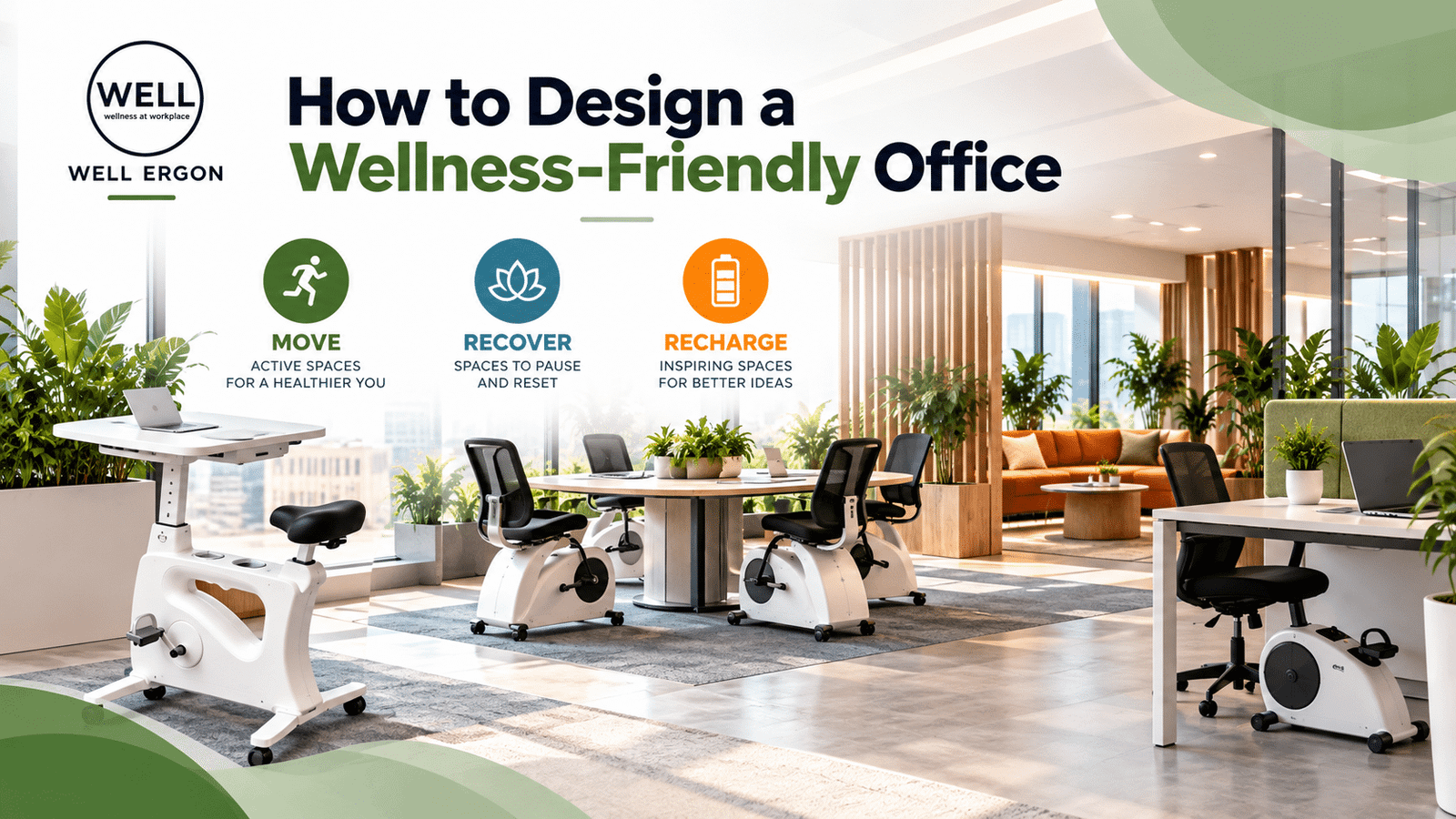
Active furnishings give employees more opportunities to move during the workday. Common examples include:
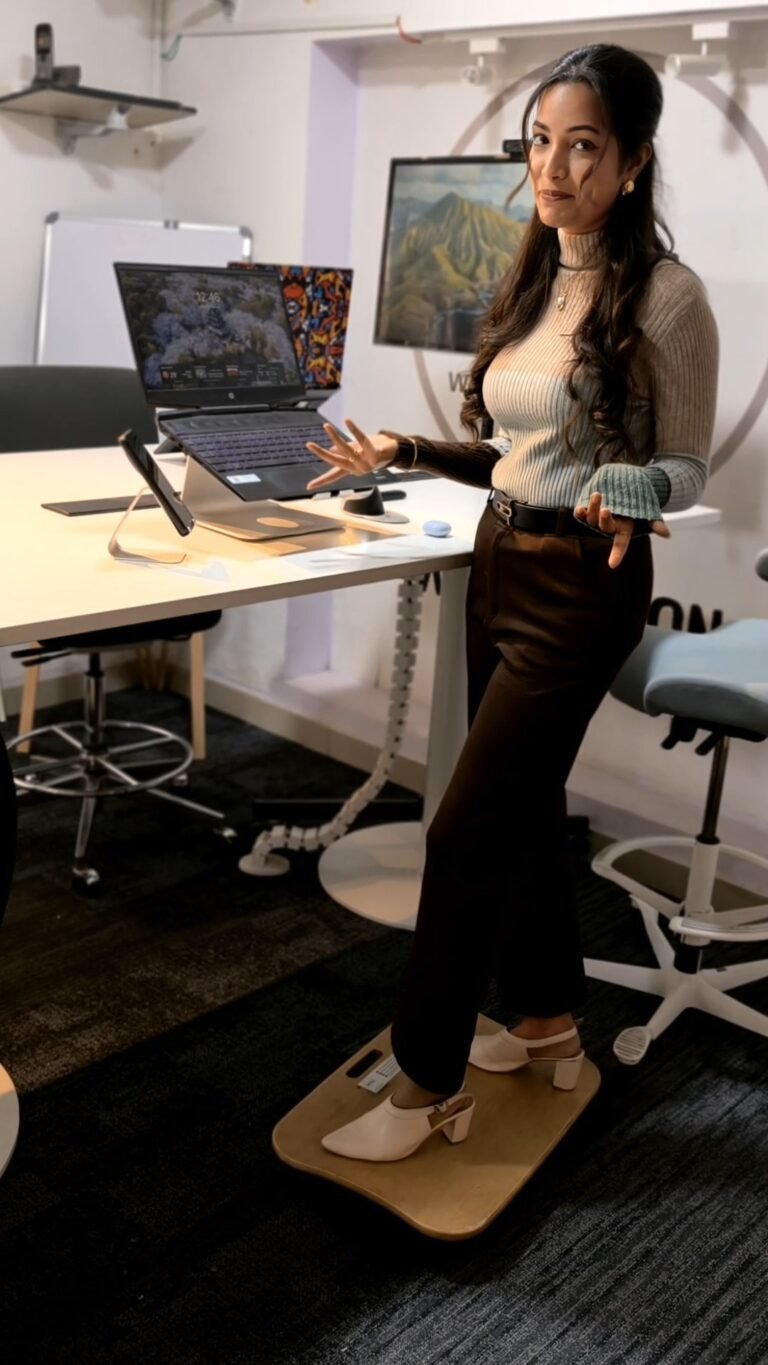
- Sit-stand desks.
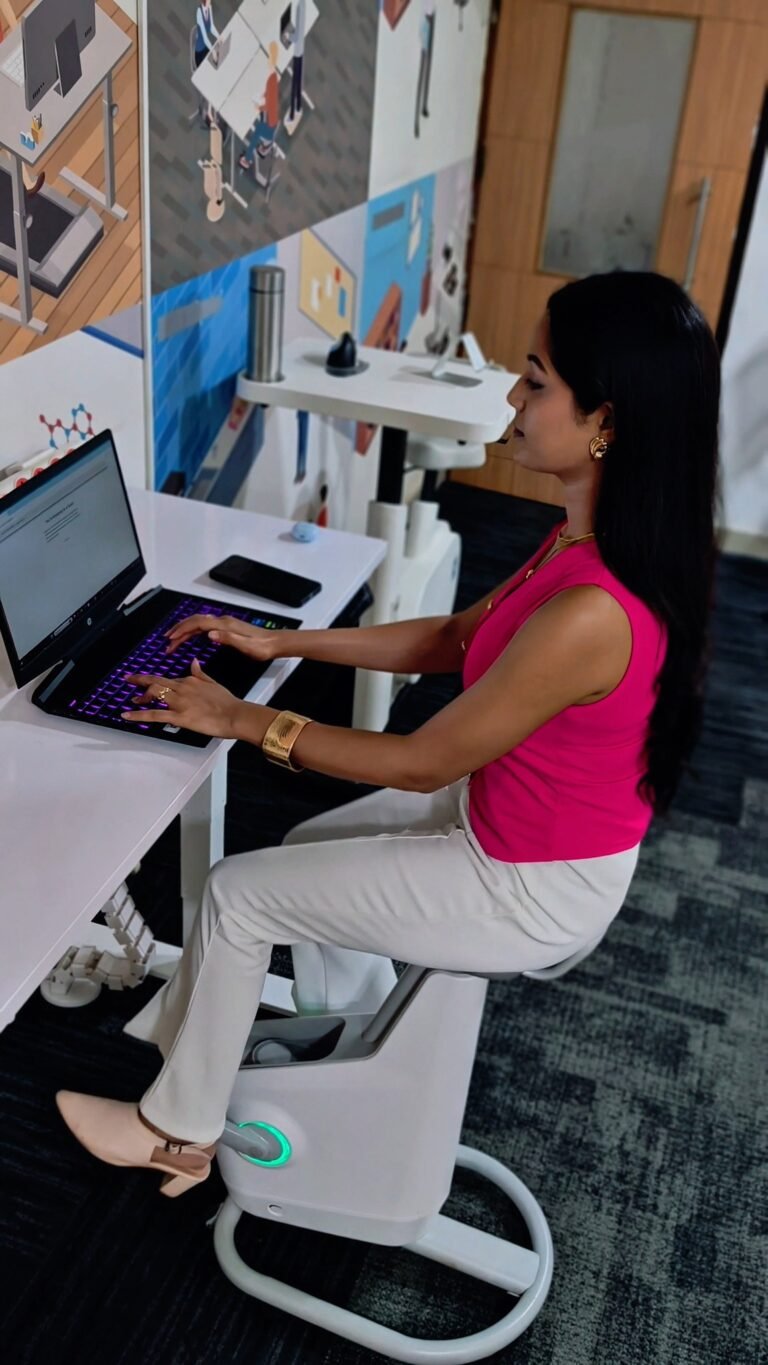
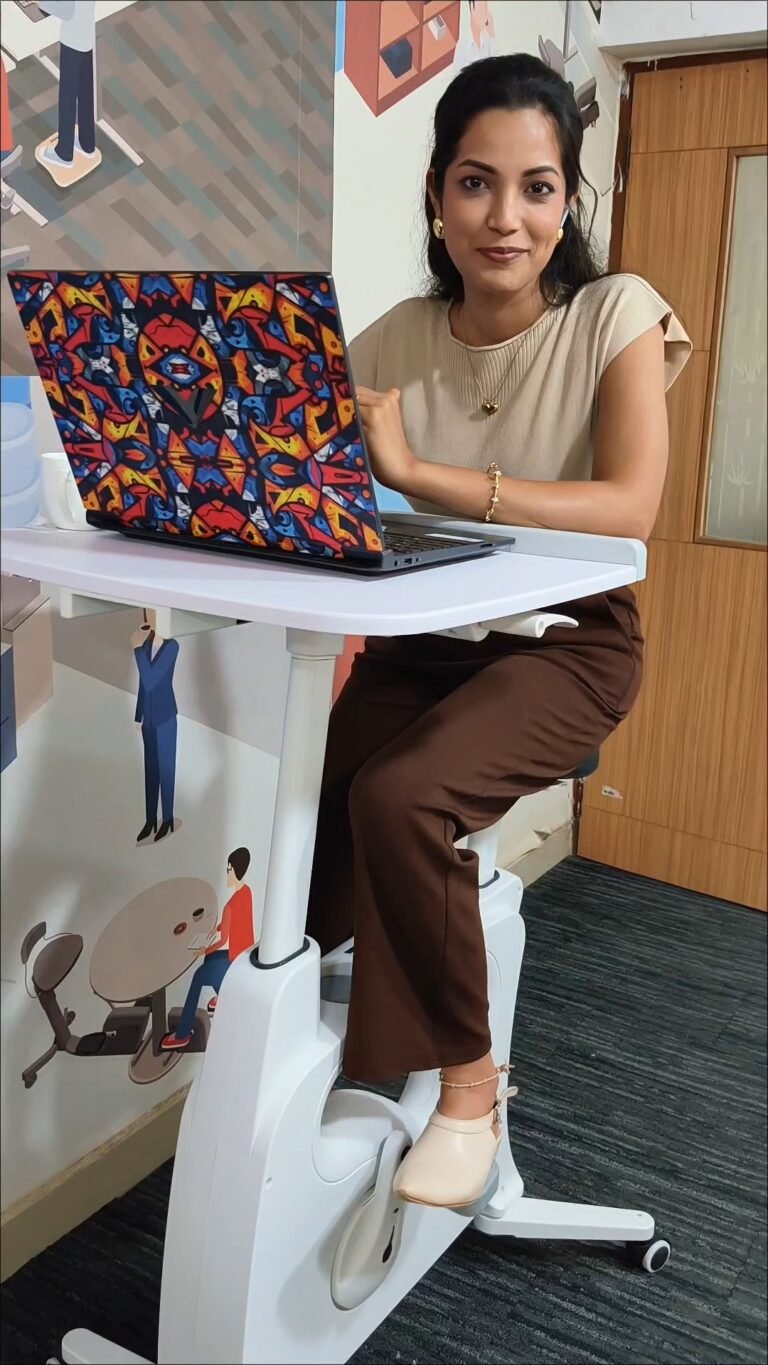
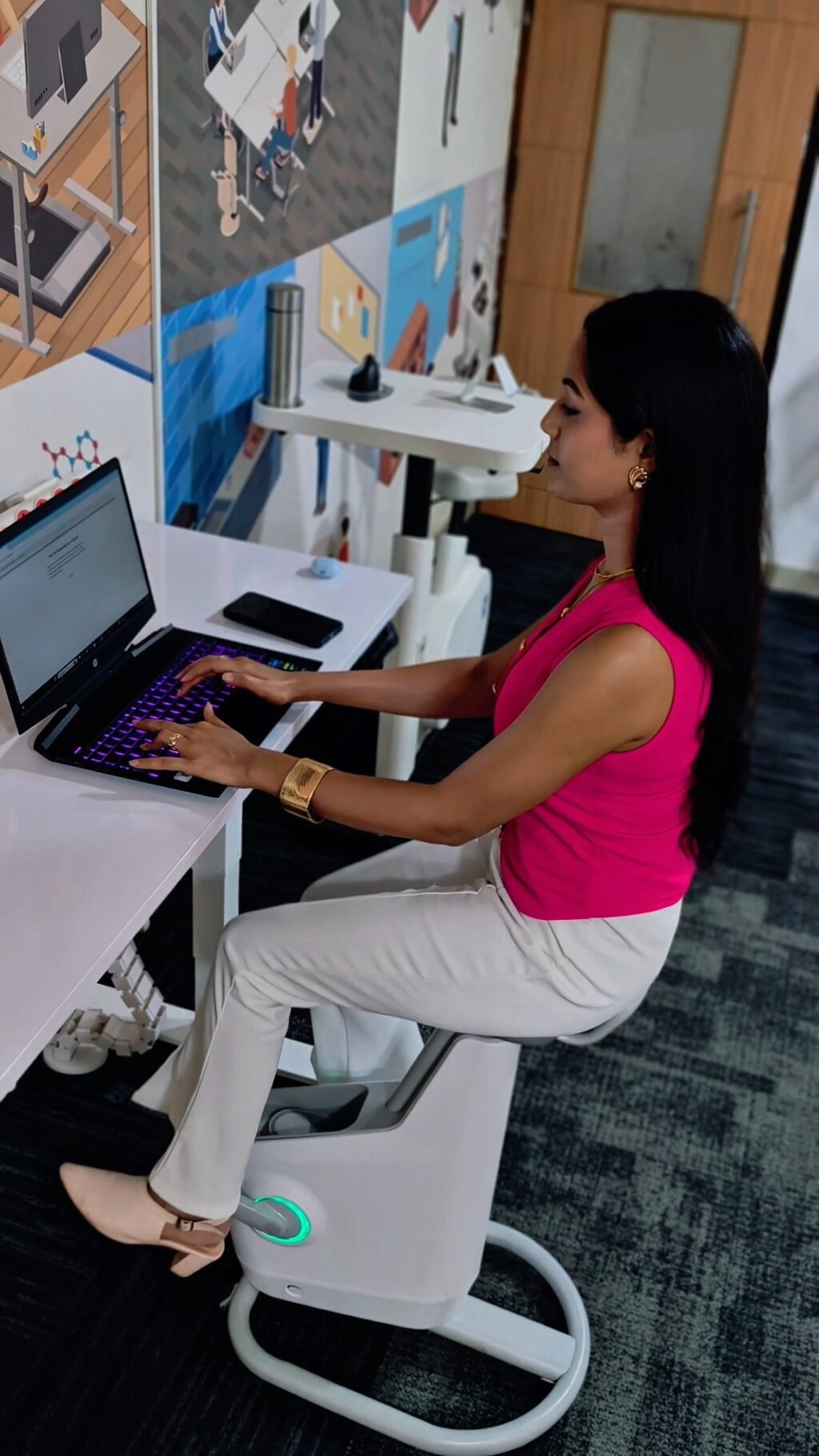
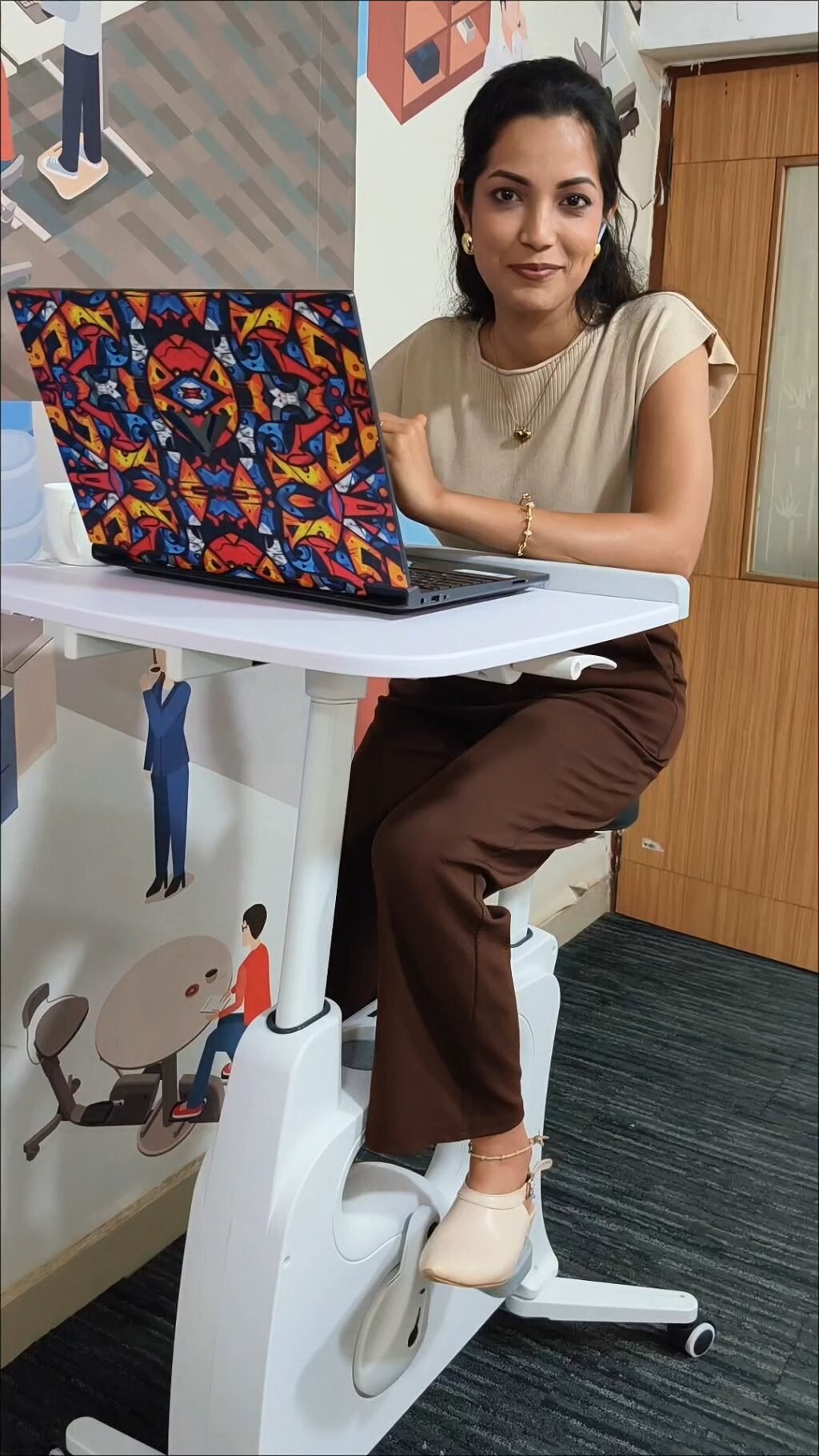
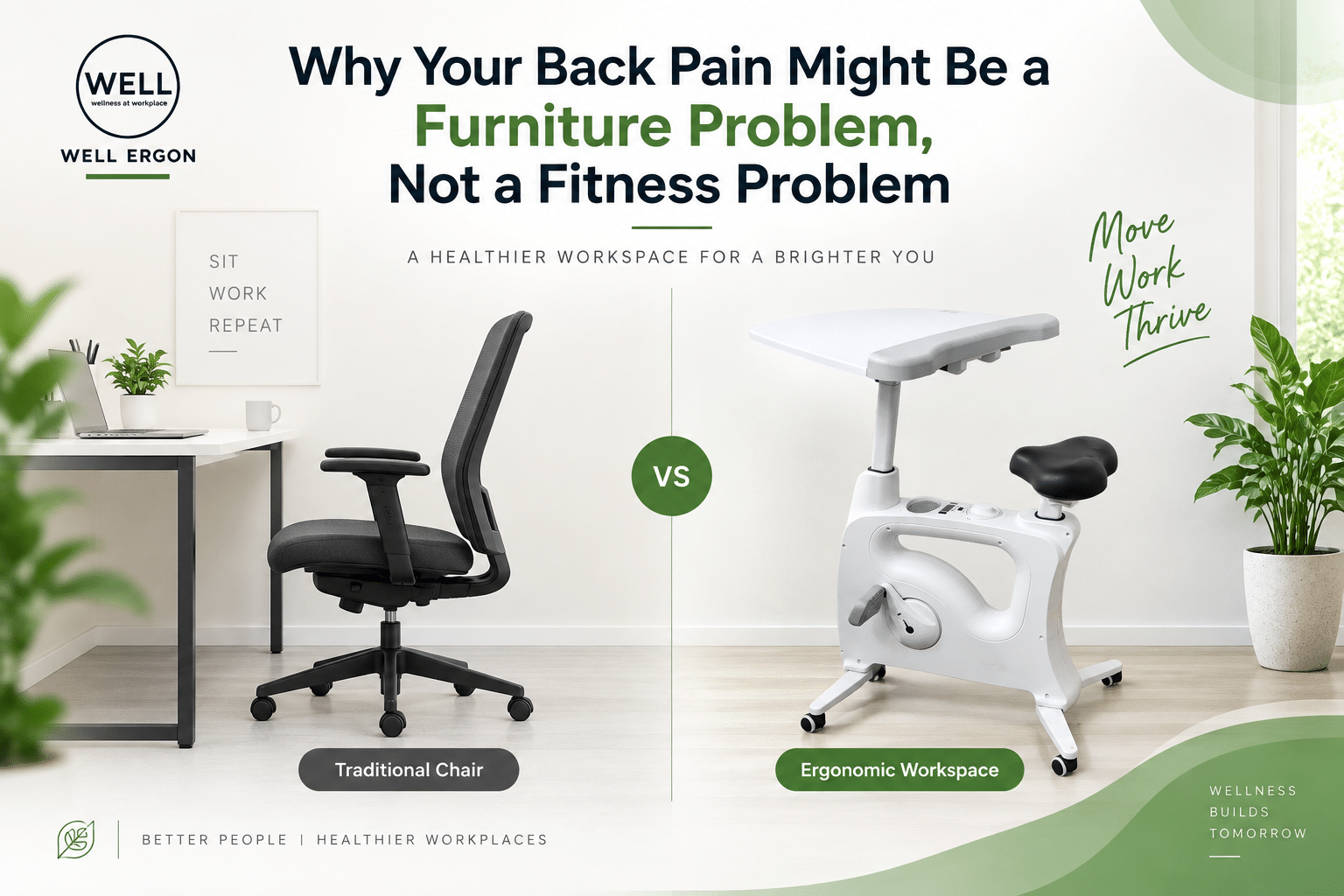
- Cycle desks and desk exercise bikes.
- Treadmill desks.
- Other suitable active workstation options.
WELL v2 includes an Active Furnishings feature among its Movement strategies. Furniture manufacturers that map their ranges to WELL typically describe sit-stand desks and high huddle tables as products that can contribute to optimization points, not as items that earn certification on their own. Certification requires meeting all applicable preconditions and a set number of optimization points, which depends on the target level (Bronze, Silver, Gold or Platinum). Specific criteria must always be checked against the standard that applies to the project.
Building Design That Encourages Movement
The layout of an office shapes how much people move without anyone asking them to. WELL v2’s Movement concept includes features on active buildings and communities and on site planning and selection, which reward sites near varied building uses, walkable and cyclist friendly surroundings and public transit. Inside the building, relevant design choices include:
- Accessible and inviting staircases.
- Convenient walking routes between work areas.
- Shared facilities placed so that people have to walk to reach them.
- Collaborative spaces located a short walk from desks.
- Safe and accessible circulation routes.
- Supporting facilities such as bike parking, showers and lockers.
Accessibility matters at every point. A design that encourages stair use should still offer an equally convenient step-free route.
Workplace Policies and Movement Programs
Physical design works best when workplace practice supports it. WELL v2 includes a Physical Activity Promotion feature that takes a flexible approach, for example subsidies for group fitness classes or flexible scheduling. Other practical measures include:
- Optional movement breaks.
- Walking meetings where practical.
- Employee wellness initiatives.
- Education about sedentary behaviour.
- Policies that make active habits easy to adopt.
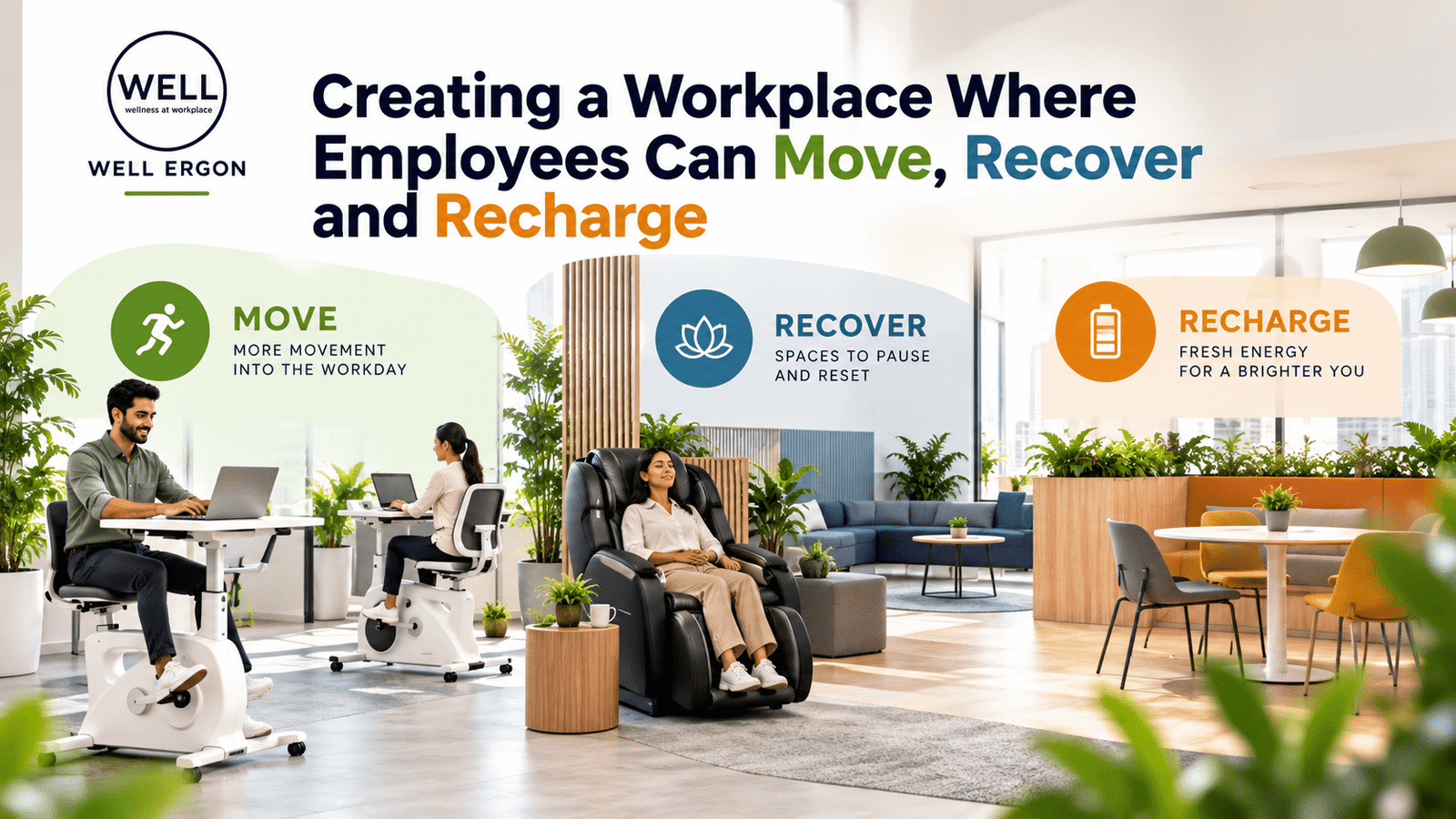
A movement-friendly workplace combines thoughtful design, suitable equipment and a culture that supports movement.
Why Movement Matters in the Modern Workplace
Reducing Prolonged Sedentary Behaviour
Desk based work can involve long unbroken periods of sitting. The World Health Organization’s 2020 guidelines on physical activity and sedentary behaviour advise adults to limit the amount of time spent being sedentary and report that replacing sedentary time with physical activity of any intensity, including light activity, provides health benefits. The same guidelines recommend at least 150-300 minutes of moderate-intensity aerobic activity per week for adults, and note that the evidence was not sufficient to set a specific threshold for sedentary time
Two points follow for workplace design. First, light activity counts, so small opportunities to move have value. Second, standing alone does not remove the issue. Swapping one static posture for another is not the goal; the aim is to change position and move regularly.
Supporting Employee Comfort and Ergonomics
Comfort at the workstation depends on a few controllable things:
- Desk and chair adjustability.
- Screen positioning at a suitable height and distance.
- Access to movement opportunities during the day.
- Ergonomic awareness among employees and managers.
Ergonomics and physical activity are related but different. A workstation can be ergonomically sound and still encourage ten hours of stillness, and an active workstation can be set up badly. A good plan addresses both.
Encouraging Healthier Daily Habits
Small opportunities to move can be built into normal work routines: walking to a collaborative space instead of calling across the floor, taking the stairs, or using an appropriate active workstation for calls and reading. These are modest changes, but repeated daily they change what a typical working day looks like.
Building a Workplace Wellness Culture
When movement is a normal, supported part of working life, employees do not have to squeeze it into personal time or feel awkward about stepping away from a desk. The evidence for specific health or productivity outcomes from individual workplace interventions varies, and results depend on many factors beyond the office layout. Organizations should treat movement initiatives as sensible risk-reduction and wellbeing measures rather than guaranteed performance fixes.
How to Apply WELL Movement Principles in Your Office
Step 1: Assess Your Existing Workspace
Before buying anything, find the barriers to movement. Review:
- Existing workstation configurations.
- Opportunities for employees to change position.
- Available walking routes and staircases.
- Unused office areas.
- Accessibility and safety.
- Employee feedback about comfort.
Step 2: Improve Ergonomic Workstations
Review chairs, desks, monitor positions and input devices. Let employee needs, task requirements and recognized ergonomic principles guide the changes. Someone who spends the day on calls has different needs from someone doing detailed spreadsheet work.
Step 3: Introduce Active Workstations
Consider sit-stand desks, cycle desks and other suitable active options. Weigh:
- Available space.
- Employee preferences.
- Compatibility with work tasks.
- Ease of adjustment and use.
- Safe operation and maintenance.
A desk exercise bike such as WellErgon Charge Up Bike is one example to evaluate for settings where light pedalling suits the task, such as reading, calls or routine administrative work. Tasks that need fine motor precision are usually better done seated or standing still.
Step 4: Create a Dedicated Movement Zone
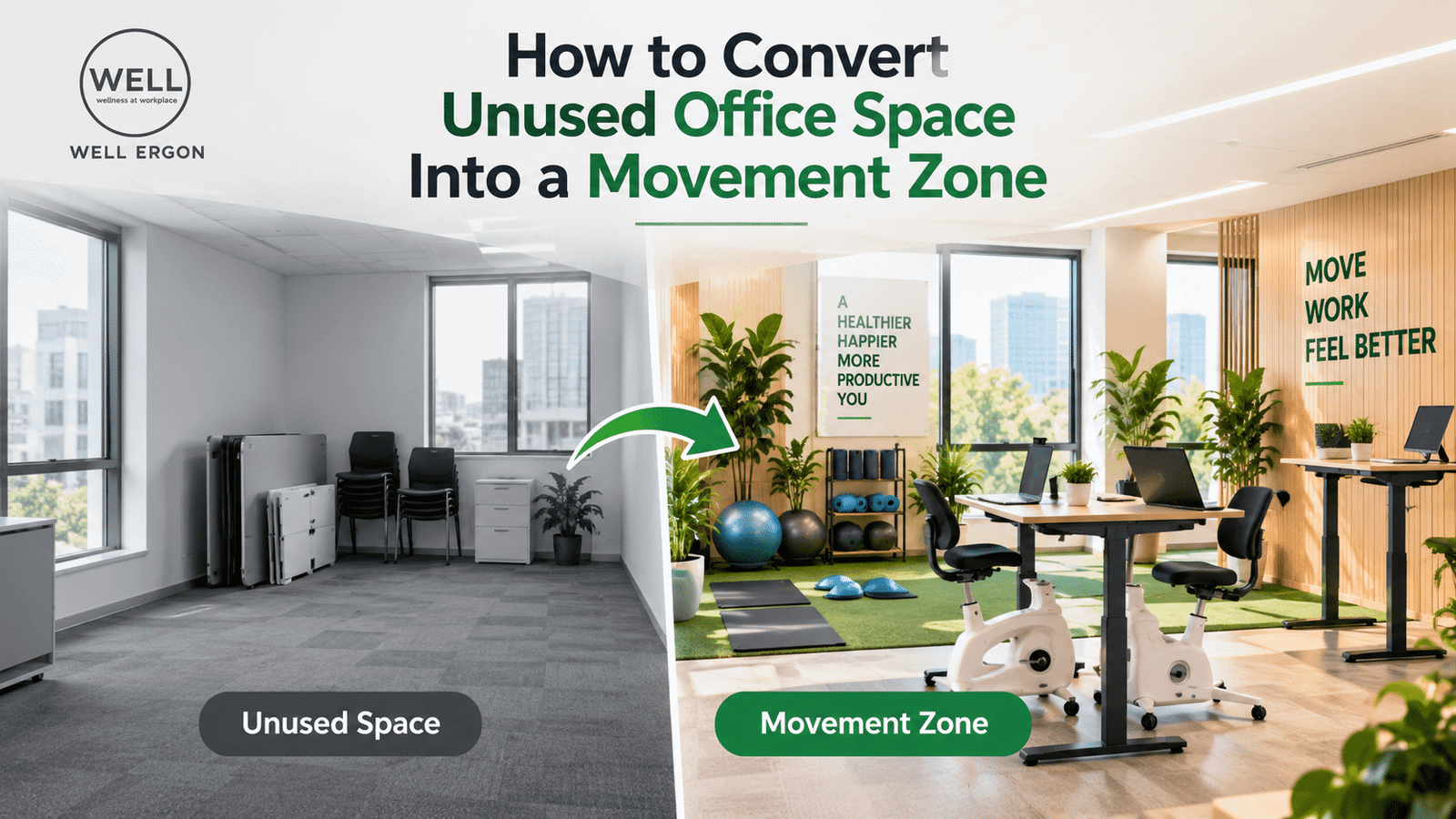
Unused corners, spare rooms and underused areas can become a movement zone. Useful features include:
- Space for light movement.
- Suitable active workstations.
- Clearly marked circulation areas.
- Safe equipment placement.
- Convenient access for all employees.
Step 5: Encourage Active Meetings and Movement Breaks
Practical options include:
- Walking meetings when appropriate.
- Short breaks between long stretches of desk work.
- Taking the stairs where accessible and practical.
- Moving between suitable work areas during the day.
- Optional employee wellness activities.
Flexibility matters. Employees should be able to take part according to their own needs and abilities, and no one should feel pressured.
Step 6: Educate Employees and Review Progress
Equipment is only part of implementation. Provide guidance on how to use it, collect feedback, check equipment regularly and assess whether the changes work for the people using them.
Which Workplace Products Can Support a Movement Friendly Office?
Products here are possible solutions to evaluate. None of them guarantees compliance with WELL, and buying them does not by itself earn certification points.
| Workplace product | Potential workplace application |
|---|---|
| Sit-stand desks | Let employees alternate between sitting and standing |
| Desk exercise bikes | Offer a way to pedal during suitable desk-based activities |
| Cycle stations | Create shared opportunities for active working |
| Walk stations | Support walking during compatible tasks |
| Ergonomic chairs | Provide adjustability to accommodate different users |
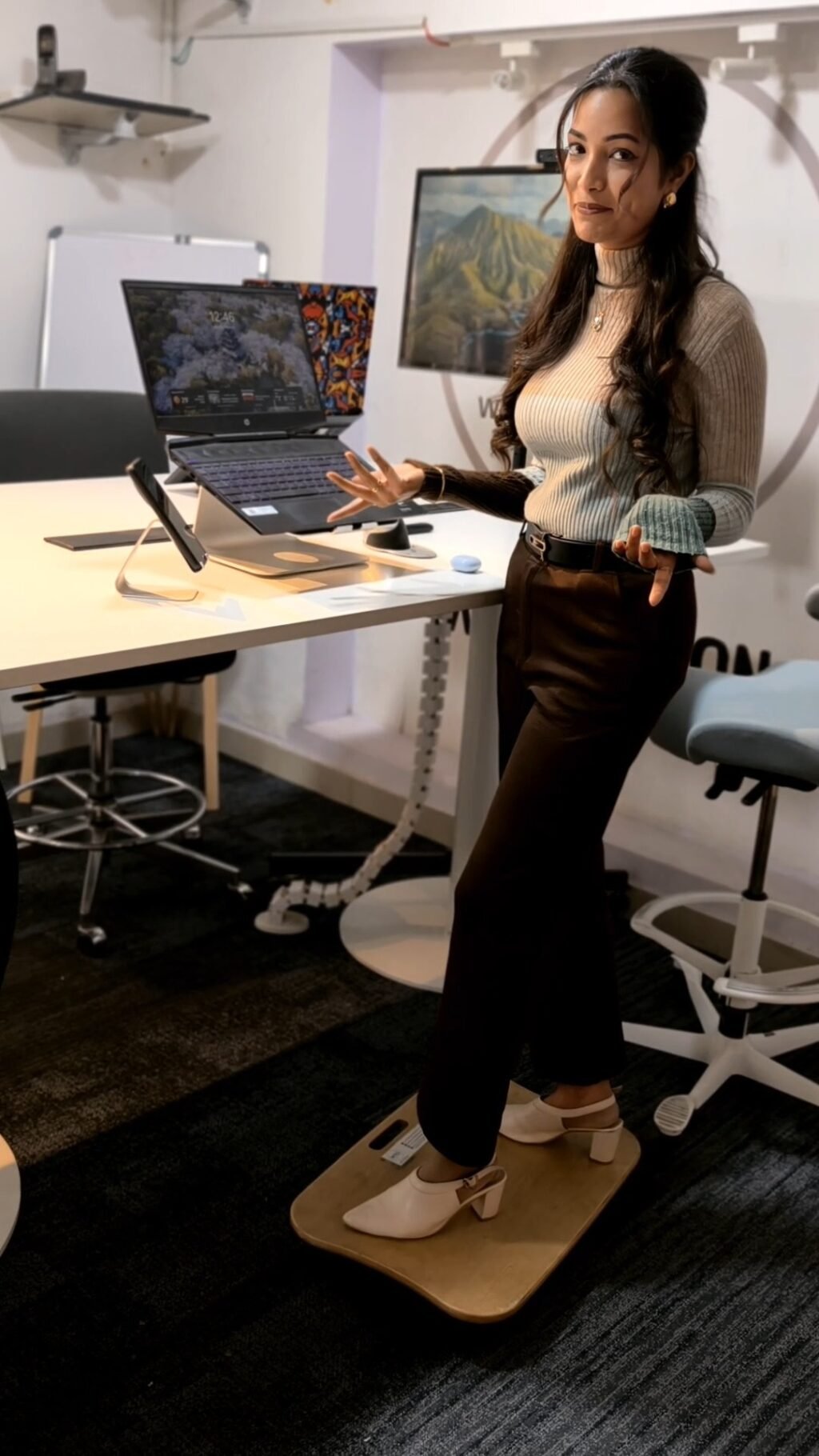
| Monitor arms and laptop stands | Help employees position screens appropriately |
| Footrests and keyboard trays | Support workstation adjustment for suitable users |
How to Choose the Right Products for Your Workplace
Evaluate each option against:
- Employee requirements.
- Adjustability and usability.
- Space and layout.
- Equipment quality and maintenance needs.
- Safety and accessibility.
- Budget and intended use.
Certification depends on the relevant standard’s requirements and its verification process, not on a product list. If WELL certification is a goal, work with a WELL Accredited Professional or the project’s assessor to confirm what applies.
How Can HR and Facility Managers Measure Progress?
Track Employee Participation
Measure voluntary participation in movement initiatives and use of shared active workstations.
Collect Employee Feedback
Ask about comfort, accessibility, equipment usability and barriers to participation. Short pulse surveys every quarter work well.
Review Workspace Utilization
Check whether movement zones and active workstations are being used as intended, and at what times of day.
Monitor Implementation and Maintenance
Track equipment availability, maintenance requirements and the completion of ergonomic assessments.
These measures show whether the changes have been implemented and are being used. They do not establish WELL certification, and they do not prove that an intervention caused changes in employee health or productivity. Other workplace factors will also be at work.
Common Mistakes When Implementing Workplace Movement Strategies
- Treating movement as a fitness-room issue rather than a design consideration.
- Buying equipment without assessing employee needs.
- Introducing standing desks without teaching employees how to adjust them.
- Ignoring ergonomics while focusing only on physical activity.
- Creating movement zones that block walkways or are hard to reach.
- Assuming that equipment alone will change employee habits.
- Making movement activities compulsory or inaccessible to some employees.
- Claiming WELL certification benefits without verifying the relevant criteria.
Frequently Asked Questions
What does the WELL Building Standard say about movement? Its Movement concept addresses physical activity, active living, ergonomics and design strategies that make movement more accessible in the built environment. Specific requirements depend on the version, feature and project type.
What is the WELL Movement concept? It is a framework within WELL v2 that addresses movement and physical activity through building design, workplace ergonomics and supportive practices, with the aim of encouraging activity and reducing sedentary behaviour.
How can companies encourage more movement in the workplace? Combine ergonomic workstations, optional movement breaks, active workstations, accessible walking routes and supportive policies. Gather employee feedback and adjust.
What are active workstations? Active workstations build opportunities for movement into the work itself. Examples include cycle desks, treadmill desks and sit-stand desks, used where they suit the task.
Do sit-stand desks meet WELL requirements? They may support applicable strategies, but compliance depends on the version, feature, project type and specific requirements. A desk is not certified by being a sit-stand desk.
Can workplace wellness products help a company achieve WELL certification? Suitable products can support a project’s implementation of relevant strategies, but products alone do not guarantee certification, which depends on meeting the standard’s requirements and passing verification.
Does WELL require every office to have an exercise room? Not as a blanket rule. Requirements depend on the applicable standard, project type and pathway, so a dedicated exercise room should not be assumed to be universally required.
Conclusion:
The WELL Building Standard’s approach to movement encourages organizations to think beyond traditional fitness facilities. Workstation ergonomics, active furnishings, accessible building design and supportive workplace practices can all contribute to a more movement-friendly environment.
For most businesses, the starting point is to assess the existing workplace, understand what employees need and introduce practical improvements that support movement throughout the day.
Looking to create a more active and wellness-focused workplace? Explore WellErgon workplace wellness solutions to discover ergonomic furniture and active workstation options for your office.