The modern workplace is at a breaking point. If you walk through any corporate office or scroll through LinkedIn today, the subtext is the same, burnout is high, attrition is rampant and disengagement is the silent killer of growth.
For years, employee wellbeing was a box to be checked. It meant a bowl of fruit in the breakroom, a subsidized gym membership that nobody used, or a high pressure Yoga Day once a year. But the landscape has shifted. Employees, particularly Gen Z and Millennials, are no longer willing to trade their health for a paycheck. They are looking for environments that support their physical and mental longevity.
Moving from a culture of perks to a structured wellbeing strategy isn’t just an HR trend, it’s a business imperative. A healthy workforce is a productive one and in this guide, we will explore how to build a strategy that actually moves the needle on your ROI.
2. What Is an Employee Wellbeing Strategy?
To get this right, we must first define what we are talking about. An Employee Wellbeing Strategy is a holistic, ongoing, and measurable approach to improving the health and happiness of a workforce.
It is the difference between a wellness activity and a wellness culture.
What it isn’t: One time activities like a mental health webinar or a Friday pizza party. These are band aid solutions that provide a temporary spike in mood but fail to address systemic issues like sedentary behavior or chronic stress.
What it is: A data driven program integrated into the company’s DNA. It involves continuous assessment, leadership buy in and physical changes to the work environment.
The Core Pillars of Holistic Wellbeing
A strategy is only as strong as its foundation. We categorize wellbeing into five essential pillars:
Physical: Movement, nutrition and sleep quality.
Mental: Resilience, stress management and cognitive load.
Emotional: Feeling valued, psychological safety and purpose.
Workplace/Ergonomic: The physical interaction between the human body and the office tools.
Social: Connection, belonging and healthy team dynamics.
3. Why Employee Wellbeing Strategy Matters
If you are a founder or a CFO, you want to see the numbers. Does investing in an ergonomic desk bike or a mental health app actually help the bottom line? The research says yes.
Productivity:
Productivity isn’t about time spent at a desk, it’s about the energy brought to that time. When employees are physically active and mentally clear, they experience less brain fog and mid afternoon slumps. A strategy that encourages movement, like using standing desks, keeps blood flowing to the brain, maintaining high focus levels throughout the day.
Retention:
High attrition is expensive. Replacing a mid level employee can cost up to 1.5-2x their annual salary. A wellbeing strategy signals to employees that they are seen as humans, not just resources. This builds deep seated loyalty and significantly lowers turnover.
Health Cost Reduction
Sedentary lifestyles are the leading cause of musculoskeletal disorders (MSDs) and lifestyle diseases like Type 2 diabetes. By integrating physical wellbeing into the workday, companies see a direct reduction in sick leaves and healthcare premiums.
Employer Branding
In a competitive talent market, your reputation as an employer matters. Companies that prioritize health attract top tier talent. It becomes a differentiator that makes your offer stand out over a competitor who offers more money but a more toxic, sedentary culture.
4. Key Challenges Companies Face Without a Strategy
Without a roadmap, companies often fall into the trap of Wellness Fatigue. This happens when HR launches initiatives that don’t solve the actual problems employees face. Common pain points include:
High Burnout in IT & Corporate Sectors: The always on culture leads to cognitive exhaustion.
The Sedentary Trap: Most corporate employees sit for 8 to 10 hours a day. This sitting disease leads to chronic back pain and lethargy.
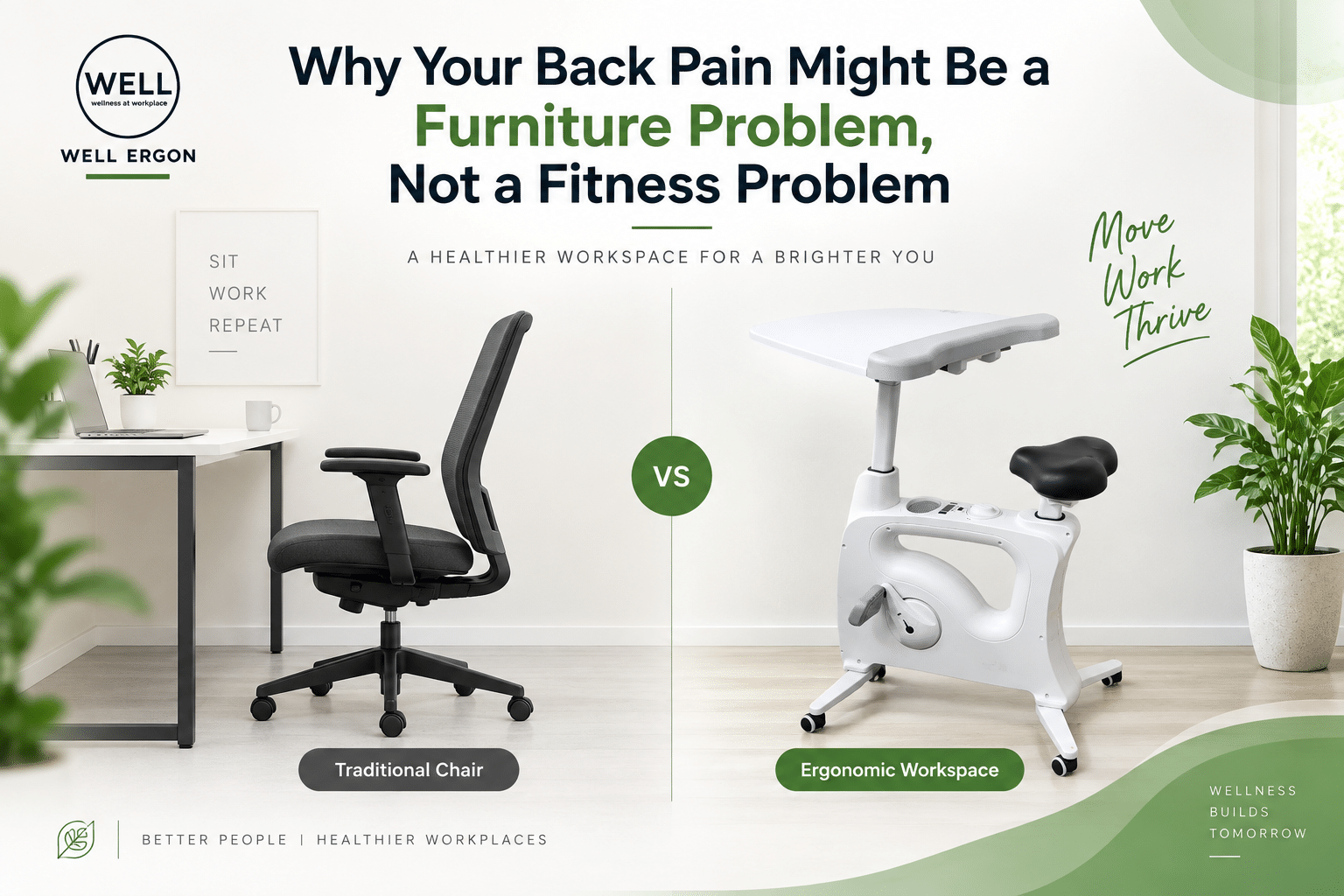
Poor Workspace Ergonomics: Slumping over laptops on dining tables or non adjustable office chairs leads to long term injury.
Lack of Engagement: If a program feels forced or irrelevant, employees won’t participate, leading to wasted budget.
5. Core Pillars of a Successful Employee Wellbeing Strategy
To build a strategy that lasts, you need to address these five areas with specific, actionable interventions.
1. Physical Wellbeing:
We weren’t born to sit still. A successful strategy encourages Active Working. This includes:
Movement intervals: Encouraging breaks every 30-60 minutes.
Posture support: Providing tools that allow for a neutral spine position.
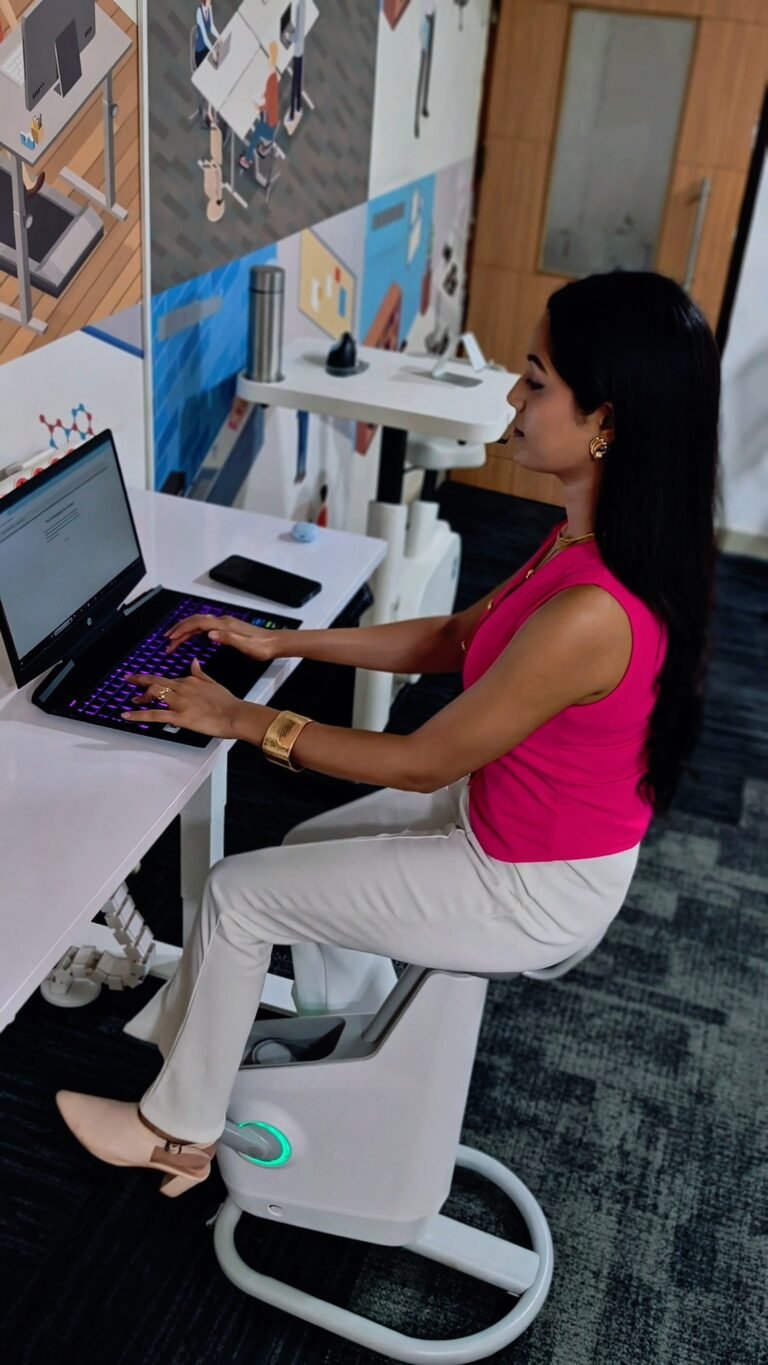
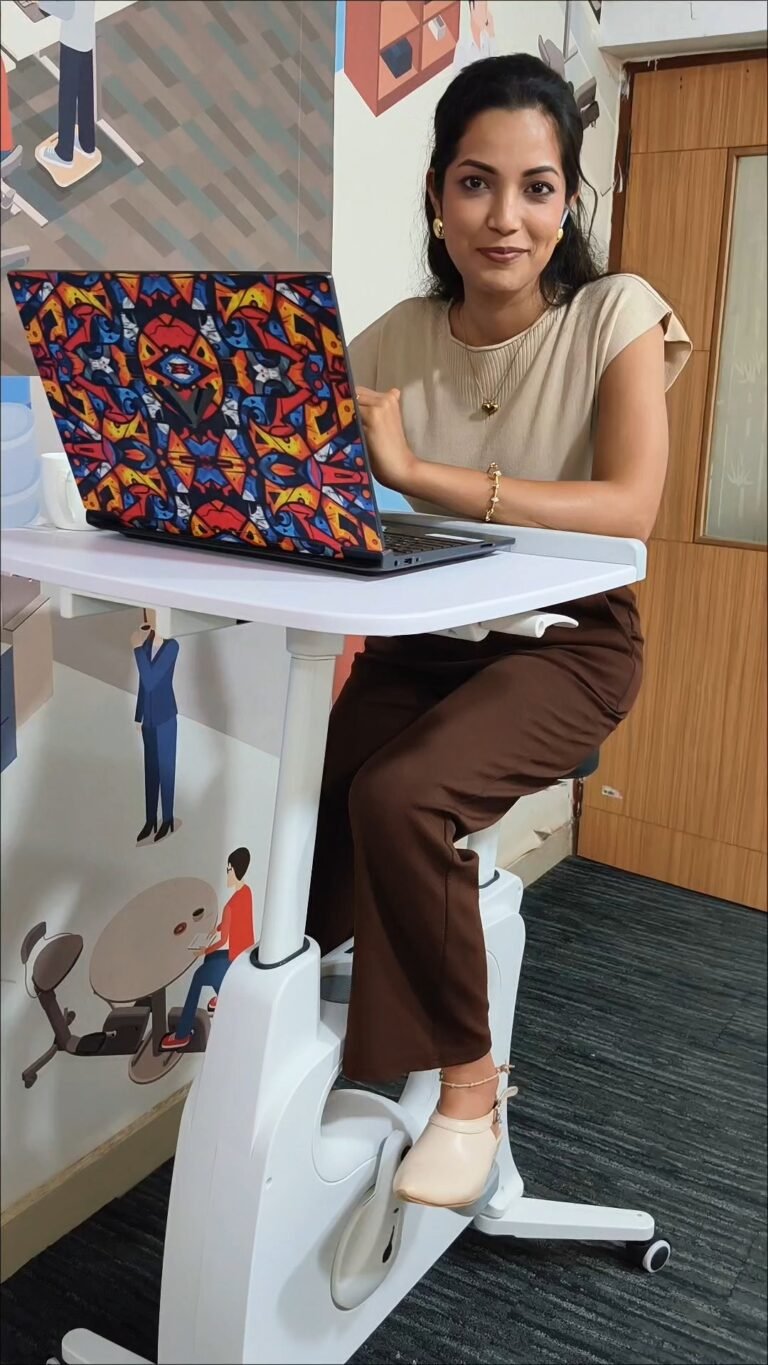
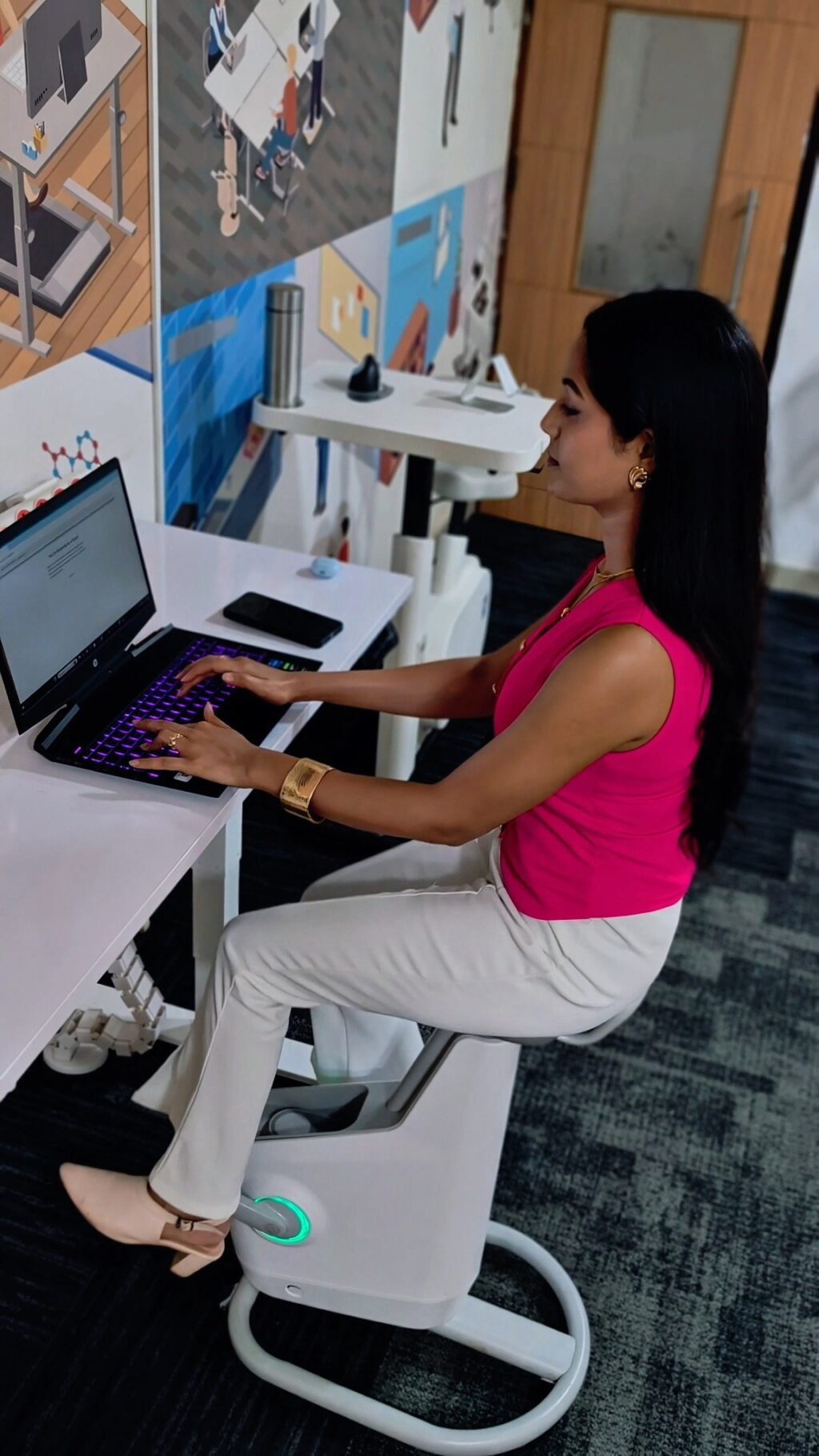
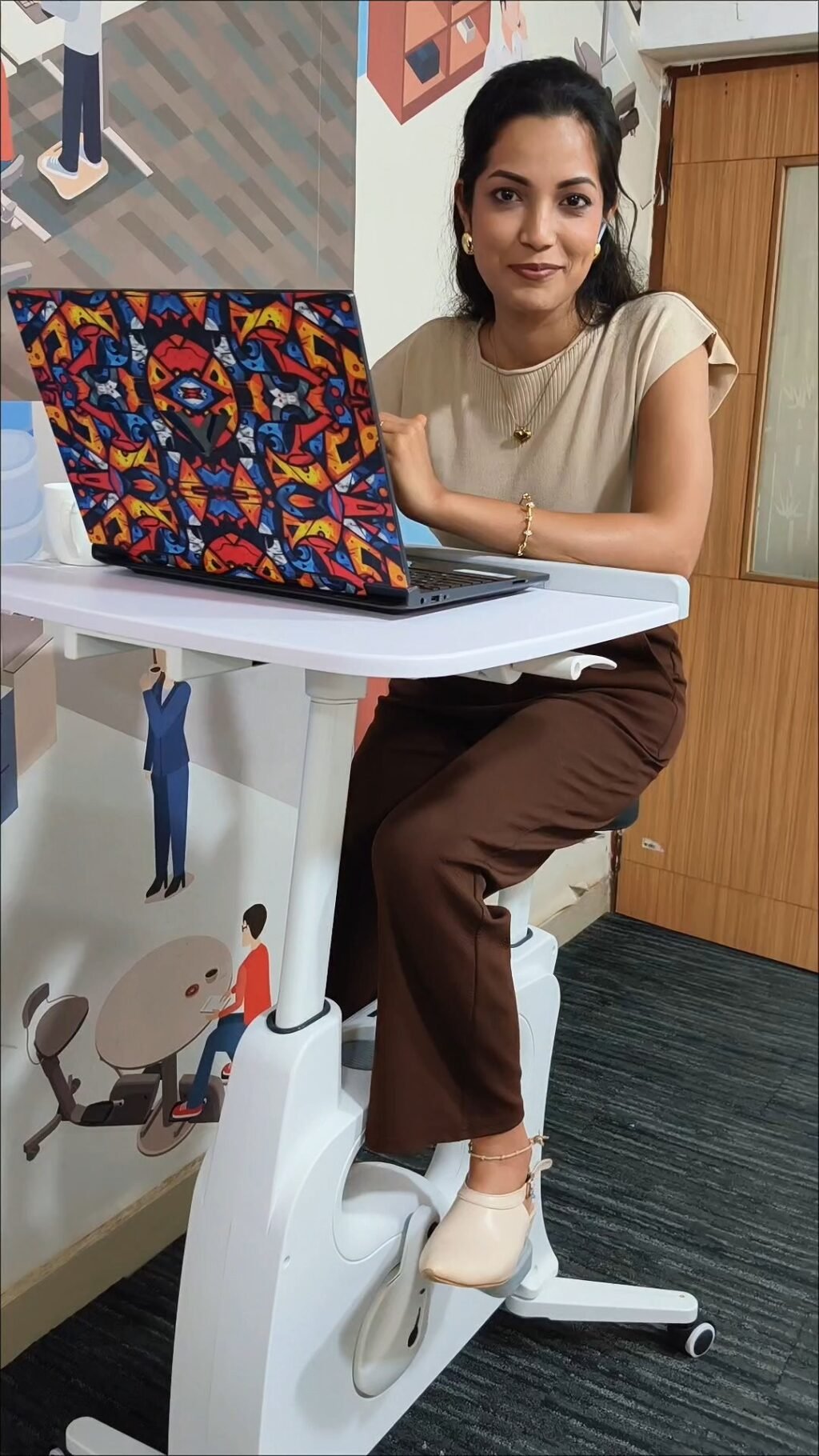
Active workstations: Introducing height adjustable desks or under desk cycles so movement happens during work, not just after it.
2. Mental & Emotional Wellbeing
This is about creating a culture where it’s okay to say, I’m overwhelmed.
Stress Management: Offering mindfulness tools or quiet zones in the office.
Work Life Balance: Respecting log off times to prevent digital exhaustion.
Psychological Safety: Ensuring employees feel safe to take risks without fear of punishment.
3. Workplace Environment
The physical space dictates behavior. If an office is dark, noisy and cramped, no amount of wellness coaching will help.
Lighting: Maximizing natural light to regulate circadian rhythms.
Ergonomics: Investing in furniture that adapts to the human body, not the other way around.
4. Social Wellbeing
Isolation is a productivity killer. A wellbeing strategy should promote Social Ergonomics, spaces designed for spontaneous collaboration and team bonding, such as huddle tables or communal lounge areas.
5. Financial Wellbeing
While often overlooked, financial stress is a massive driver of poor mental health. Providing transparency in salary structures and offering financial literacy workshops can significantly reduce employee anxiety.
6. The Role of Workplace Design in Employee Wellbeing
We often think of wellbeing as an internal state, but our external environment heavily influences it. This is where Workplace Design becomes a strategic tool.
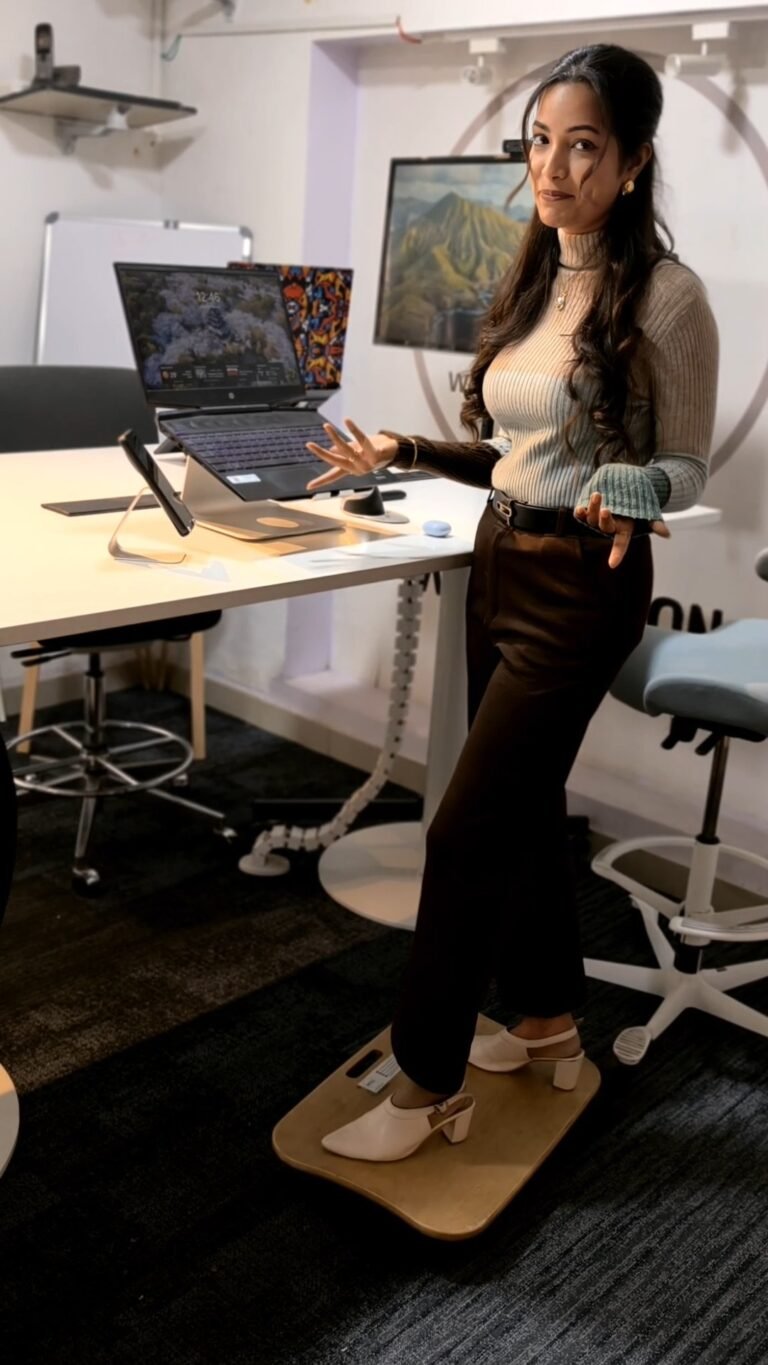
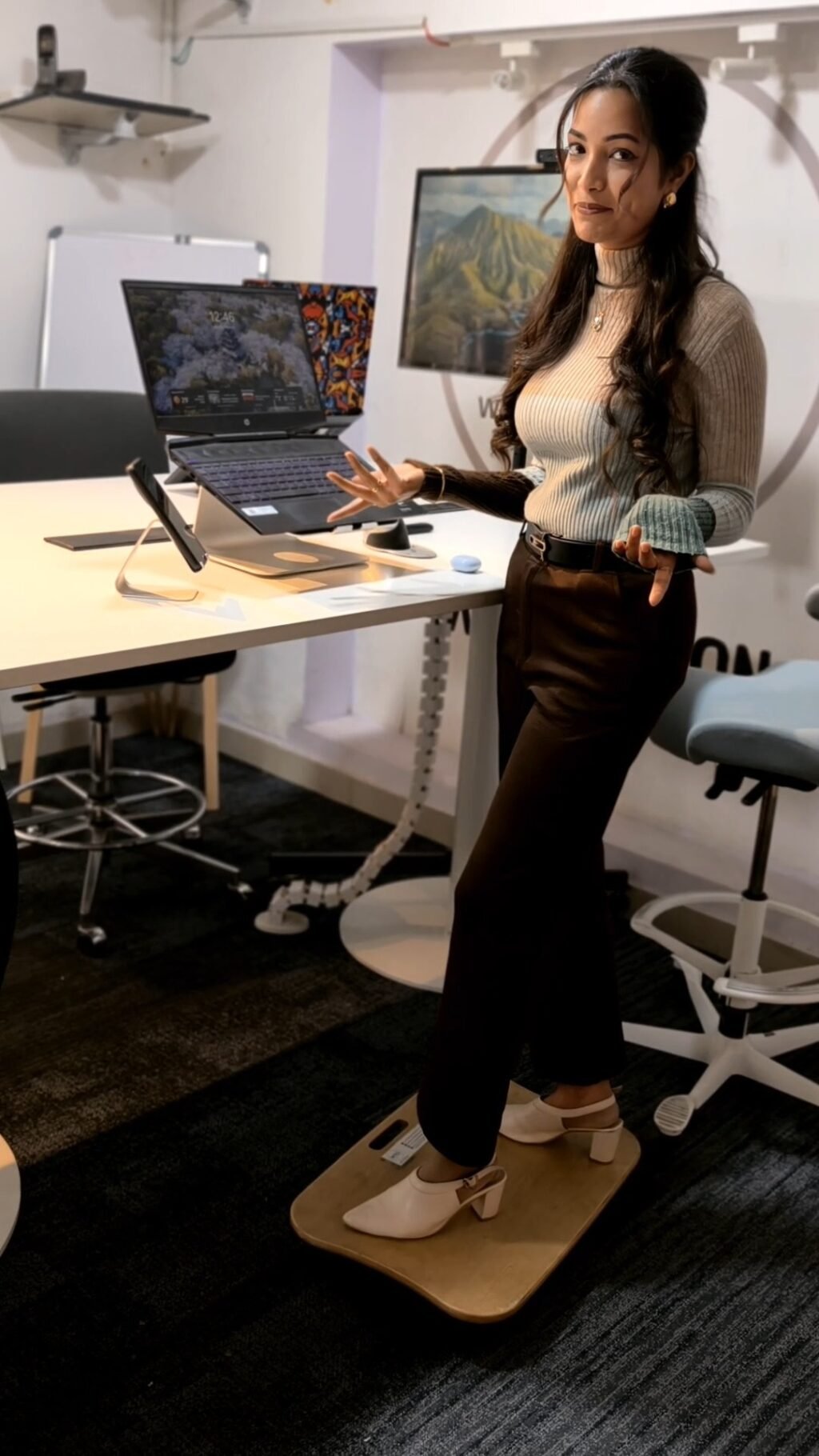
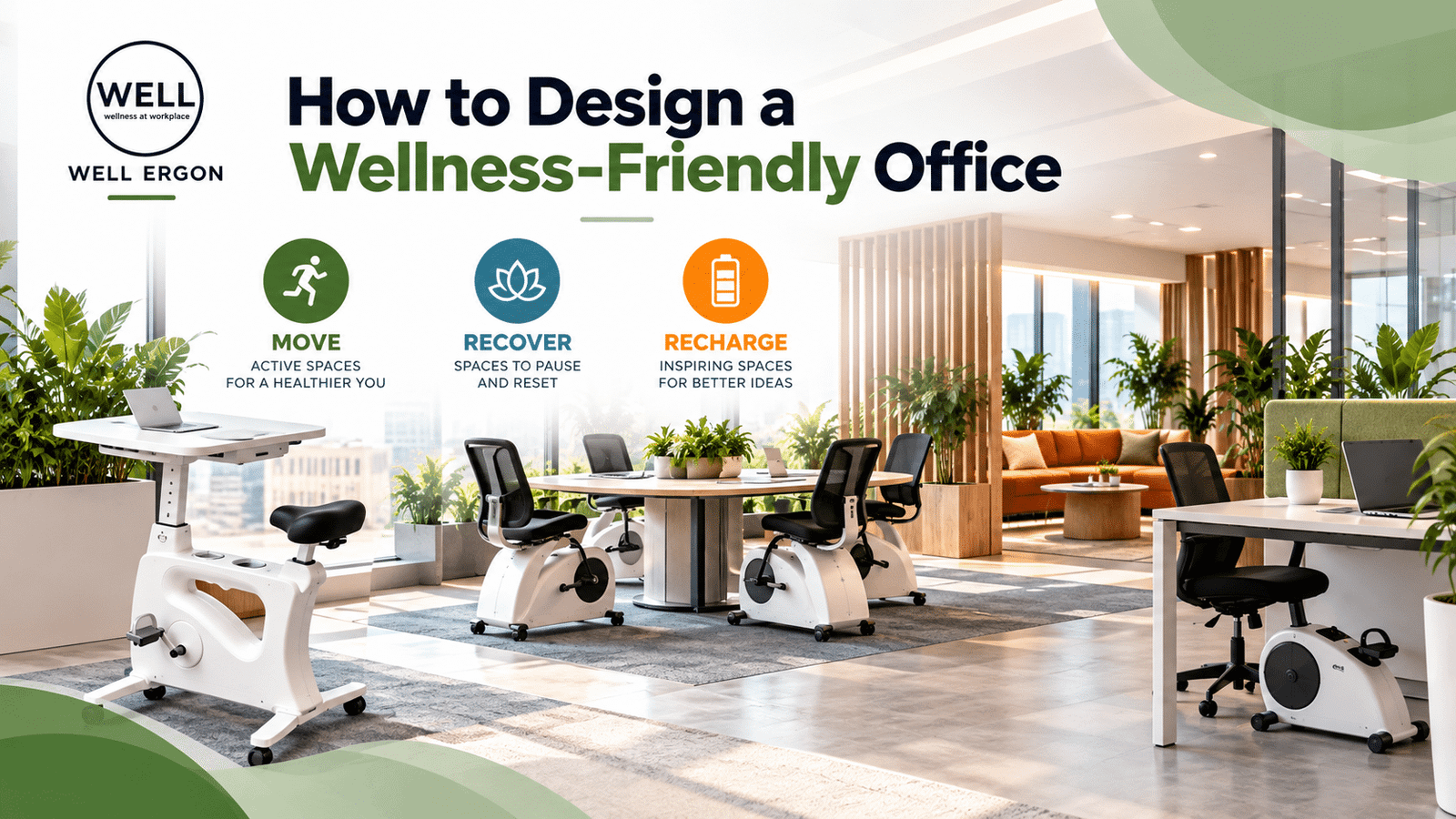
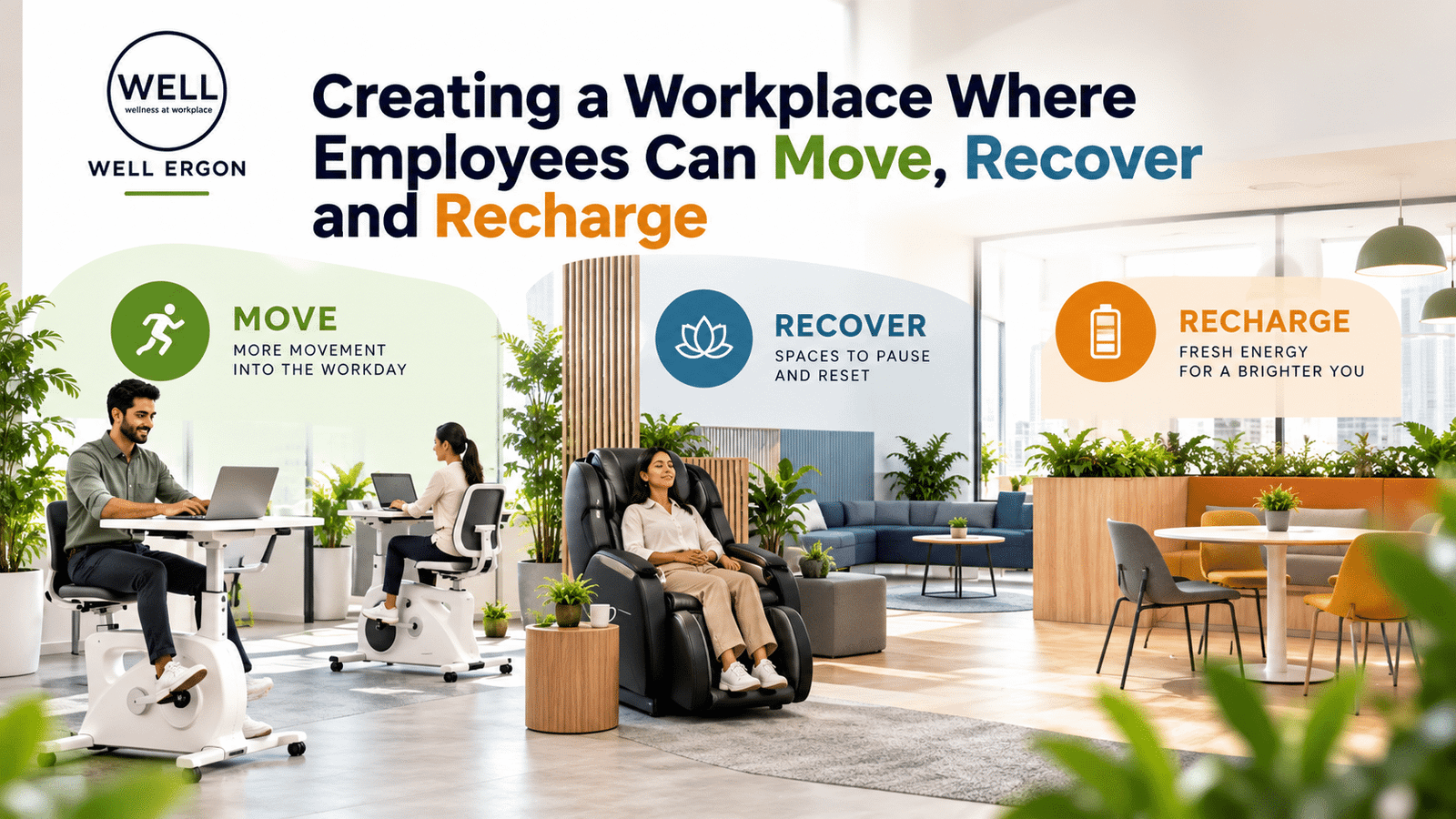
The goal is to transition from a sedentary environment to an active environment. Height Adjustable Desks: These allow employees to transition between sitting and standing, which burns more calories and reduces back strain.
Under Desk Bikes: These enable low intensity movement while typing, keeping the metabolism active without distracting from the task at hand.
Treadmill Desks: Perfect for reading tasks or internal calls, ensuring steps are hit during the workday.
Huddle Tables: High tables that encourage standing meetings, which are scientifically proven to be shorter and more efficient.
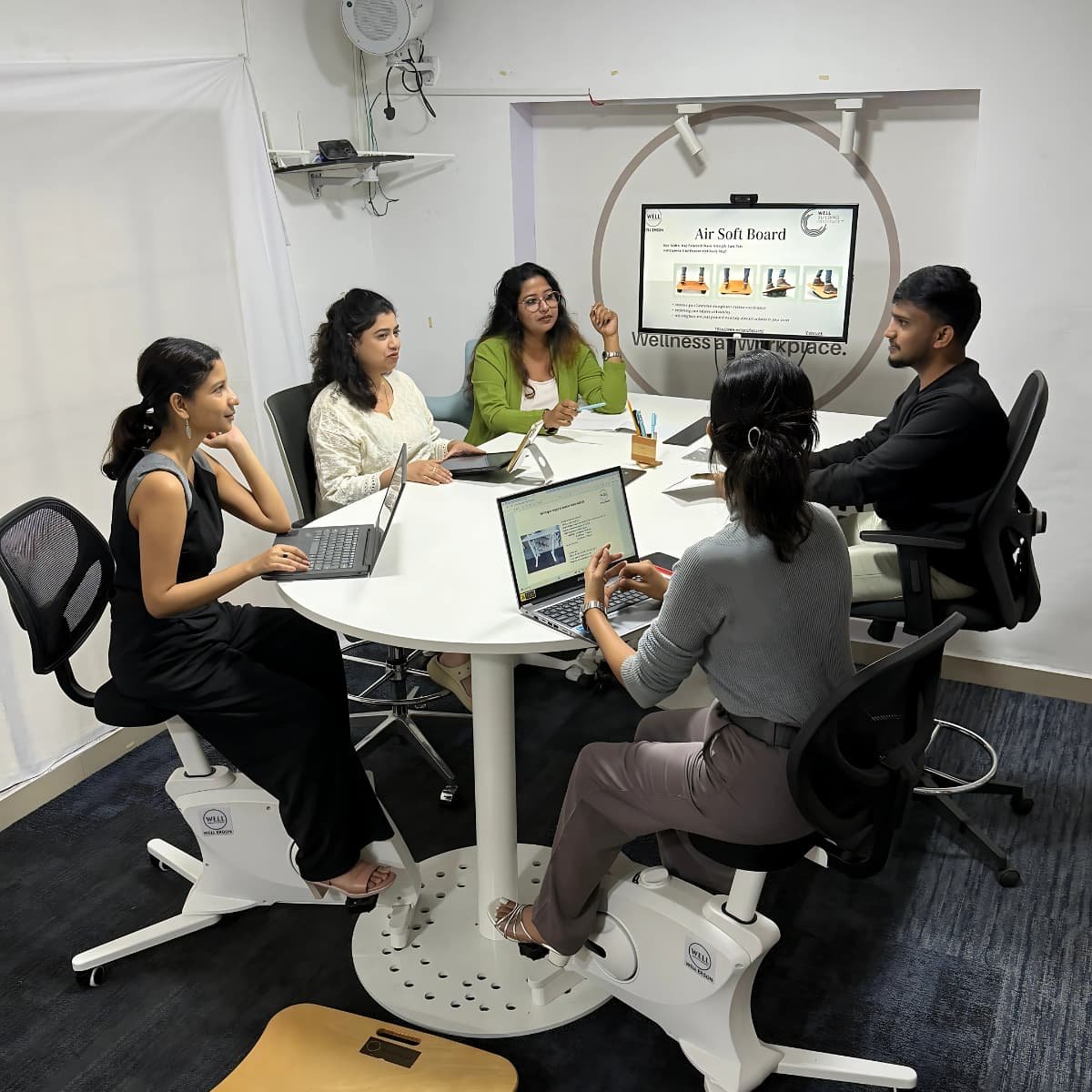
By connecting ergonomics to daily habits, you ensure that health isn’t something employees have to do after work, it’s something they achieve at work.
7. How to Build an Employee Wellbeing Strategy
Step 1: Assess Current Workplace Health
Don’t guess, ask. Use anonymous surveys to find out if your team is struggling with back pain, eye strain, or mental fatigue. Look at your sick leave data, are there patterns?
Step 2: Define Clear Goals
What does success look like?
Reduce absenteeism by 15% in 12 months.
Improve employee engagement scores regarding Work Environment by 20%.
Step 3: Choose the Right Interventions
Based on your assessment, pick tools that fit. If your team complains of back pain, prioritize ergonomic upgrades. If they feel isolated, prioritize social spaces.
Step 4: Implement Gradually
Don’t overhaul the whole office over a weekend. Start with a pilot program. Equip one department with active workstations and measure their feedback before a company wide rollout.
Step 5: Measure & Optimize
Track your KPIs. Is the engagement rate high? Are people actually using the new standing desks? Use this data to tweak and improve the strategy.
8. Common Mistakes to Avoid
Treating it as Just an HR Activity: If the CEO never uses a standing desk or works 80 hours a week, the strategy will fail. Leadership must model the behavior.
No Measurable KPIs: If you can’t measure it, you can’t manage it.
Ignoring Ergonomics: Providing a meditation room is useless if the chairs employees sit in for 8 hours are destroying their spines.
One Size Fits All: A developer has different needs than a sales representative. Tailor the tools to the role.
No Employee Involvement: If employees aren’t part of the design process, they won’t feel ownership of the program.
9. How WellErgon Supports Your Strategy
At WellErgon, we believe that the furniture you use is the foundation of your health. We don’t just sell chairs, we provide ergonomic workplace solutions designed for the modern, high performance professional.
Whether you are looking for movement friendly office furniture, active workstations like desk bikes, or standing desks that fit perfectly into Indian office layouts, we help you bridge the gap between working hard and working healthy. Our solutions are built for hybrid teams and corporate hubs alike, ensuring that your wellbeing strategy is backed by world class hardware.
10. Future of Employee Wellbeing
The future is personalized. We are moving toward:
Data Driven Wellbeing: Wearables that sync with office environments to suggest when you should stand or hydrate.
Hybrid Work Evolution: Ensuring employees have the same ergonomic standards at home as they do in the office.
Active Workspaces as Standard: In 5 years, a static desk will be as outdated as a typewriter.
11. Actionable Tips for HR & Founders
Start Small: Buy five standing desks for a hot desking zone and see how people react.
Focus on Daily Habits: It’s better to stand for 10 minutes every hour than to go to the gym for an hour once a week.
Combine Culture + Tools: Give people the tools and the permission to use them.
Education: Hold Ergo Workshops to teach employees how to set up their monitors and chairs correctly.
12. Conclusion:
Employee wellbeing is no longer a nice to have luxury, it is a core pillar of business resilience. By moving away from superficial perks and toward a structured, environment focused strategy, you protect your most valuable asset: your people.
A well executed strategy directly impacts productivity, retention and long term business growth. Remember, you aren’t just building a company, you are building a community.
Healthy employees don’t just do better work, they build high performing, sustainable organizations that can weather any storm. It’s time to take your workspace from sedentary to stationary and from surviving to thriving.
FAQs
1. What is an employee wellbeing strategy?
A structured approach to improving employees physical, mental and workplace health to enhance productivity and retention.
2. Why is employee wellbeing important for companies?
It improves productivity, reduces burnout and helps retain top talent.
3. How can companies improve employee wellbeing?
By combining ergonomic workplace design, wellness programs and active work culture.
4. What are examples of workplace wellbeing initiatives?
Standing desks, desk exercise bikes, flexible work policies and mental health support.