Walk into almost any office in Bengaluru, Gurugram, or Pune today and you’ll see the same picture – rows of employees hunched over laptops, often for 7-9 hours a day, five or six days a week. Add long commutes, hybrid work schedules, and back to back video calls and it’s no surprise that back pain, neck strain, eye fatigue and general burnout have become common complaints in Indian workplaces.
For years, employee wellbeing was treated as a “nice to have”, a poster in the break room, an occasional yoga session. That’s changing fast. Progressive HR leaders, business owners and facility managers across India now recognize that health focused workplace products aren’t a perk, they are a business strategy that directly impacts productivity, absenteeism and talent retention.
But with hundreds of ergonomic products flooding the market, chairs, standing desks, footrests, under desk bikes, how do you choose what’s actually right for your office and your people?
This guide breaks down everything HR managers, office administrators, procurement teams and workplace designers need to know before investing in workplace wellness solutions.
What Are Health,Focused Workplace Products?
Health focused workplace products are furniture, equipment and accessories designed to improve employee comfort, support correct posture, reduce physical strain and encourage movement during the workday. They include ergonomic chairs, sit stand desks, monitor arms, and active seating options and are used to lower the risk of workplace injuries while improving focus and productivity.
In simple terms, these are products built around how the human body actually works, not just how an office looks.
Common examples include:
- Ergonomic office chairs
- Sit stand (height adjustable) desks
- Monitor arms
- Laptop stands
- Keyboard trays
- Footrests
- Under desk bikes
- Walk stations (treadmill desks)
- Fitness balls
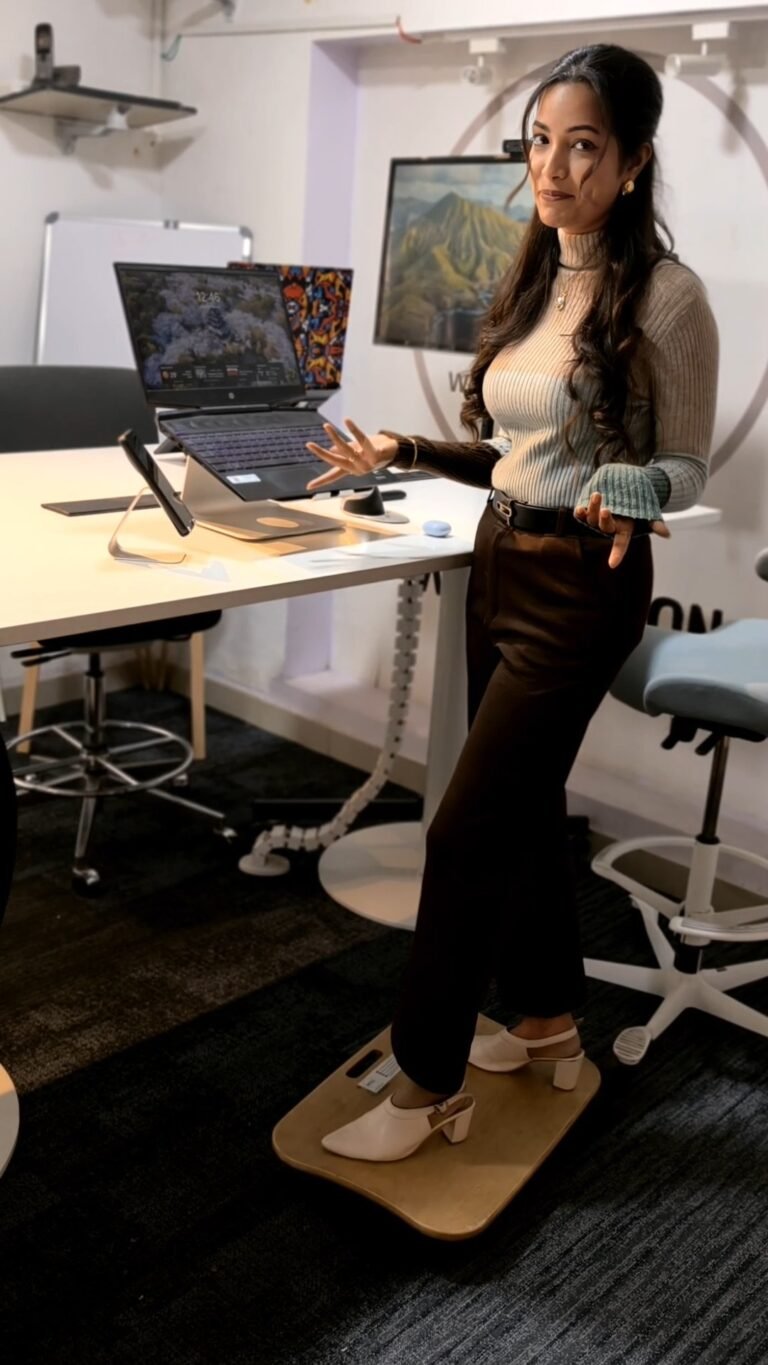
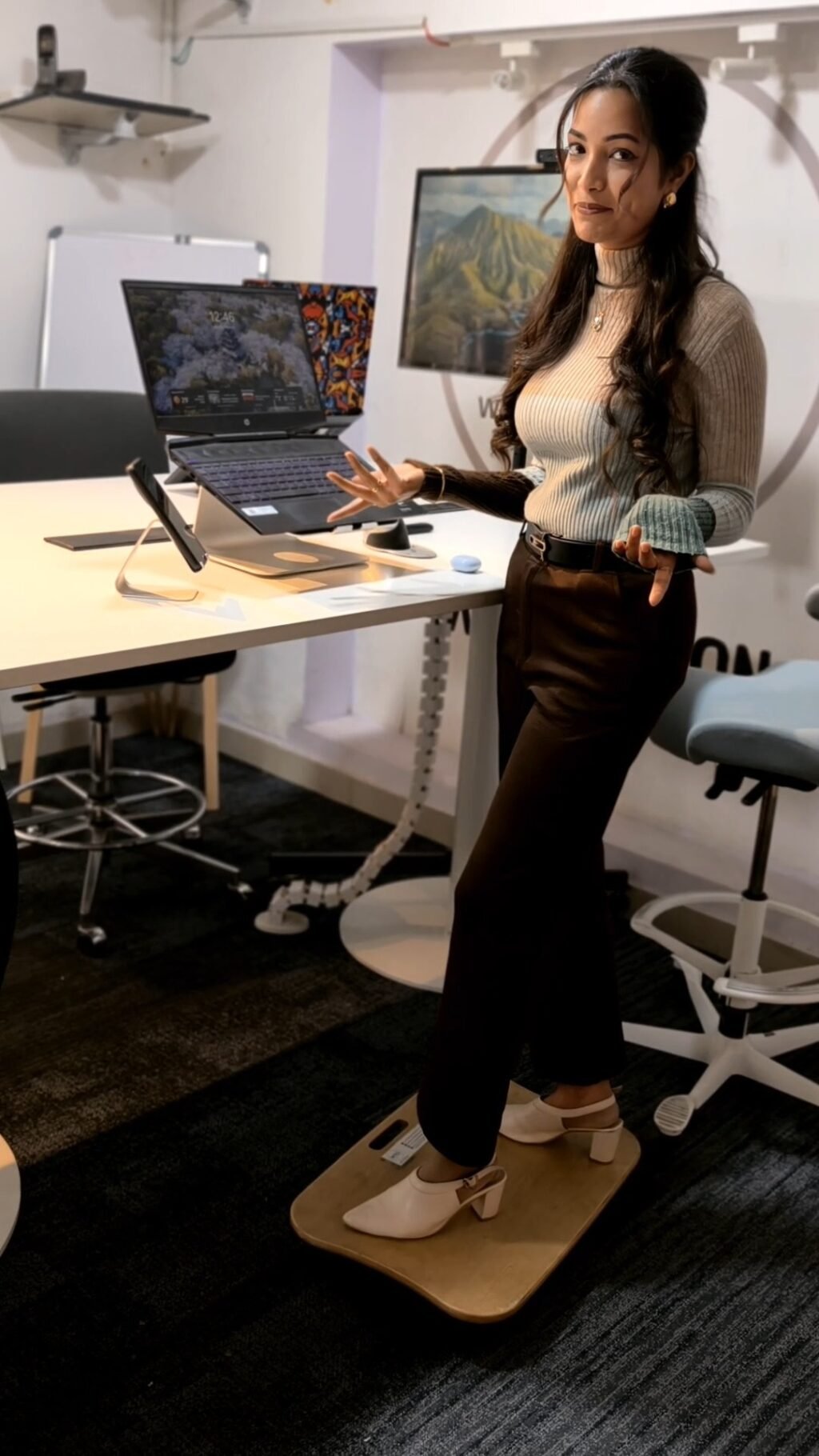
- Balance boards
- Anti fatigue mats
Each product addresses a specific physical stress point, the spine, neck, wrists, or legs, that builds up during long hours of desk work.
Why Choosing the Right Workplace Wellness Products Matters
Not all wellness products deliver equal value. Choosing thoughtfully, rather than buying whatever looks trendy, has a measurable impact on your workforce and your business.
Improves Employee Health
The right ergonomic setup encourages better posture, reduces the risk of musculoskeletal disorders, and lowers the likelihood of repetitive strain injuries in the wrists, shoulders and neck. Over time, this translates into fewer aches, fewer sick leaves and a workforce that feels physically better at the end of the day than at the start.
Increases Productivity
Comfort and concentration are closely linked. When an employee isn’t distracted by a stiff neck or an aching lower back, they can focus longer, collaborate more actively in meetings, and sustain energy through the afternoon slump, a very real issue in Indian offices running on back to back calls and minimal movement breaks.
Supports Employee Wellbeing
Wellness isn’t only physical. Employees who feel that their organization genuinely cares about their comfort report higher job satisfaction and stronger engagement. A well designed workspace signals that the company values people, not just output, something that matters greatly to India’s younger, increasingly wellbeing conscious workforce.
Reduces Long Term Business Costs
Ergonomic investment is not an expense, it’s risk management. Companies that proactively address workplace discomfort typically see lower absenteeism, fewer workplace injury claims, and better employee retention, which matters enormously given the cost of rehiring and retraining talent in competitive sectors like IT, ITES and BFSI.
Key Factors to Consider Before Choosing Workplace Wellness Products
This is where most organizations go wrong, they buy products first and think about needs later. Here’s how to reverse that.
Understand Employee Needs
Before purchasing anything, ask:
- Do most employees sit at a desk for the majority of the day?
- Are teams working in hybrid setups, splitting time between home and office?
- Are there recurring complaints about back, neck, or wrist discomfort?
- Do different roles, developers, sales teams, designers, need different workstation setups?
A quick internal survey or informal conversation with team leads can reveal far more than any product catalog.
Evaluate Your Office Layout
Your available space shapes what’s realistic. Consider:
- Total floor space and desk density
- Open-plan layouts versus private cabins
- Collaborative zones and breakout areas
- Whether a dedicated wellness corner is feasible
Prioritize Ergonomic Design
When comparing products, look for:
- Multi directional adjustability (height, tilt, depth)
- Genuine lumbar support, not just a curved backrest
- Easy height customization for desks and chairs
- Stability under regular use
- Intuitive controls that don’t require a manual to operate
Consider Employee Work Habits
Different roles need different solutions:
- Desk-based analysts and developers benefit most from ergonomic chairs and monitor arms
- Creative teams may need flexible, mobile furniture for collaboration
- Hybrid employees need lightweight, portable options like laptop stands
- Meeting heavy roles benefit from standing desks that break up long sitting stretches
Focus on Product Quality
Cheap, non adjustable furniture often costs more in the long run through replacements and employee complaints. Evaluate:
- Durability of materials (especially important with India’s varying climate and humidity)
- Relevant safety certifications
- The manufacturer’s reputation and track record
- Warranty terms and after-sales support
Essential Health Focused Workplace Products Every Office Should Consider
Ergonomic Office Chairs
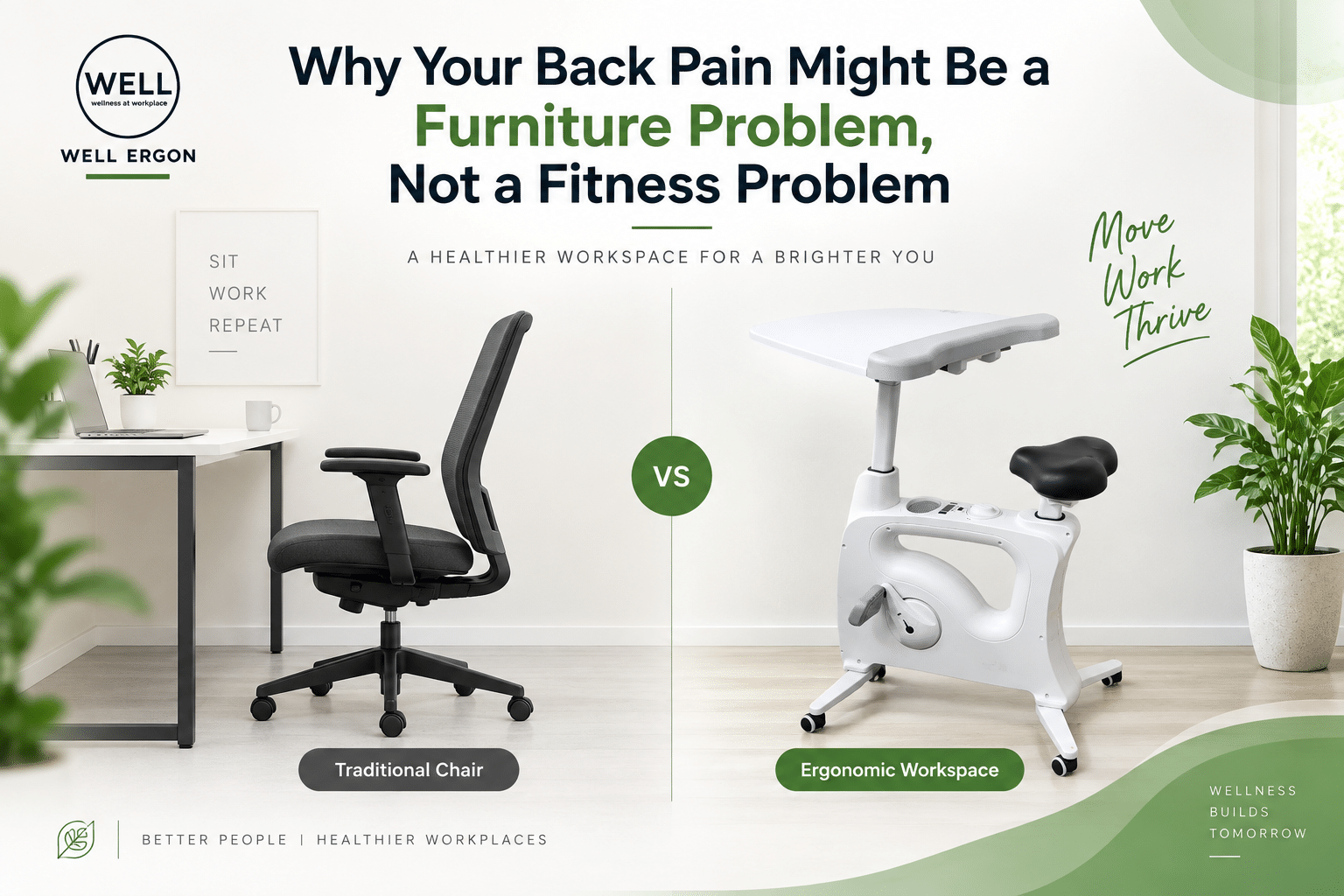
Benefits: Proper lumbar support, adjustable seat depth, and breathable materials reduce lower back strain during long sitting hours.
Best for: Any desk based employee, especially those working 6+ hours seated.
Buying tips: Prioritize adjustability (height, armrests, lumbar support) over aesthetics alone, and check weight capacity and warranty coverage.
Height Adjustable Desks
Advantages: Sit stand desks allow employees to alternate positions throughout the day, reducing prolonged sitting, a major contributor to fatigue and back pain.
Ideal users: Employees with long working hours, those with existing back issues and hybrid teams who want flexibility.
Monitor Arms
Benefits for neck posture: Positioning the screen at eye level prevents the forward head tilt that causes chronic neck and upper-back tension.
Screen positioning tips: The top of the screen should sit at or just below eye level, roughly an arm’s length away.
Laptop Stands
Why they reduce neck strain: Laptops force users to look down, straining the neck over time. A stand raises the screen to a healthier viewing angle when paired with an external keyboard.
Keyboard Trays
Proper wrist alignment: A keyboard tray keeps wrists in a neutral position, reducing strain that can lead to repetitive strain injuries like carpal tunnel syndrome.
Footrests
Improved circulation and comfort: For employees whose feet don’t rest flat on the floor, footrests support proper leg positioning and reduce pressure on the lower back and thighs.
Under Desk Bikes
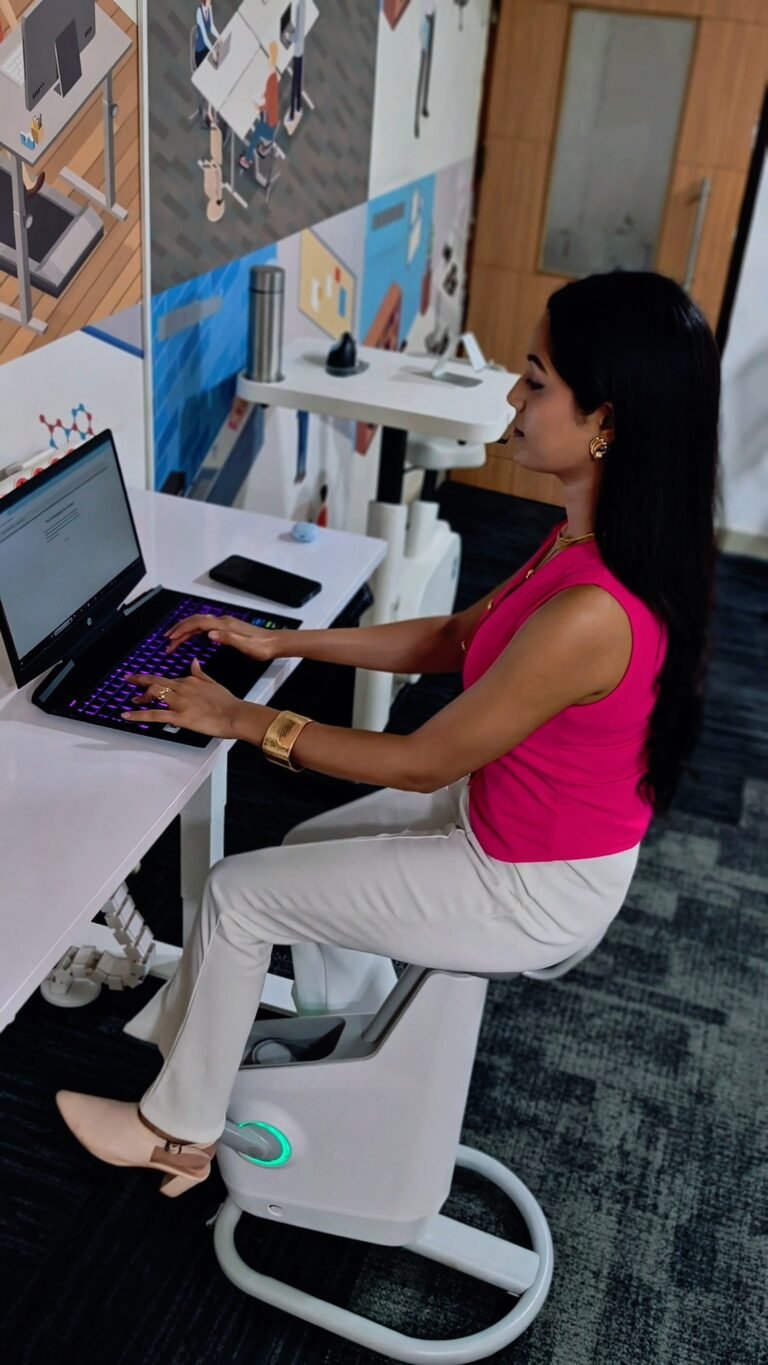
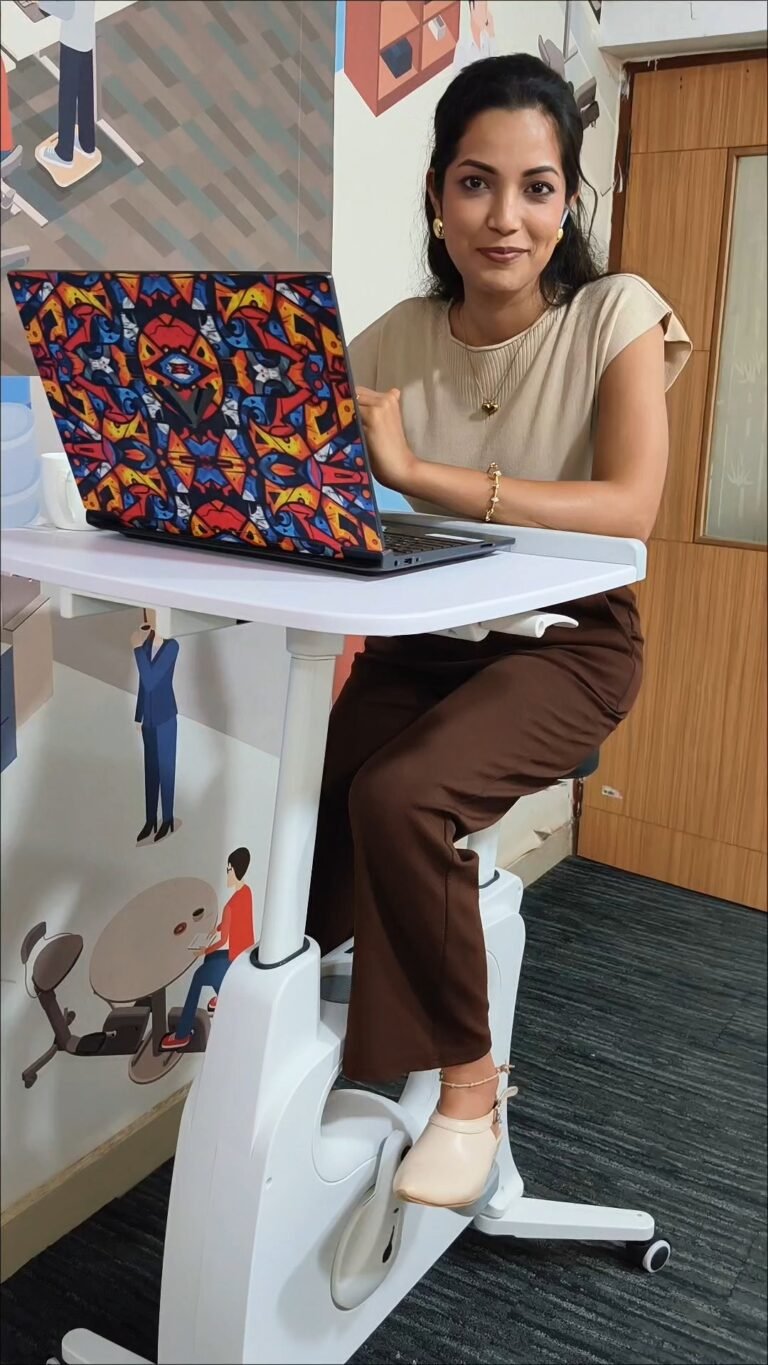
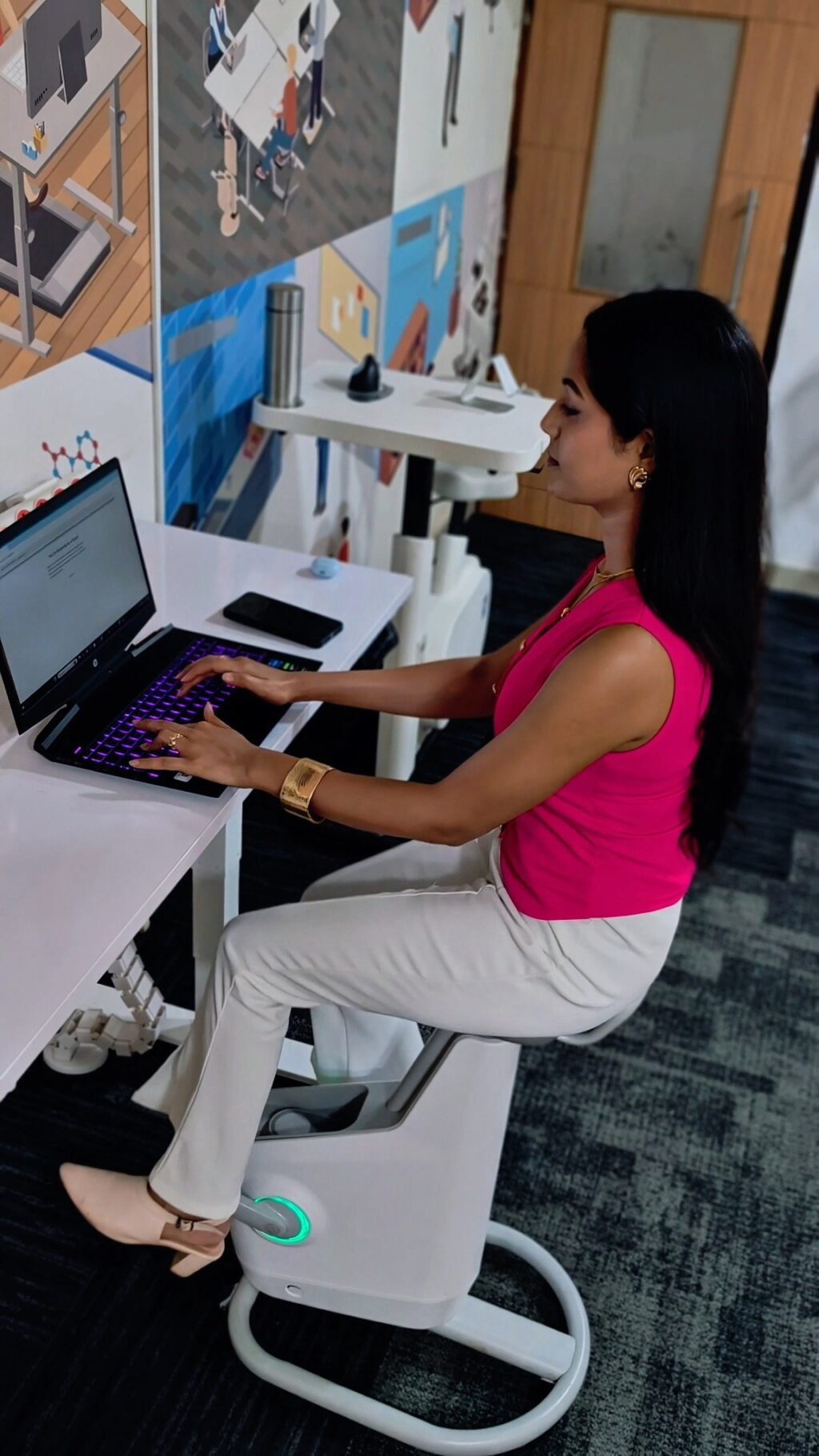
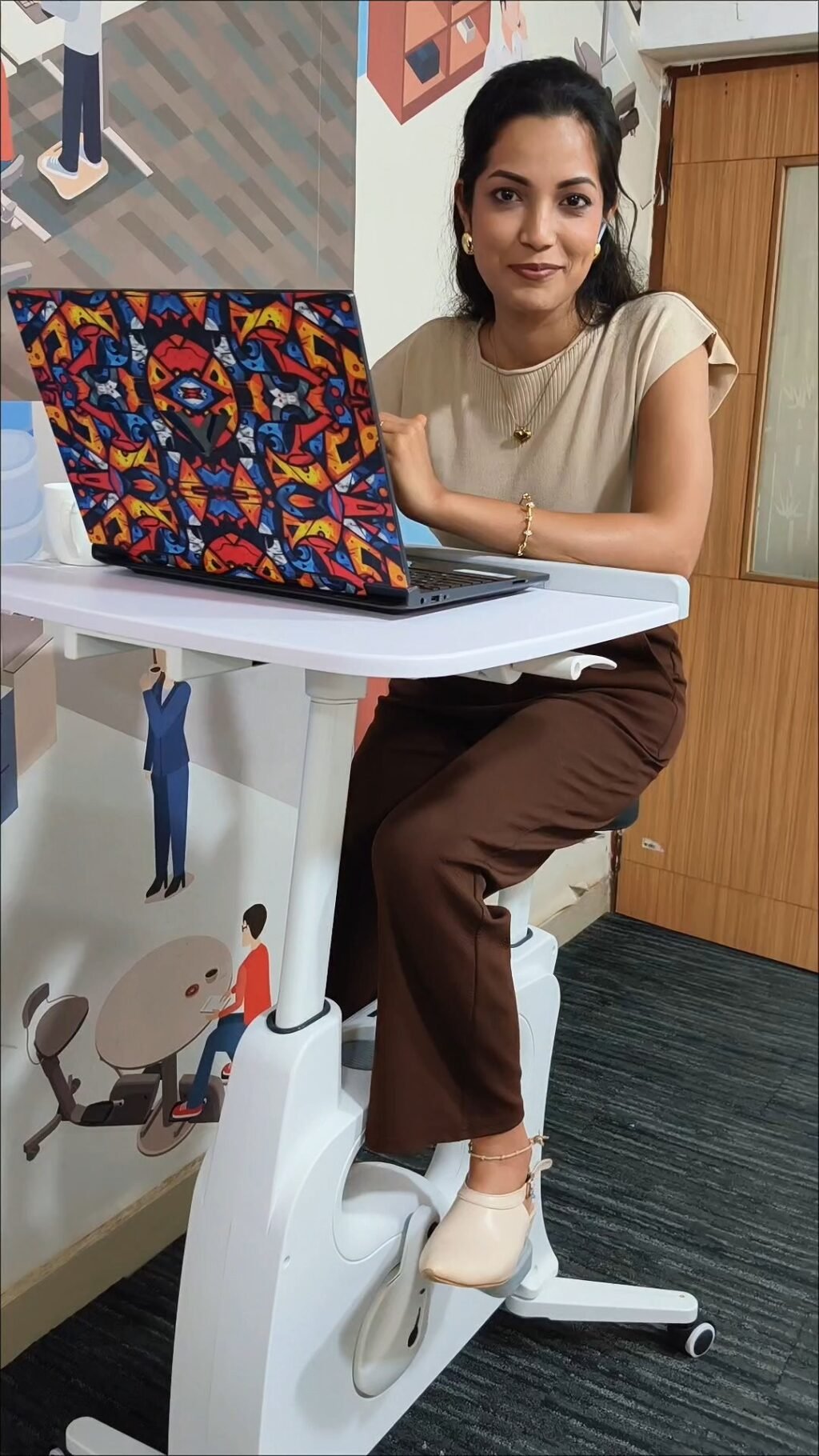
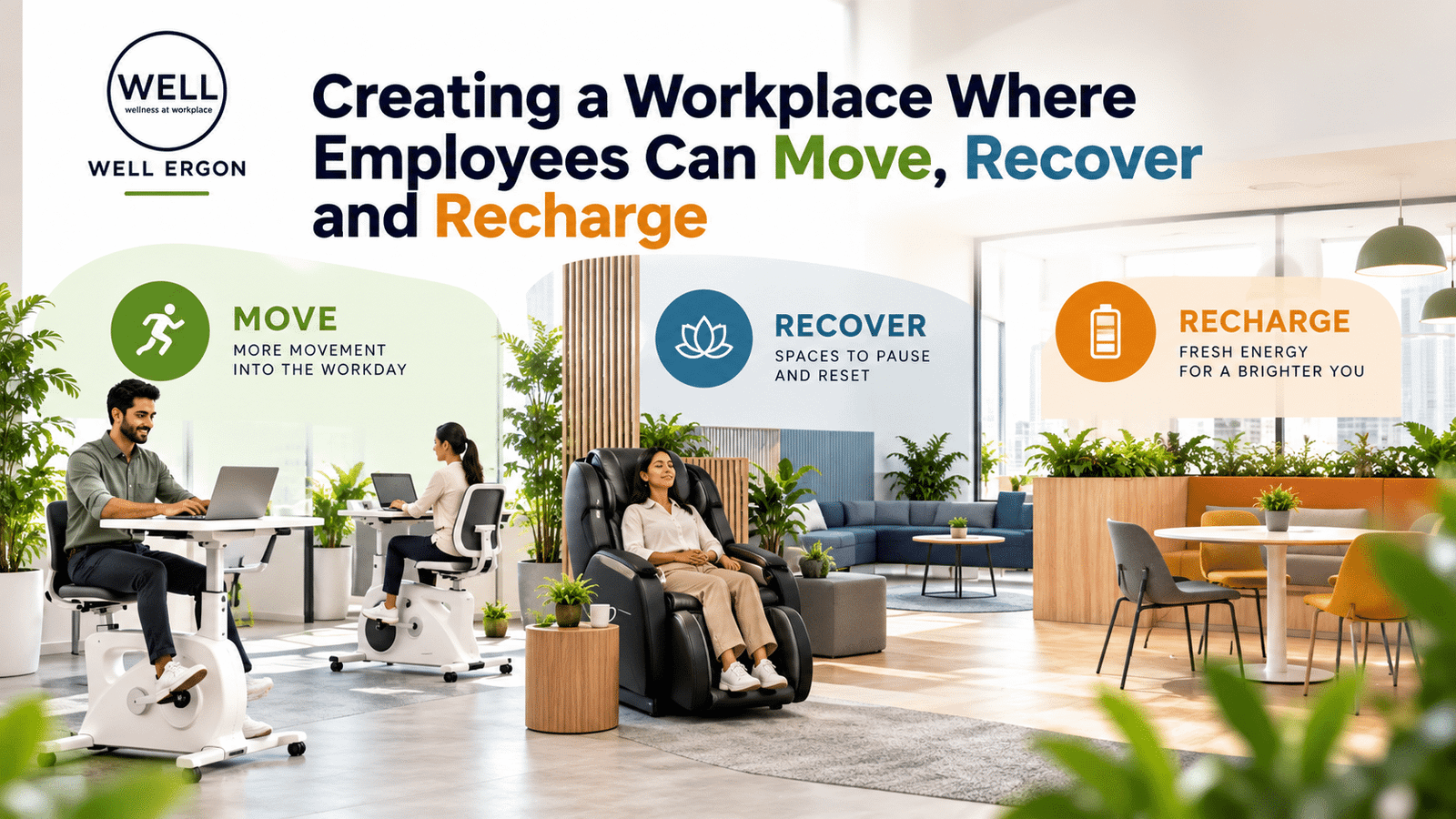
Encourages movement, reduces sedentary time, supports workplace wellness: These compact pedal devices let employees stay active during calls or reading tasks without leaving their desks, a practical solution for space constrained Indian offices.
Walk Stations
Active working, ideal for long computer hours: Treadmill style desks let employees walk at a slow pace while working, combining light physical activity with regular tasks. Best suited for wellness zones rather than every desk.
Fitness Balls & Active Seating
Core engagement, posture awareness, suitable usage duration: Used in moderation (typically 20-30 minutes at a stretch), these encourage core engagement and active sitting, making them a good complement to, not a replacement for, a proper ergonomic chair.
Common Mistakes to Avoid When Buying Workplace Wellness Products
- Buying based only on price, without evaluating durability or adjustability
- Ignoring employee feedback before finalizing purchases
- Choosing non adjustable furniture that doesn’t suit different body types
- Not considering workspace dimensions before ordering bulky items
- Skipping ergonomic assessments for high risk roles
- Buying trendy products (like standing desks for everyone) without evaluating whether they suit actual business needs
How to Build a Health Focused Workplace Product Strategy
- Assess your current workplace: audit existing furniture, layout, and known pain points.
- Identify health challenges: gather feedback on recurring discomfort or injury patterns.
- Prioritize essential products: start with high-impact items like ergonomic chairs before expanding to specialty products.
- Create a phased implementation plan: roll out changes department by department or floor by floor to manage budget and disruption.
- Train employees: teach correct desk setup, posture, and how to use adjustable furniture properly; even the best chair fails if it’s never adjusted.
- Monitor employee feedback: use short pulse surveys after rollout to catch issues early.
- Review effectiveness regularly: reassess needs annually or when team structures change significantly.
How Health Focused Products Improve Workplace Productivity
The connection between ergonomics and output isn’t just intuitive, it’s well documented. Occupational health researchers have repeatedly linked poor workstation design to increased fatigue, reduced concentration, and higher rates of musculoskeletal complaints, all of which chip away at productivity over time.
When organizations invest in the right products, the effects typically show up as:
- Reduced physical fatigue by end of day
- Improved concentration during long work sessions
- Better employee engagement in meetings and collaborative work
- Fewer sick days related to back, neck, or wrist issues
- Higher overall morale
- Increased collaboration, particularly in open and hybrid workspaces
For India’s fast-growing knowledge economy, spanning IT services, GCCs, BPOs, and startups, these gains compound quickly across large teams.
Why Businesses Are Investing in Workplace Wellness Products
Several converging trends are driving this shift across Indian corporates:
- Hybrid work has made employees more conscious of comfort, since many now compare their well-equipped home setups to the office
- Employee experience has become a competitive differentiator in hiring, not just compensation
- Corporate wellness programs are expanding beyond gym memberships to cover everyday workstation ergonomics
- ESG and workplace wellbeing initiatives are increasingly part of corporate reporting and employer branding
- Talent retention pressures, especially in IT and services, push companies to invest in tangible quality-of-life improvements
- Modern office design trends favor flexible, human centered layouts over rigid cubicle formats
Why Choose WellErgon for Workplace Wellness Solutions?
Selecting the right products is only half the challenge, implementing them well is the other half. This is where a knowledgeable partner makes a real difference.
WellErgon works with organizations to build comprehensive workplace wellness solutions rather than offering one-off products. Its approach centers on:
- Ergonomically designed products engineered around real postural and movement needs, not just aesthetics
- Solutions built for modern offices, including hybrid and space-constrained environments common across Indian workplaces
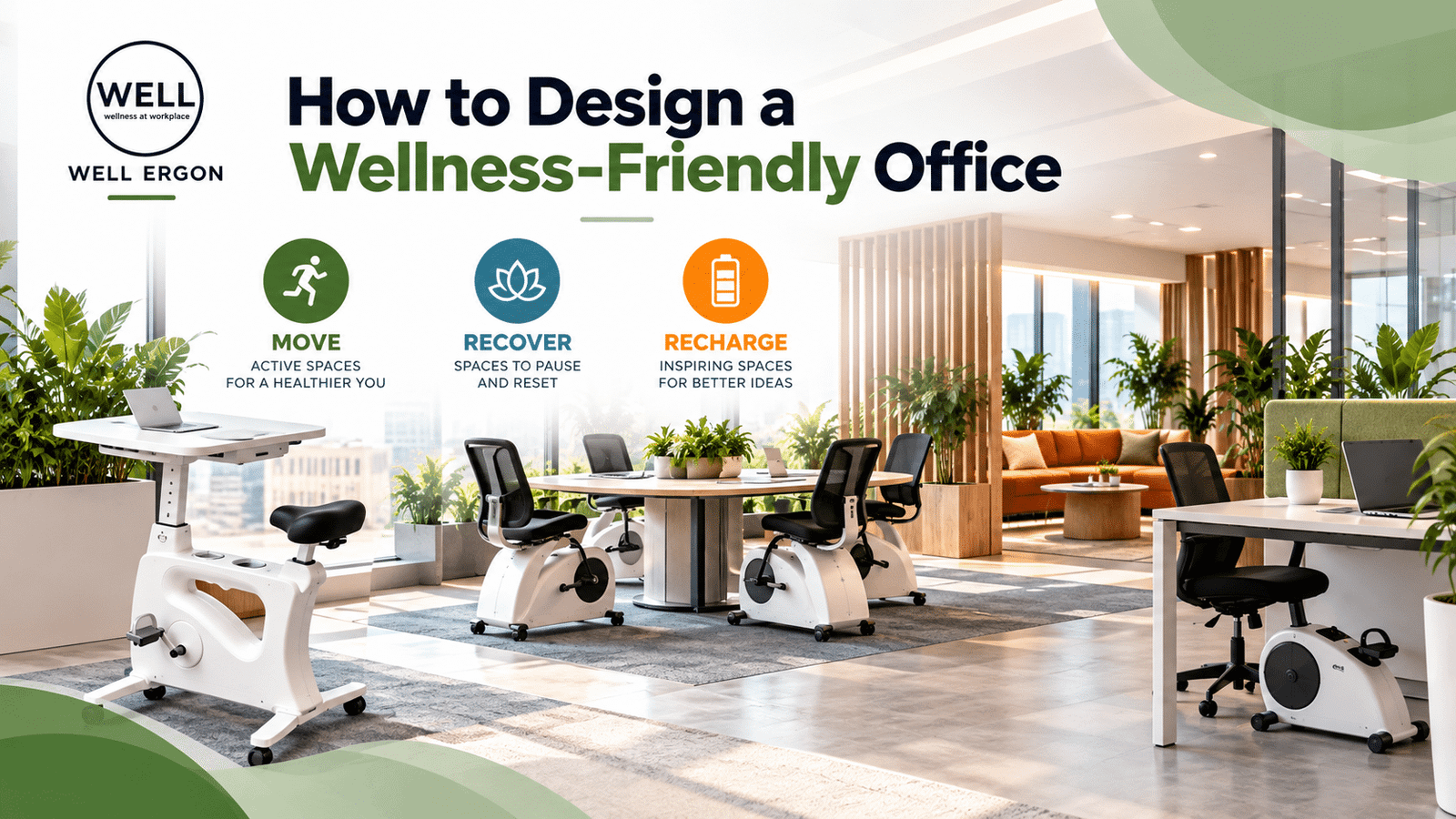
- Active workspace concepts, such as under-desk bikes and sit-stand solutions, that encourage movement throughout the day
- Expert guidance to help HR teams and facility managers assess needs, prioritize investments, and phase implementation sensibly
- Products designed to support both employee wellbeing and measurable productivity outcomes, rather than wellness as a standalone gesture
Rather than pushing a one size fits all catalog, WellErgon focuses on helping organizations match the right products to their specific workforce, layout and long term goals, the same evaluation framework outlined throughout this guide.
Conclusion
Choosing the right workplace wellness products is ultimately an investment in employee health and business success, not just an office upgrade. The best solutions aren’t the most expensive or the most talked-about; they’re the ones that genuinely match your workforce’s needs, your office layout, and your organization’s long-term wellbeing goals.
A healthier workplace starts with smarter choices. Explore WellErgon’s range of ergonomic and workplace wellness solutions to create an office where employees feel comfortable, productive, and supported every day.
Frequently Asked Questions
What are health focused workplace products?
They are furniture and equipment, such as ergonomic chairs, sit-stand desks, and monitor arms, designed to improve posture, reduce physical strain, and support employee comfort and movement throughout the workday.
Why are ergonomic products important in offices?
Ergonomic products reduce the risk of musculoskeletal disorders and repetitive strain injuries caused by prolonged sitting or poor posture. They also improve comfort, which supports sustained focus and higher productivity.
Which workplace wellness products should every office have?
At minimum, offices should provide ergonomic chairs, adjustable desks, and monitor arms. These address the most common pain points, lower back strain and neck tension, affecting the majority of desk based employees.
How do ergonomic products improve productivity?
By reducing physical discomfort and fatigue, ergonomic products help employees maintain focus for longer periods, reduce distraction from pain, and sustain energy through the workday, directly supporting better output.
Are workplace wellness products worth the investment?
Yes. While there’s an upfront cost, the long-term savings from reduced absenteeism, fewer injury related claims and improved retention typically outweigh the initial investment, especially for organizations with large desk-based teams.
What is the best ergonomic product for employees who sit all day?
An ergonomic chair with proper lumbar support is the highest-priority product, since it directly supports the spine during extended sitting. Pairing it with a height adjustable desk further reduces prolonged static posture.
How do I choose ergonomic office furniture?
Look for adjustability, proper lumbar and wrist support, durable materials, and manufacturer warranties. Match products to actual employee needs and work habits rather than choosing based on appearance alone.
Can workplace wellness products reduce back and neck pain?
Yes. Products like ergonomic chairs, monitor arms, and laptop stands are specifically designed to correct posture and screen positioning, both of which are major contributors to chronic back and neck discomfort in desk-based work.