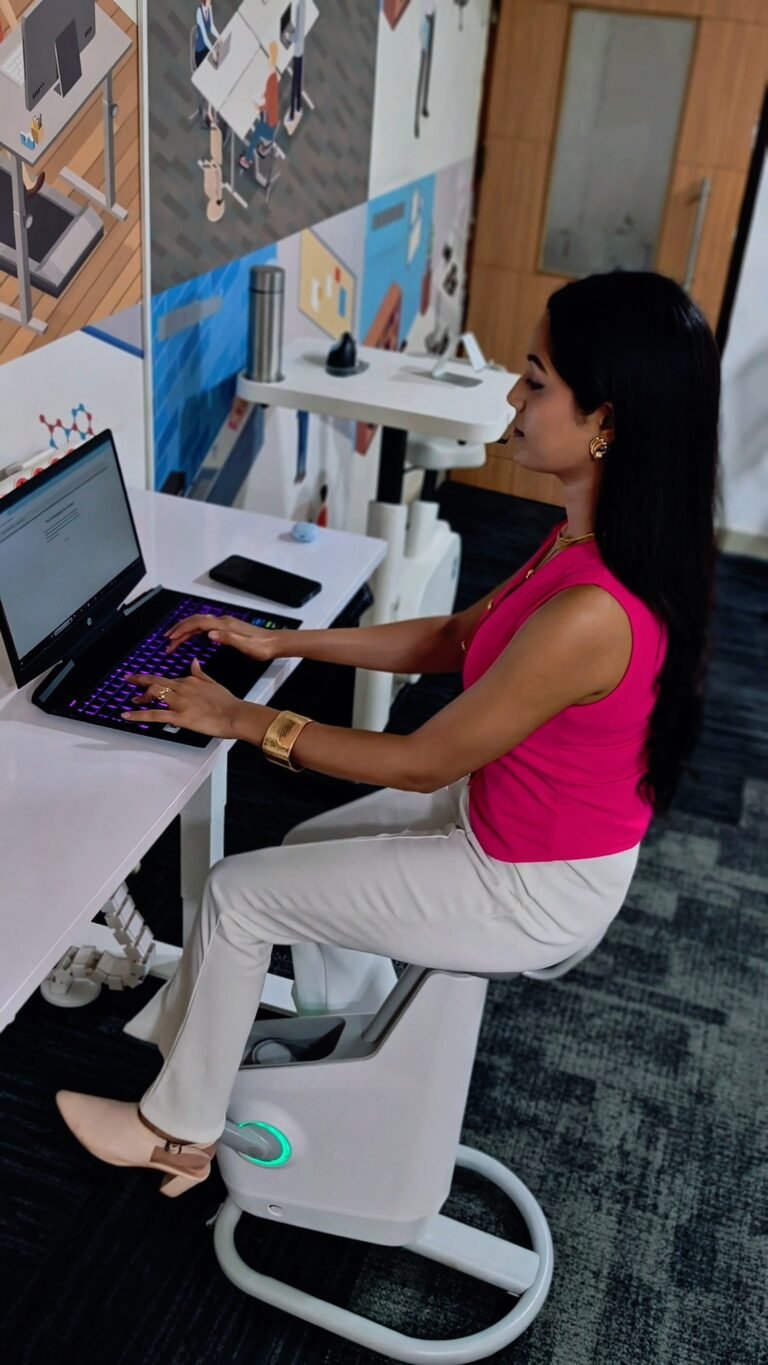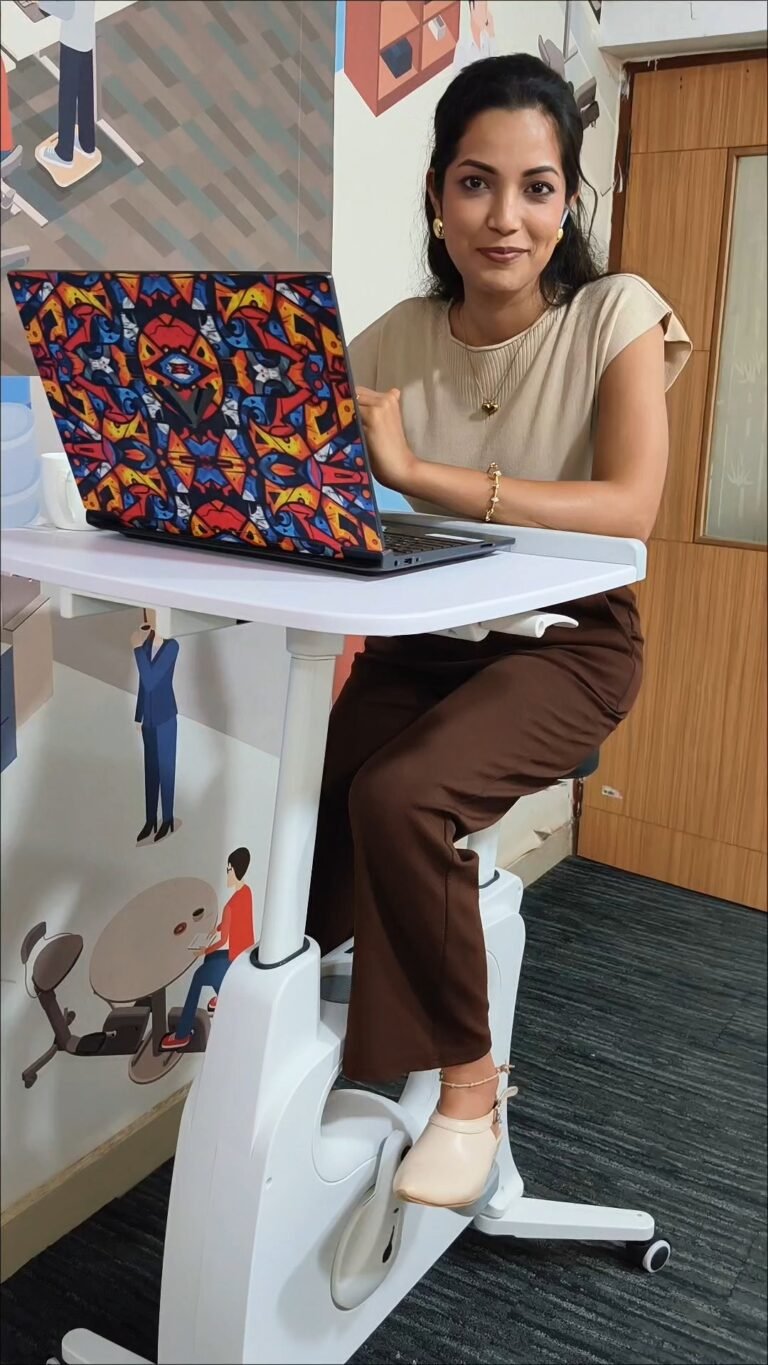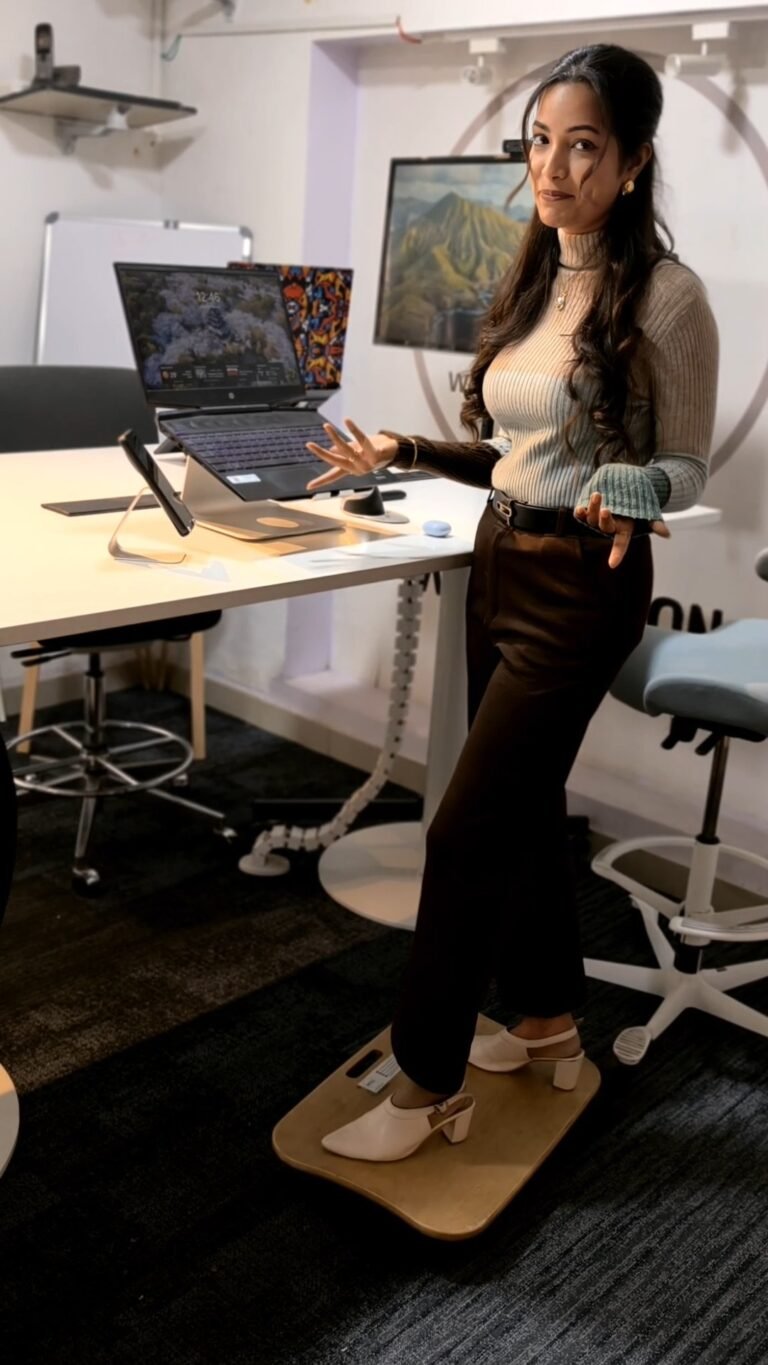
What are WELL Certification Movement Solutions?
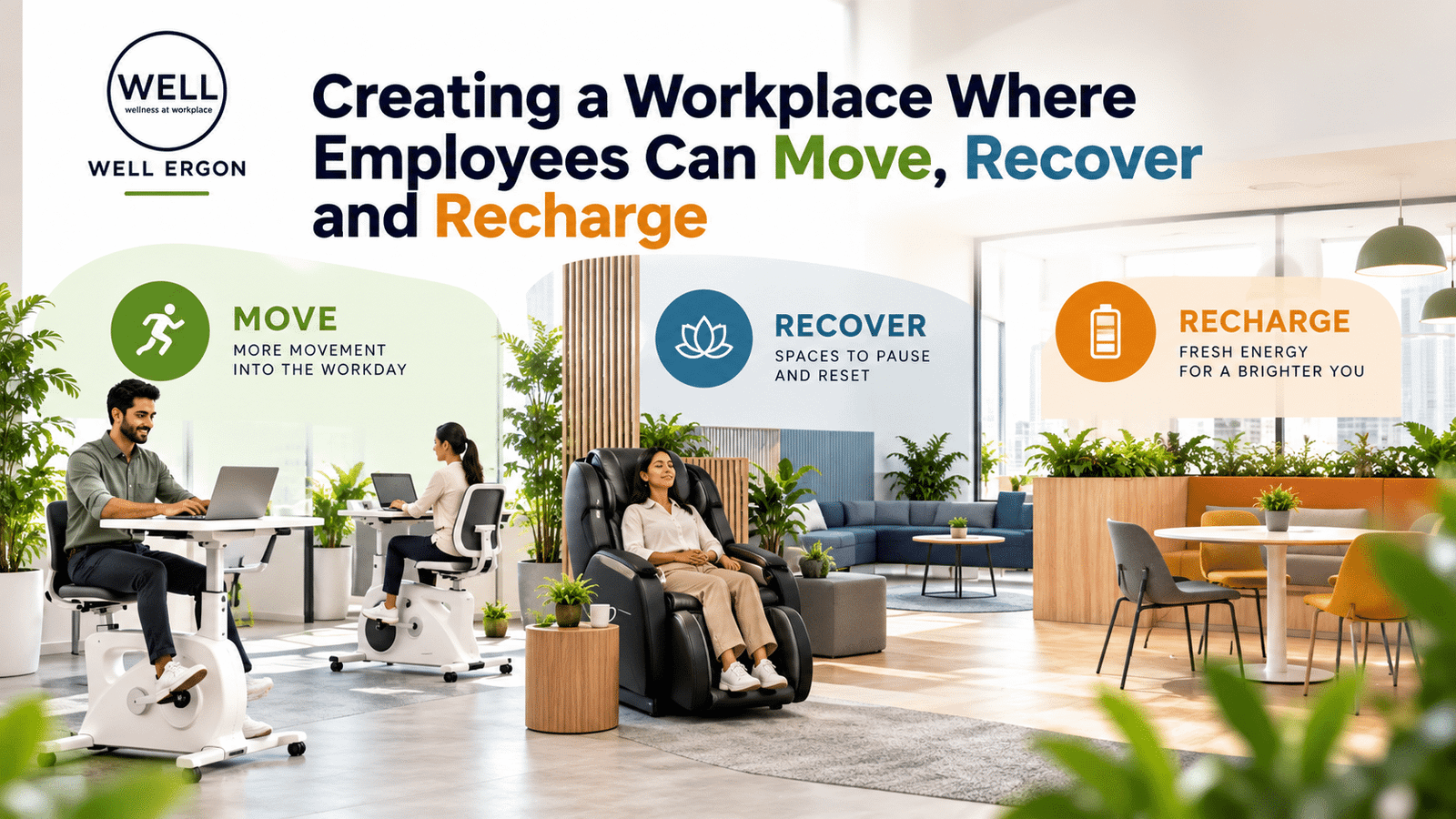
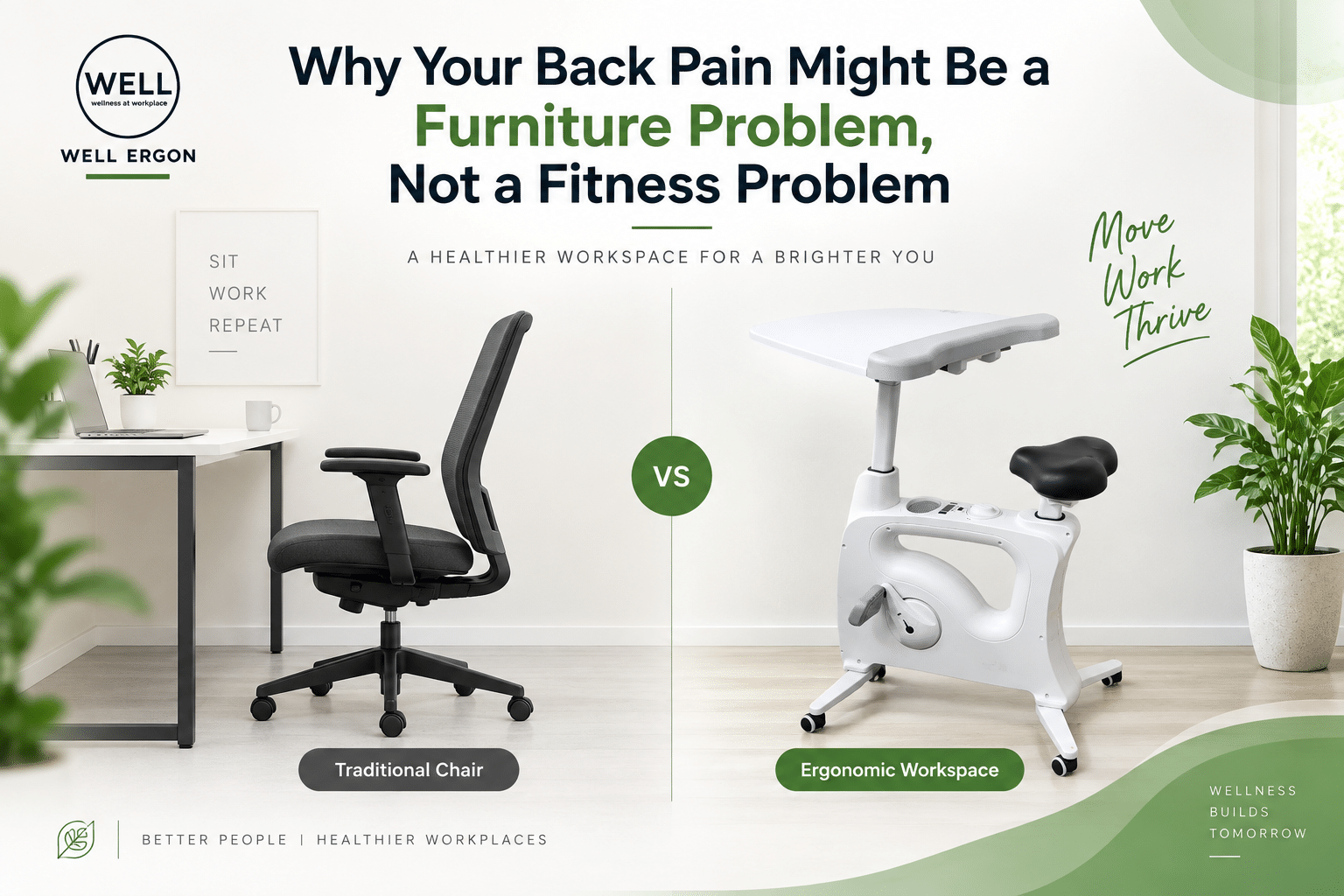
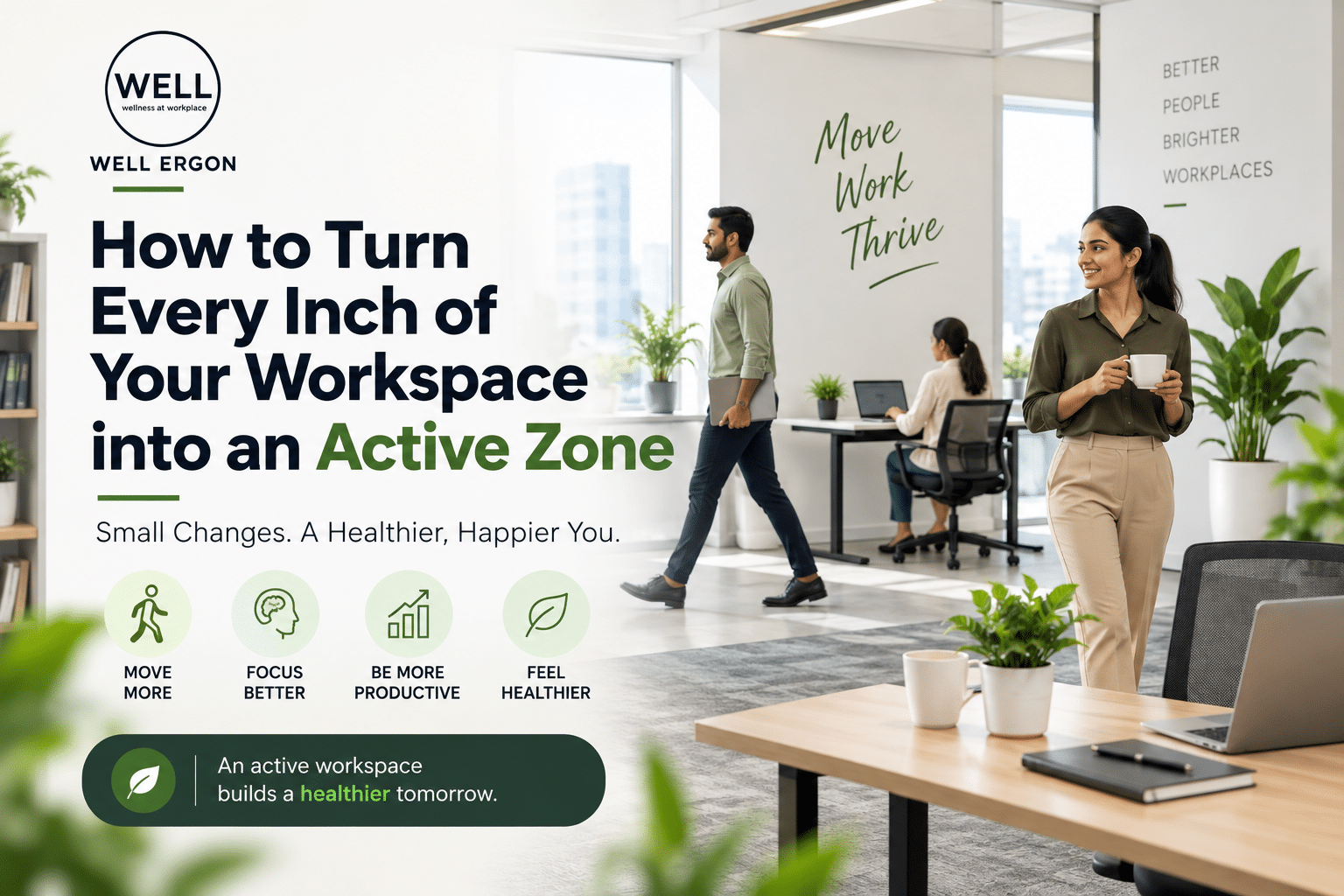
WELL Certification Movement Solutions are workplace design strategies, ergonomic furniture, active workstations and wellness initiatives that encourage employees to move more throughout the workday. Under the WELL Building Standard’s Movement Concept, organizations can improve employee health, reduce sedentary behavior, increase productivity and support WELL Certification goals through sit stand desks, ergonomic workstations, walking spaces and active workplace design.
Introduction
In recent years, the conversation inside Indian boardrooms has shifted dramatically. While financial targets, technological scaling and business continuity remain paramount, there is a rapidly growing realization that a company’s strongest asset is its workforce’s physical and mental well being. Historically, corporate office spaces in major Indian metropolitan areas like Bengaluru, Gurugram, Mumbai, Hyderabad and Pune focused primarily on maximizing spatial efficiency and density. Today, the focus is squarely on workplace wellness.
This shift is heavily driven by the rise of Global Capability Centers (GCCs), multinational corporations and progressive Indian enterprises establishing world-class commercial spaces. These organizations are choosing premium commercial real estate that features third-party verifications of health and safety. Consequently, India has become one of the fastest growing markets for WELL certified offices.
Employee health is no longer just an HR checkbox or an insurance benefit; it has elevated to a core boardroom discussion. Post pandemic health awareness, combined with an epidemic of sedentary lifestyle diseases among young Indian professionals, has forced businesses to recognize the direct link between physical health and long-term business performance.
This is where the WELL Building Standard, specifically its Movement Concept, comes into play. Administered by the International WELL Building Institute (IWBI), WELL is a performance based system that measures, certifies and monitors features of the built environment that impact human health and well being. The Movement Concept specifically addresses the physical inactivity crisis by providing guidelines for designing active spaces, incorporating ergonomic furniture and establishing a culture of healthy physical movement.
By transforming stagnant corporate environments into movement friendly spaces, businesses in India are reporting remarkable improvements in employee productivity, mental alertness and overall talent satisfaction.
Key Takeaway
Movement is no longer optional. It is a core component of modern workplace design and WELL Certification. Integrating active design and ergonomic furniture is a strategic business decision that pays dividends in employee health, retention and performance.
What Is WELL Certification?
WELL Certification is a globally recognized building certification system that focuses on human health, well being and workplace performance. Unlike traditional building certifications that focus solely on environmental impact, WELL is centered entirely on the people inside the building.
Understanding the WELL Building Standard
Developed over seven years of rigorous scientific, medical, and architectural research, the WELL Building Standard was launched by the International WELL Building Institute (IWBI). Its primary goal is to improve human health and well being through the built environment.
While popular standards like LEED (Leadership in Energy and Environmental Design) evaluate how a building treats the planet (measuring energy efficiency, water conservation, and sustainable materials), WELL evaluates how a building treats its occupants. It is entirely possible and increasingly common, for premium Indian corporate offices to pursue both LEED and WELL certifications simultaneously to achieve a holistic standard of sustainability and human wellness.
Why WELL Certification Matters
Achieving WELL Certification is an explicit commitment to people-first design. The benefits span across several critical parameters of business operations:
Employee Health & Wellness: Systematically reduces exposure to harmful environmental factors, lowers stress levels and encourages physical vitality.
Talent Attraction and Retention: In India’s highly competitive white collar job market (especially in IT and finance), a state of the art, certified healthy workplace serves as a powerful recruitment tool.
ESG (Environmental, Social and Governance) Goals: WELL alignment directly supports the Social aspect of ESG frameworks, demonstrating to investors and stakeholders that the company prioritizes human capital.
Growth of WELL Certification in India
The demand for WELL certified buildings in India has surged, led primarily by the expansion of Global Capability Centers (GCCs), modern IT parks (such as those managed by Embassy, Mindspace and DLF) and premium corporate headquarters in major cities. With overseas parent companies mandating global wellness standards for their Indian offices, real estate developers and tenant organizations are investing heavily in WELL aligned designs to command premium valuations and ensure operational excellence.
Understanding the WELL Movement Concept
The WELL Movement Concept encourages physical activity throughout the workday by creating environments that reduce sedentary behavior and support healthy movement.
Objectives of the Movement Concept
The modern office environment is notoriously sedentary. The core objectives of the Movement Concept are to:
Reduce sitting time by offering dynamic workspace configurations.
Increase daily activity through architectural design that naturally encourages movement.
Promote ergonomic work habits that prevent physical strain and musculoskeletal stress.
Encourage an active workplace culture where movement during work is normalized and celebrated.
Why Movement Is a Core WELL Requirement
Humans are built to move. Prolonged static postures, whether standing or sitting, are highly detrimental to human physiology. Sitting for hours without interruption slows the metabolism, impairs blood sugar regulation and reduces circulation to vital organs and muscles. By embedding movement into the physical infrastructure of the office, companies can prevent these micro level physiological declines before they manifest as chronic health issues.
Key Features Under WELL Movement
The WELL Building Standard evaluates several actionable features to award points toward certification. The table below highlights how key wellness goals translate directly to real world, WELL aligned solutions:
WELL Movement Goal | Workplace Solution |
|---|---|
Reduce Sitting | Sit-Stand Desks & Height Adjustable Workstations |
Improve Ergonomics | Fully Adjustable Task Chairs, Monitor Arms, and Accessories |
Encourage Activity | Active Furnishings (Desk Bikes, Walk Stations, Balance Boards) |
Promote Collaboration | Shared Active Spaces & Standing Meeting Areas |
Increase Mobility | Walking Routes, Clear Signage, and Accessible Common Areas |
Why Workplace Movement Matters More Than Ever
The Sedentary Office Epidemic
The corporate lifestyle in urban India has become highly sedentary. The average Indian office worker spends between 10 hours sitting every single day. This issue has been compounded by remote and hybrid work trends, where home office setups are frequently sub par, leading to even fewer transitions between spaces, lack of commutes and prolonged periods of static, unergonomic seating.
Health Risks of Prolonged Sitting
A body kept static for too long faces severe physical degradation, commonly leading to:
Musculoskeletal Disorders (MSDs): Chronic lower back pain, neck stiffness, shoulder strain and repetitive strain injuries (RSIs).
Cardiovascular and Metabolic Risks: Increased risk of deep vein thrombosis, obesity, type 2 diabetes and cardiovascular diseases.
Mental Fatigue: Reduced oxygen flow to the brain, causing sluggishness, brain fog and higher stress susceptibility.
Business Impact
The physical decline of employees directly correlates to negative business outcomes:
Lower Productivity: Fatigued, uncomfortable employees work more slowly and make more errors.
Higher Absenteeism: Musculoskeletal pain is one of the leading causes of sick leave among corporate employees in India.
Employee Disengagement: Working in constant physical discomfort leads to lower morale and higher employee turnover.
Increased Healthcare Costs: Rising corporate health insurance premiums and medical claims related to ergonomic ailments strain company budgets.
Key WELL Certification Movement Requirements
To secure WELL Certification points, organizations must design and provide physical environments that actively promote movement and curb sedentary patterns.
                                 ┌─────────────────────────┐
                                 │  Active Office Design   │
                                 └────────────┬────────────┘
                                              │
                      ┌───────────────────────┼───────────────────────┐
                      ▼                       ▼                       ▼
          ┌───────────────────────┐   ┌───────────────┐   ┌───────────────────────┐
          │ Ergonomic Workstations│   │ Active Spaces │   │ Cultivating Culture   │
          └───────────┬───────────┘   └───────┬───────┘   └───────────┬───────────┘
                      │                       │                       │
     ┌────────────────┴──────────────┐        │        ┌──────────────┴──────────────┐
     ▼                               ▼        ▼        ▼                             ▼
Sit-Stand Desks             Task Chairs  Stairs/Paths Activity Challenges     Wellness Policies
Ergonomic Workstation Design
WELL requires workspaces to offer comprehensive physical support. This involves deploying workstations that allow users to customize their physical orientation. Key requirements dictate that furniture must be adjustable to accommodate varying body types and physical preferences.
Sit Stand Workstations
An essential element of the WELL Movement concept is providing height adjustable desks. This ensures that employees have the freedom to alternate between sitting and standing seamlessly without interrupting their workflow. WELL guidelines reward workplaces that offer a high percentage of adjustable desks to their employee base.
Active Furnishings
Beyond sit stand desks, integrating active furnishings can drastically cut down on sedentary time. Examples include:
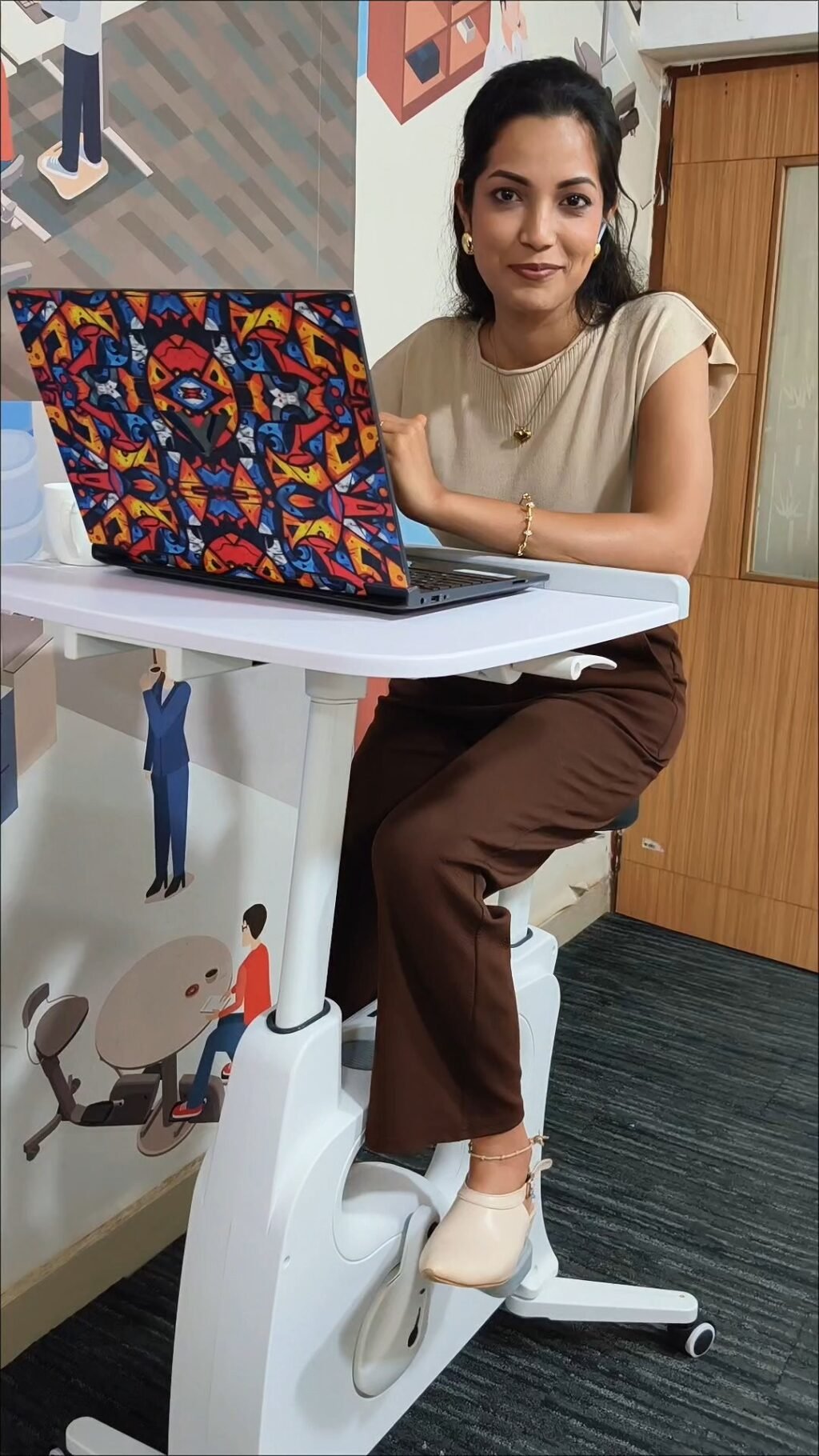
Desk Exercise Bikes: Silent, pedal assisted stations that allow for low intensity cycling while checking emails.
Balance Balls and Active Chairs: Seating that engages core muscles and encourages micro movements throughout the day.
Walking Friendly Workplace Layouts
Office floor plans should be intentionally mapped out to make walking natural and desirable. This includes placing shared resources (such as printers, water dispensers, and cafeterias) in locations that require employees to take short, frequent walks throughout the day.
Stair Accessibility and Promotion
Instead of hiding staircases behind heavy, dark fire doors, active offices feature highly visible, well lit and artistically designed stairwells. Clear, motivational signage is used to encourage employees to choose the stairs over elevators for short floor transitions.
Physical Activity Opportunities
WELL aligned offices provide designated areas for physical fitness. This can take the form of on site gym facilities, dedicated yoga or stretching zones, or structured indoor/outdoor walking loops.
Employee Wellness Programs
Built infrastructure must be reinforced with cultural initiatives. Organizations are encouraged to run structured physical activity challenges, establish standing meeting protocols, and sponsor fitness-oriented employee resource groups.
How WELL Movement Solutions Align with Ergonomic Furniture and Workplace Wellness Initiatives
Ergonomic furniture and active workplace solutions are among the highly effective and direct methods to satisfy the WELL Movement concept requirements.
Sit Stand Desks and WELL Certification
Implementing sit stand desks directly supports the core objective of reducing prolonged sitting.
Reduced Sitting Time: Moving to a standing position for just 30 minutes every hour keeps the metabolic rate active.
Improved Posture: Standing naturally aligns the spine and reduces the tendency to slouch, relieving stress on the lower back.
Increased Energy: Standing increases blood flow and oxygenation, leading to higher levels of alertness and cognitive function.
Ergonomic Workstations and WELL Goals
A truly ergonomic workstation is highly adjustable and tailored to the individual. To meet WELL criteria, workstations should be equipped with:
Adjustable Desks: Motorized or manual sit stand functionality.
Ergonomic Chairs: Deep lower back lumbar support, adjustable armrests, seat depth adjustments and dynamic recline mechanisms.
Monitor Arms: Fully articulating arms that allow monitors to be positioned at eye level, completely eliminating neck strain.
Footrests: Providing ergonomic relief and support for shorter individuals to maintain a correct sitting posture.
Active Workstations
Active workstations represent the peak of modern health focused design, allowing productive computer work to be combined with light exercise.
Desk Exercise Bikes: Placed in collaborative areas or hot-desking zones, these allow employees to pedal casually during virtual training sessions or long calls.
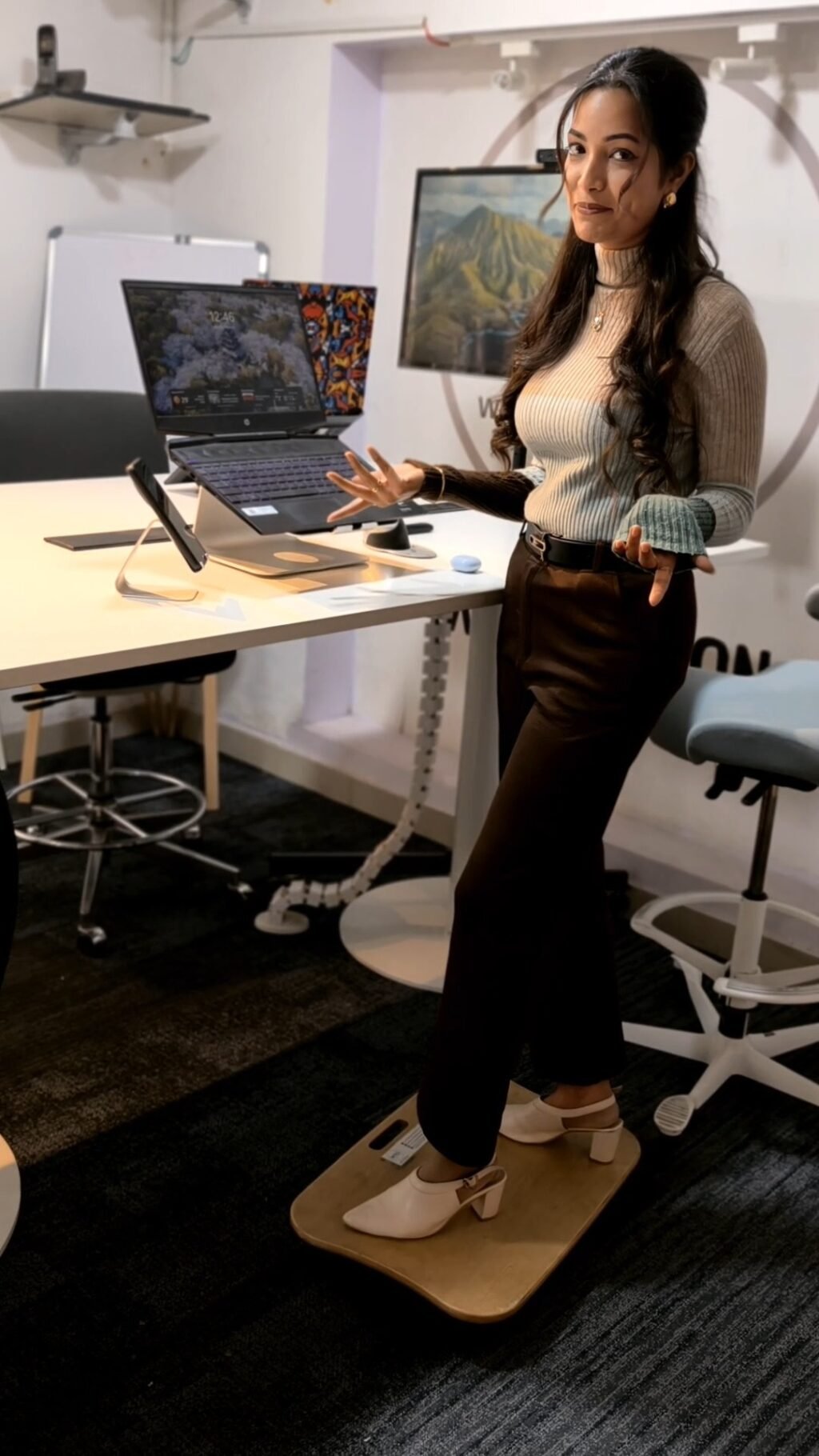
Walk Stations & Treadmill Desks: Slow-speed treadmills integrated with standing desks that enable employees to log daily steps while keeping up with light tasks.
Employee Wellness Programs
Ergonomic furniture acts as the tool, wellness programs act as the motivation. Linking furniture with company challenges (such as Most Active Standing Hour of the Week or group Treadmill Walk and Talks) ensures high utilization of these wellness assets.
Active Workplace Design
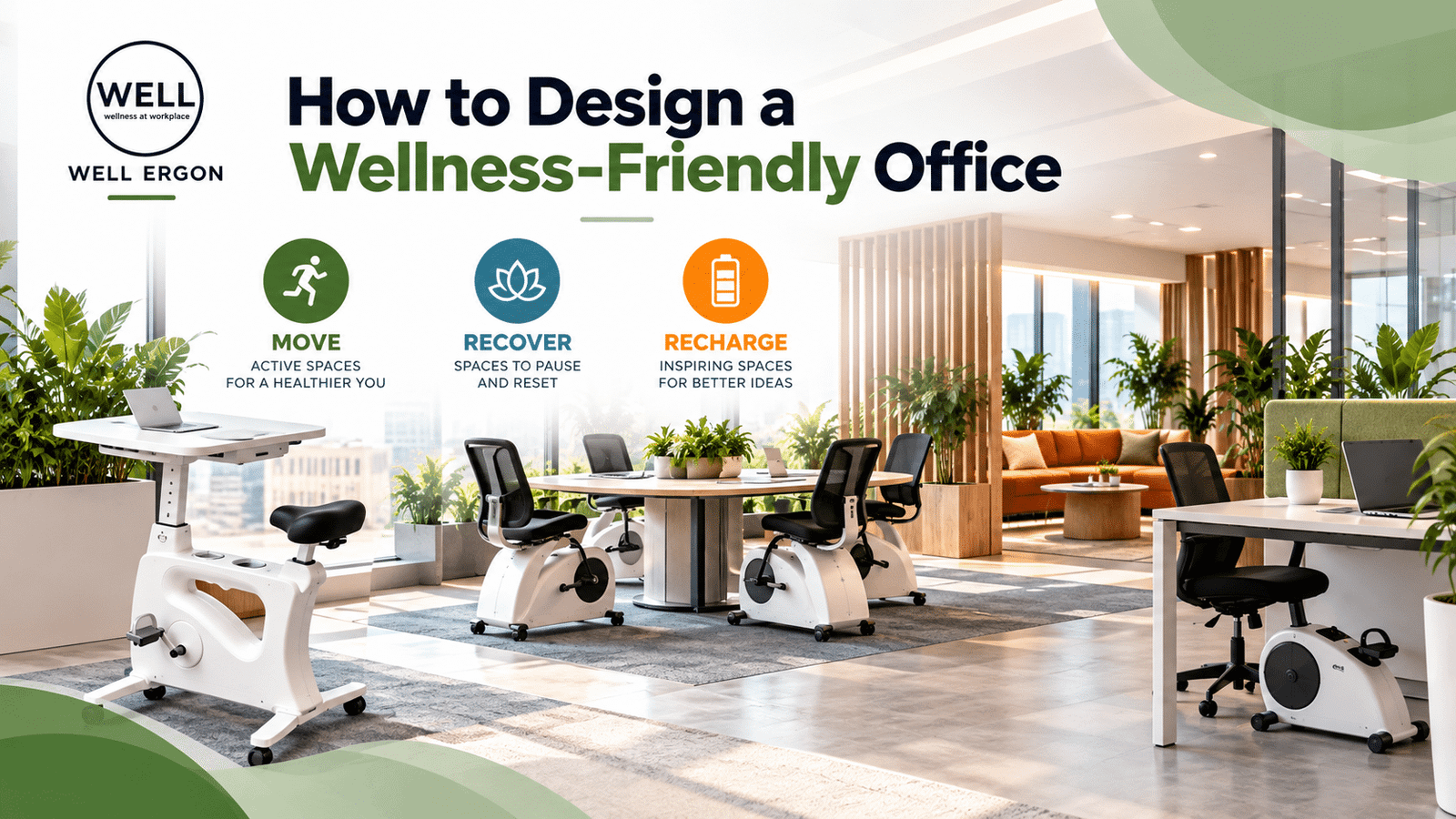
Rather than confining employees to a single assigned cubicle, active workplace design promotes Activity Based Working (ABW). Under an ABW model, employees move to different areas of the office depending on their immediate task: a quiet pod for deep work, a standing huddle table for quick check ins, or a walking route for a brainstorming session.
Top WELL Certification Movement Solutions for Indian Workplaces
When executing a WELL focused design in India, specific high impact solutions should be prioritized:
Height Adjustable Desks
Motorized, dual motor sit stand desks with anti collision sensors are highly recommended for Indian corporate workspaces. They allow for smooth transition height presets, making it effortless for multiple employees to use the same desk in hot desking or hybrid models.
Best Applications: Individual task zones, agile sprint spaces and executive cabins.
WELL Alignment: Satisfies core adjustable workstation requirements and actively works to reduce static desk postures.
Ergonomic Office Chairs
Investing in premium, certified ergonomic task chairs is essential. Chairs must feature adjustable seat depth, dynamic lumbar support and breathable mesh backings, which are highly critical for thermal comfort in warm Indian climates.
Monitor Arms and Ergonomic Accessories
Articulating monitor arms allow workers to easily pull, tilt and rotate screens. This eliminates slouching, head tilting and eye-strain, keeping workers physically aligned with their tasks.
Desk Exercise Bikes
Designed for low impact active workspaces, silent desk side bikes provide an engaging alternative for dynamic collaboration areas, breakout rooms and informal meet up zones.
Walk Stations and Treadmill Desks
While usually deployed in limited quantities due to cost and space, having 3 centralized Walk Stations on a floor gives employees a highly visible space to walk while checking routine reports or taking casual calls.
Collaboration Zones
Equipping collaboration areas with high top tables, standing height surfaces, and mobile whiteboards creates a natural environment for standing meetings, which are proven to be shorter and more energetic than seated ones.
Wellness Rooms
Dedicated rooms with soft lighting, yoga mats, foam rollers and guided stretching charts provide employees with a safe, private harbor to decompress physically and mentally during intense workdays.
Walking Meeting Spaces
Designating indoor corridors or outdoor paths as Walking Meeting Zones, complete with distance markers and visual checkpoints, encourages managers to take 1 on 1 chats on the move.
WELL Movement Solutions Comparison Table
To assist facilities managers and procurement heads in planning, here is a breakdown of key workplace movement solutions:
Solution | Supports WELL | Employee Health Impact | Cost Level | Space Requirement | Primary Target Areas |
|---|---|---|---|---|---|
Sit-Stand Desk | High | High | Medium | Standard | Primary open office, executive cabins |
Ergonomic Chair | High | High | Medium | Standard | Every dedicated workstation |
Desk Bike | High | High | Medium | Low to Medium | Collaborative zones, breakout rooms |
Walk Station | High | Very High | High | Medium to High | Centralized active hubs, wellness zones |
Wellness Room | Medium | Medium | High | High | Quiet corners, low-traffic areas |
How WellErgon Supports WELL Certification Movement Goals
WellErgon is India’s premier partner for corporate ergonomic transformation, helping companies transition seamlessly from highly sedentary offices to active, health optimizing, WELL compliant workspaces.
Workplace Ergonomic Assessments
WellErgon conducts comprehensive, on-site, or remote ergonomic audits of your existing office workspaces. Our certified experts analyze seating arrangements, desk heights, posture angles and lighting parameters to identify physical risk zones.
WELL Aligned Workspace Planning
We work closely with your project architects, interior designers and HR leads to map out spatial layouts that encourage natural movement. We help you design the optimal placement for standing desks, collaboration hubs and movement corridors.
Sit Stand Desk Solutions
We provide premium tier, customizable motorized sit stand desks. Designed with quiet operation, exceptional load capacity and robust durability, WellErgon’s desking systems are built to withstand the rigors of high density Indian corporate environments.
Active Workstation Solutions
From state of the art desk bikes to high performance under desk walking treadmills, WellErgon supplies commercial grade active furniture solutions that transform idle hours into active energy.
Employee Wellness Programs
We don’t just deliver the furniture, we ensure your team knows how to use it. WellErgon designs bespoke physical activity campaigns, ergonomic education sessions and interactive posture coaching workshops to drive long-term adoption.
Custom Ergonomic Furniture Solutions
Every office has a unique brand identity. WellErgon offers customized aesthetic finishes, desk dimensions, cable management systems and specialized accessory packages to integrate seamlessly with your brand’s unique design vocabulary.
Consultation for WELL Focused Workplace Design
If your goal is to secure WELL Certification points, our team provides targeted consultation on the exact technical specifications required for furniture height adjustments, safety standards and ergonomic reach zones, facilitating a streamlined certification process.
Benefits of WELL Aligned Movement Solutions
Implementing these solutions creates a robust ripple effect of positive outcomes across the entire organization:
  ┌────────────────────────────────────────────────────────┐
  │         WELL Aligned Movement Solutions                │
  └──────────────────────────┬─────────────────────────────┘
                             │
            ┌────────────────┴────────────────┐
            ▼                                 ▼
┌───────────────────────┐         ┌───────────────────────┐
│   Employee Benefits   │         │   Business Benefits   │
└───────────┬───────────┘         └───────────┬───────────┘
            ├─► Better Spine Health           ├─► Boosted Productivity
            ├─► Reduced Muscle Pain           ├─► Decreased Absenteeism
            ├─► Boosted Daily Energy          ├─► High Talent Retention
            └─► Improved Mental Clarity       └─► Stronger Employer Brand
Improved Employee Health
Regular movement improves blood circulation, boosts metabolic rate and reduces physical stagnation. This keeps employees feeling vitalized, fresh and energetic throughout long, demanding shifts.
Reduced Musculoskeletal Disorders
Providing adjustable tables, monitor arms and supportive chairs ensures that employees operate within optimal, tension free physical ranges, drastically lowering instances of back pain and repetitive strain injuries.
Higher Productivity
Physical comfort translates directly to mental endurance. Eliminating discomfort-related distractions allows employees to maintain sharp concentration, resulting in high-quality outputs.
Increased Employee Engagement
Employees who feel physically supported by their employer are demonstrably happier and more motivated, creating a positive work environment.
Better Employee Retention
A workplace designed with human health at its core is a workplace employees are reluctant to leave. Investing in WELL-aligned furniture is a concrete, visible signal that you value your team’s longevity.
Enhanced Employer Brand
In an era of intense corporate competition, carrying a WELL certified or WELL aligned workplace badge is a massive marketing differentiator, positioning your company as an elite employer of choice.
Stronger Workplace Culture
Integrating movement breaks, active walking meetings, and standing collaboration creates a vibrant, health conscious office culture where wellness is actively practiced.
Industries in India That Benefit Most from WELL Movement Solutions
While every modern business benefits from active design, several Indian industries show the most immediate and profound return on investment:
Information Technology (IT) & Software Services: With developers and engineers logging long hours at computer screens, the IT sector is highly vulnerable to sedentary ailments.
Global Capability Centers (GCCs): Operating as critical global hubs for multinational parent companies, GCCs must deliver peak operational excellence. Healthy, active, WELL aligned workplaces keep these high value workforces at their best.
BFSI (Banking, Financial Services and Insurance): High stress environments and intensive desk work in financial institutions make active workspaces a key differentiator for relieving stress and preventing physical burnout.
Healthcare and Pharmaceutical Companies: As pioneers of health, pharmaceutical and healthcare companies are increasingly ensuring their internal workplace practices match their external health missions.
Consulting Firms: With consultants tackling complex problems under tight timelines, comfortable, motion friendly offices help sustain cognitive performance and relieve physical strain.
Corporate Headquarters: Flagship headquarters of India’s top conglomerates use WELL certified design as an essential showcase of corporate excellence and modern, progressive leadership.
Common Challenges When Implementing WELL Movement Solutions
Budget Constraints
The Challenge: Outfitting an entire office with premium, motorized sit-stand desks and active workstations requires a notable upfront capital expenditure.
The WellErgon Solution: We recommend a phased implementation. Begin by outfitting collaborative areas, hot desking zones and high impact departments first, followed by a gradual, budgeted rollout across the entire floor plan.
Employee Adoption
The Challenge: Simply purchasing sit stand desks doesn’t guarantee employees will use them, many remain in a static, sitting position out of habit.
The WellErgon Solution: Overcome this by launching targeted awareness campaigns and physical training workshops. Introduce gamification, such as step challenges or designated standing hours, to make the physical transition engaging and fun.
Limited Office Space
The Challenge: Active workstations like treadmill desks and active breakout areas require more space than traditional compact cubicles.
The WellErgon Solution: WellErgon offers highly compact active workstations and modular furniture configurations that optimize real estate footprint without compromising on ergonomic performance or employee movement.
Leadership Buy In
The Challenge: Securing budget approvals from CFOs who might view ergonomic upgrades as non-essential expenses.
The WellErgon Solution: Build an ROI focused business case. Present clear data demonstrating how ergonomic upgrades directly reduce absenteeism, boost daily output and lower insurance claims, showing that wellness is an investment, not a cost.
Future Trends in Workplace Movement and WELL Certification
The landscape of corporate wellness in India is evolving at a lightning pace. These are the key trends defining the next decade of workplace design:
AI Driven Workplace Wellness
We are moving toward workplaces that learn about employee habits. Future offices will feature smart sensors that track sitting duration and send gentle reminders via computer dashboards or wearable tech, prompting the user to stand, stretch, or take a short walk.
Hybrid Work Ergonomics
As the boundary between home and office remains fluid, organizations will increasingly offer Work From Home ergonomic stipends or curated furniture packages to ensure employees are physically supported, regardless of where they are working.
Smart Active Furniture
Next-generation sit stand desks will feature built in touch interfaces, automated scheduling and synched apps that track calories burned and active minutes, directly integrating office furniture into the user’s personal fitness ecosystem.
Wellness Centric Office Design
Future floor plans will be built around biophilic design elements (natural lighting, indoor plants and natural water features) fused with active layouts, ensuring that walking through the office feels refreshing rather than exhausting.
Employee Experience as a Business KPI
Employee health, cognitive comfort and physical vitality will be measured with the same precision as traditional performance metrics. Corporate real estate and HR departments will actively collaborate to keep physical well being at the heart of corporate strategy.
Frequently Asked Questions
What is the Movement Concept in WELL Certification?
The Movement Concept is a core pillar of the WELL Building Standard that focuses on promoting physical activity, discouraging sedentary behavior, and integrating ergonomic design principles into the workplace to protect and enhance human health.
Are sit stand desks required for WELL Certification?
While not strictly mandatory for every single employee, offering a significant percentage of height adjustable/sit stand desks is one of the most effective and direct ways to earn crucial points toward achieving WELL Certification.
How do ergonomic workstations support WELL Certification?
Ergonomic workstations support WELL Certification by allowing employees to adjust their furniture (desks, chairs, monitors and keyboard trays) to fit their unique physical dimensions, thereby reducing musculoskeletal strain and supporting physical health goals.
What are the benefits of WELL Certification for Indian companies?
WELL Certification helps Indian companies stand out as premier employers, significantly improving talent acquisition and retention, boosting employee productivity, reducing absenteeism caused by physical strain and strengthening the company’s ESG profile.
How much does WELL Certification cost in India?
The total cost of WELL Certification in India varies depending on office size, building conditions and the extent of upgrades required. However, the investment is offset over time by substantial gains in productivity, lower medical leave rates, and improved employee retention.
What furniture helps achieve WELL Movement goals?
Motorized sit stand desks, certified ergonomic chairs with extensive adjustability, articulating monitor arms, desk exercise bikes and walking treadmill stations are excellent furniture choices to satisfy WELL Movement goals.
Can active workstations improve employee productivity?
Yes. Active workstations increase blood circulation and oxygen flow to the brain. This physical activation boosts energy, helps combat mental fatigue (especially during afternoon slumps), and sharpens focus.
Is WELL Certification suitable for small offices?
Absolutely. WELL Certification standards can be scaled to fit any workspace, from small boutique startup offices to massive multi story enterprise campuses, with customized solutions tailored to any floor plan.
Conclusion:
The future of workplace wellness in India is movement driven. Organizations that invest in ergonomic furniture, sit stand desks, active workstations and wellness focused office design are not only supporting WELL Certification goals but also creating healthier, happier and more productive teams.
By taking steps to minimize sedentary patterns, companies unlock the latent energy of their workforce, converting stagnant offices into dynamic engines of health and business success.
Ready to Transform Your Corporate Workspace?
Looking to align your workplace with WELL Certification Movement standards? WellErgon helps organizations across India implement ergonomic workplace solutions, active workstations and wellness-focused office designs that support employee well being and long term business performance.
Contact WellErgon Today to Schedule an Ergonomic Workspace Assessment