You work out three times a week. You stretch. You’ve cut back on sugar and you sleep reasonably well. And yet, by 4 p.m. most workdays, your lower back is aching in a way that no amount of fitness seems to fix.
Here’s the direct answer: back pain in office workers is often caused by furniture that doesn’t support the spine’s natural curve, not a lack of fitness. A chair without proper lumbar support, a desk set at the wrong height, or a monitor positioned too low can undo hours of exercise in a single workday, because the problem isn’t strength or stamina, it’s sustained, poor postural loading.
This article breaks down why just get fitter is incomplete advice, what’s actually happening to your spine at your desk, how to tell if furniture is the real culprit, and what a genuinely supportive setup looks like.
Section 1: The Fitness Myth Why Just Exercise More Doesn’t Fix Desk Related Pain
It’s an easy assumption: back pain means a weak core, so the fix must be more exercise. For many people, that’s only part of the picture.
Fitness and ergonomic support solve two different problems. Cardio and strength training build muscular endurance and general resilience. They don’t change what happens to your spine when you sit, largely still, for six to eight hours a day in a chair that doesn’t hold your lower back’s natural curve.
Fitness improves muscular endurance, it does not correct sustained spinal compression from poor seating.
That’s why someone can be objectively fit, strong core, active lifestyle, no old injuries and still develop chronic lower back pain that tracks almost perfectly with their work schedule. The pain isn’t coming from a lack of strength. It’s coming from hours of static loading in a posture the body isn’t designed to hold.
Section 2: How Bad Furniture Actually Causes Back Pain (The Mechanism)
To understand why furniture matters this much, it helps to look at what’s physically happening.
The lower spine lumbar region has a natural inward curve. When you sit without support for that curve, the lower back tends to flatten or round, which shifts pressure onto the spinal discs unevenly. Held for long enough, this uneven loading is a well-recognized contributor to lower back discomfort and, over time, more persistent pain.
Three furniture issues drive most of this:
- Chairs without lumbar support flatten the lower back’s natural curve, increasing disc pressure over time.
- Desks at the wrong height force you to slouch forward or hike your shoulders up, straining both the lower back and neck.
- Fixed, non adjustable seating locks you into one posture for hours, preventing the small positional shifts your spine needs to stay comfortable.
| Furniture Issue | Body Impact | Resulting Pain Area |
|---|---|---|
| No lumbar support | Lower back curve flattens, disc pressure increases | Lower back |
| Desk too low/high | Forces slouching or shoulder elevation | Upper back, neck, shoulders |
| Non-adjustable chair | No postural variation possible | Lower back, hips |
| Monitor below eye level | Forward head tilt for hours | Neck, upper spine |
None of these issues are solved by a stronger core. They are solved by furniture that actually fits how your spine works.
Section 3: Signs Your Pain Is Furniture Related, Not Fitness Related
If you are unsure whether your pain is coming from your setup or your fitness level, a few patterns are worth checking:
- Pain worsens through the workday but eases on weekends or vacations. This timing pattern points strongly to your desk setup rather than general fitness.
- Pain is localized to the lower back or neck, rather than showing up as general full body soreness.
- Pain appears even on days you exercised. If a solid workout doesn’t prevent the afternoon ache, the cause likely isn’t fitness related.
- Pain reduces noticeably when you’re in a different chair, a hotel chair, a car seat, or a friend’s setup, even briefly.
If two or more of these sound familiar, your furniture is a strong suspect.
Section 4: What the Research Says
This isn’t a fringe idea. Occupational health guidance from bodies like the World Health Organization and various national workplace safety agencies comparable to OSHA style ergonomic standards has long emphasized that prolonged static postures, not just poor fitness, are a primary contributor to musculoskeletal disorders in office workers. Ergonomics research consistently points to the same root causes: inadequate lumbar support, poor desk height and lack of postural variability during long work sessions.
The consistent theme across occupational health literature is this: musculoskeletal pain in desk based jobs is largely a design and environment problem, addressed through proper equipment and postural variation, not solely a personal fitness problem.
Section 5: The Fix, What Actually Supporting Furniture Looks Like
Once furniture is identified as the issue, the fix is fairly specific. Look for:
Chair essentials:
- Dynamic lumbar support that adjusts to your lower back’s curve
- Adjustable seat depth, so the seat pan fits your leg length
- Recline tension control, so leaning back is supported rather than unstable
Desk essentials:
- Correct height so elbows rest at roughly a 90-100° angle while typing
- Sit stand capability, allowing posture changes throughout the day
- Monitor positioned at eye level to avoid neck strain
Setup essentials:
- Feet flat on the floor or a footrest
- Screen roughly an arm’s length away
- Frequently used items within easy reach to avoid repeated twisting
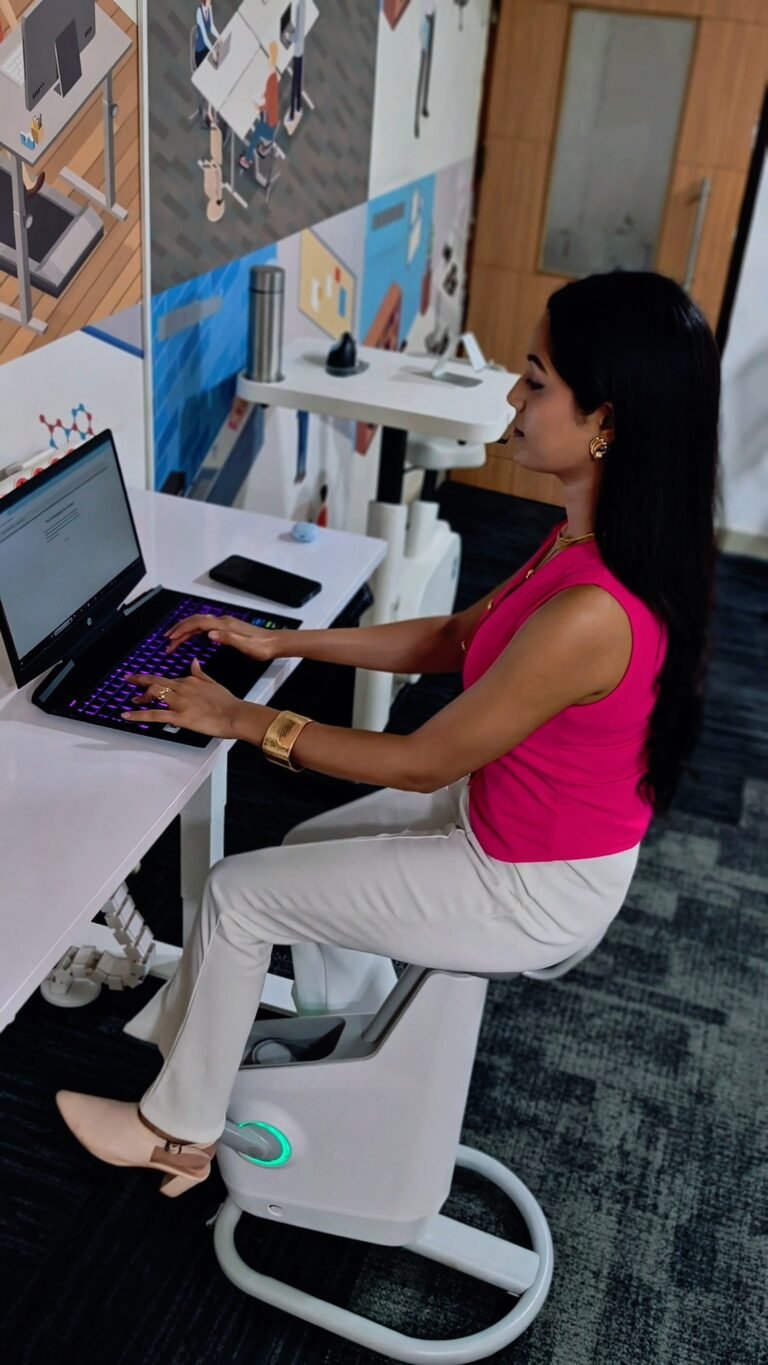
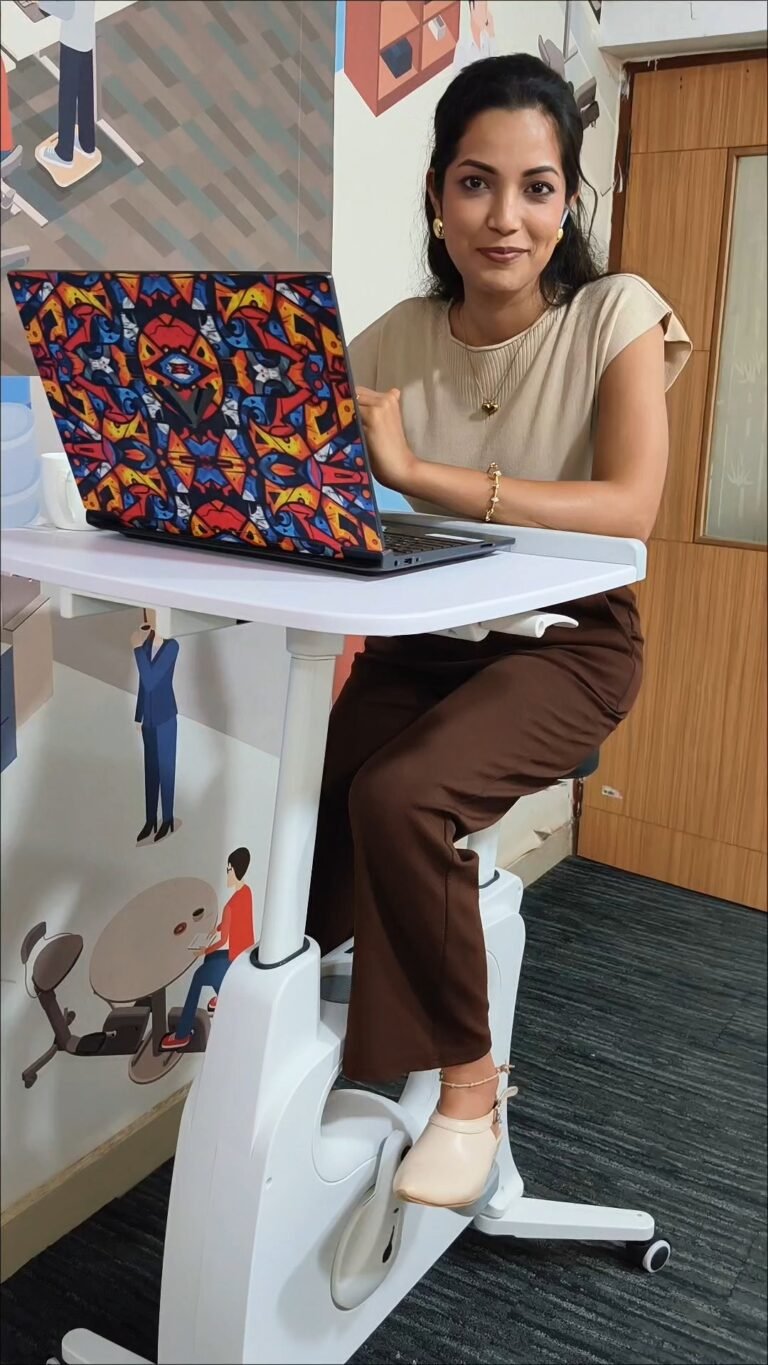
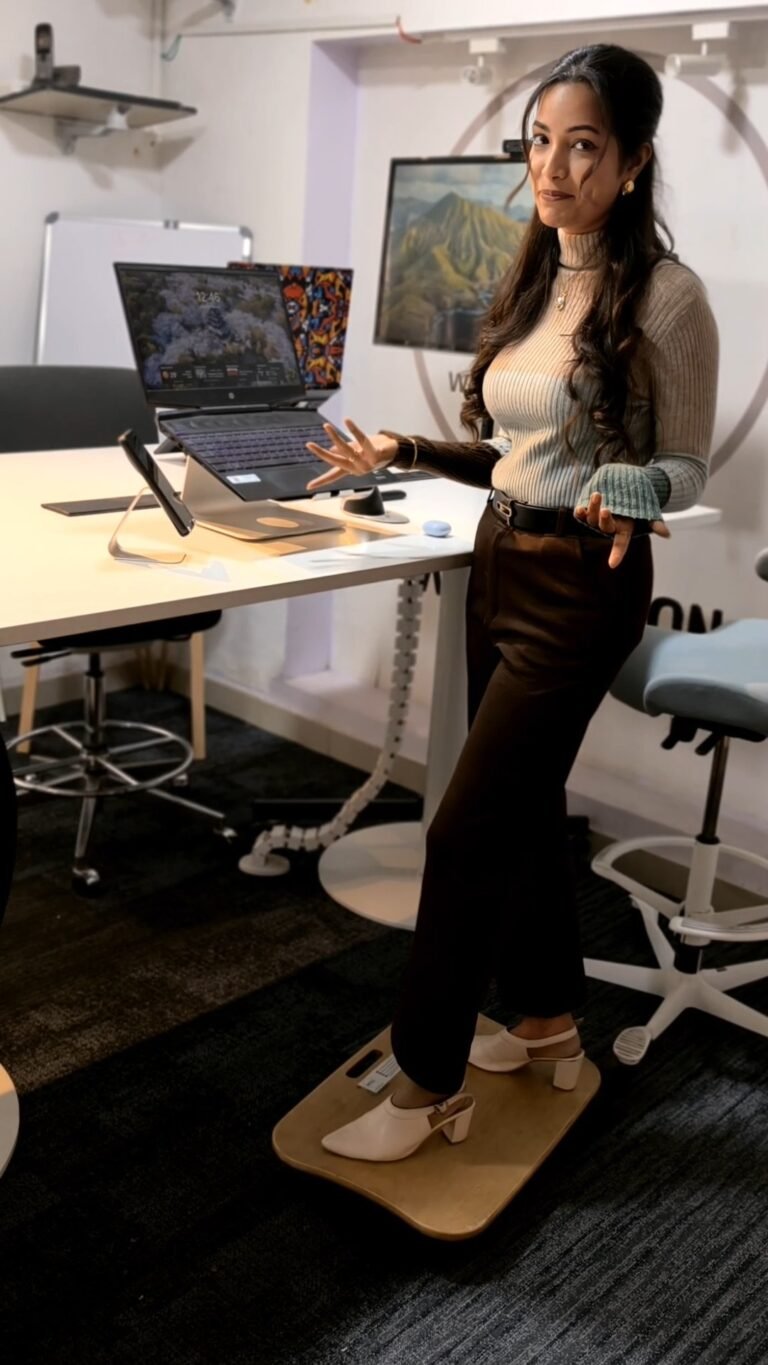
This is exactly the kind of design thinking behind ergonomic chairs and height-adjustable desks, including Wellergon’s range, which are built around supporting the spine’s natural curve and enabling postural variation, rather than locking users into one fixed position for hours.
Section 6: Fitness Still Matters, But as a Complement, Not a Fix
None of this means fitness is irrelevant. A stronger core and better overall mobility do help the body tolerate imperfect conditions better and movement throughout the day supports circulation and reduces stiffness. Furniture and fitness work best together, not as competing explanations.
A few simple additions that pair well with better furniture:
- Desk stretches: seated spinal twists, neck rolls, and hip flexor stretches every hour
- Short movement breaks: a 2-3 minute walk every 45-60 minutes
- Core-supportive exercise: planks or bridges a few times a week to build baseline endurance
Think of furniture as removing the root cause, and fitness as building resilience around it.
Section 7: How to Test If Your Furniture Is the Problem
You can get a reasonably clear answer in a few days with this simple check:
- Sit normally and check lower back contact: is there a gap between your lower back and the chair, or does the chair fill that curve?
- Check your elbow angle while typing: it should sit close to 90-100°, not significantly more or less.
- Check your monitor’s eye line: the top of the screen should be roughly at eye level, not below it.
- Track your pain pattern for three days: note pain levels on work days versus rest days.
- Try a lumbar cushion or footrest as a quick test: a noticeable improvement within a few days is a strong signal that furniture, not fitness, is the primary driver.
Frequently Asked Questions
Can bad furniture really cause back pain even if I exercise regularly?
Yes. Exercise builds general strength and endurance, but it doesn’t offset hours of unsupported sitting each day. Many physically fit people still develop desk-related back pain because the root cause is postural loading, not muscle weakness.
What’s the difference between fitness related back pain and posture related back pain?
Fitness related pain tends to appear after physical exertion and improves with rest and conditioning. Posture related pain tends to build gradually during the workday, ease on days off and persist regardless of exercise habits.
How do I know if I need a new chair or just better posture habits?
If your pain follows your work schedule rather than your activity level, and improves noticeably in a different chair, furniture is likely the bigger factor, though good posture habits still help.
Can a standing desk alone fix chronic back pain?
Not on its own. A standing desk helps by enabling posture changes, but it needs to be paired with correct height, a supportive chair for seated periods and proper monitor positioning to meaningfully reduce pain.
How long does it take for ergonomic furniture to reduce back pain?
Many people notice some improvement within one to two weeks of switching to properly fitted, adjustable furniture, though full adjustment, especially after long-standing poor posture, can take four to six weeks.
Conclusion
If your back pain seems to track your workday more than your workout schedule, the honest answer is usually furniture, not fitness. A chair without lumbar support, a poorly positioned desk, or a low monitor can create pain that no amount of exercise will fully resolve, because the two are solving different problems.
The good news is that this is a fixable, identifiable issue. A quick self audit of your setup, paired with furniture that actually supports your spine’s natural curve, addresses the root cause directly.
Explore Wellergon’s ergonomic chairs and height-adjustable desks, designed around genuine postural support, or reach out for a free workspace assessment.