Sitting 8-10 hours daily? For many of us, back pain isn’t just an occasional nuisance, it’s becoming the new normal. You start the morning feeling sharp, but by 3:00 PM, you are slouching, your shoulders are creeping toward your ears and that dull ache in your lower back is starting to throb.
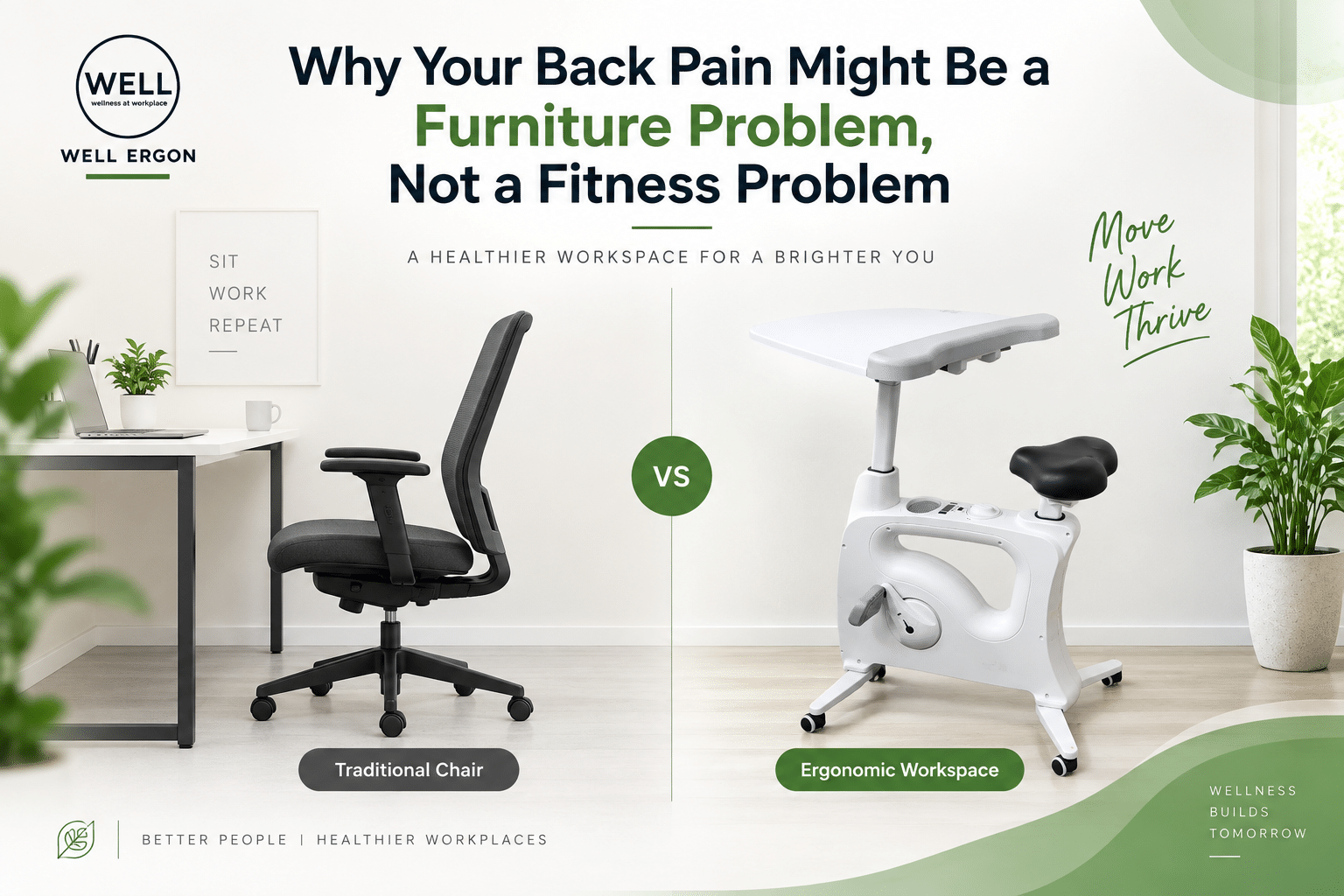
As workplace health issues like chronic lower back pain, neck stiffness and poor posture reach an all time high, the hunt for the perfect seat has intensified. This has sparked a heated debate in the world of office wellness: The traditional ergonomic office chair vs. the fitness ball.
Is the structured support of a high tech chair the ultimate winner, or does the active sitting of a stability ball hold the key to a pain free spine? In this comprehensive guide, we’ll dive deep into the pros and cons of both to help you decide what is actually better for your back.
2. Why Sitting Matters for Your Back Health
Before we compare the tools, we have to understand the toll that sitting takes on the human body. Evolutionarily, humans weren’t designed to be sedentary for 40+ hours a week.
The Impact of Prolonged Sitting
When you sit for extended periods, several physiological changes occur:
Spine Compression: Sitting increases the pressure on your intervertebral discs significantly more than standing or walking.
Muscular Atrophy: Your glutes and core (the deep stabilizing muscles of your abdomen and back) essentially go to sleep. When these muscles stop firing, your spine loses its internal bracing system.
The C Curve: Most people eventually succumb to gravity, rounding their shoulders and tucking their pelvis, leading to a C-shaped posture that strains the ligaments in the spine.
Active Sitting vs. Passive Sitting
The core of the debate lies in these two concepts:
Passive Sitting: This occurs in a standard chair. The chair does all the work, holding your weight. While comfortable, it allows your muscles to remain completely inactive.
Active Sitting: This involves a seat that requires your body to engage in micro movements to maintain balance. This keeps blood flowing and muscles engaged.
3. What Is an Ergonomic Office Chair?
An ergonomic office chair is a piece of furniture specifically engineered to support the body’s natural alignment and reduce stress on the musculoskeletal system during seated work.
Key Features
Lumbar Support: Perhaps the most critical feature, it mimics the natural inward curve of your lower spine.
Adjustability: High end ergonomic chairs allow you to modify seat height, armrest position and seat depth to fit your unique proportions.
Backrest Tilt: This allows you to recline slightly, which can redistribute weight and reduce pressure on the lower discs.
The Benefits
The primary advantage of an ergonomic chair is structured support. It provides a stable foundation that allows you to focus on high concentration tasks for hours without immediate muscular fatigue. It is designed to catch you when you get tired.
The Limitations
The downside is that ergonomic chairs promote passive sitting. Because the chair is so supportive, your core muscles don’t have to do anything. Over years of use, this can lead to weakened abdominal and back muscles, making you more prone to injury when you finally stand up or lift something heavy.
4. What Is an Ergonomic Fitness Ball (Active Sitting)?
Often called a stability ball, Swiss ball, or yoga ball, an ergonomic fitness ball used as a chair is the poster child for the active sitting movement.
The Concept of Active Sitting
Sitting on an unstable, air filled surface forces your body to constantly make tiny adjustments to stay upright. You can’t slump into a fitness ball the way you can a chair; if you do, you’ll likely lose your balance or roll off.
The Benefits
Core Engagement: Your obliques, transverse abdominis, and erector spinae stay on to keep you centered.
Improved Posture Awareness: You are forced to sit with your feet flat and your spine stacked.
Micro Movements: The ability to bounce or sway slightly keeps the spinal discs hydrated by encouraging blood flow and movement.
The Limitations
A fitness ball is not a magic bullet. Because it requires constant muscle engagement, it can lead to muscular fatigue. If you sit on one for eight hours straight without being conditioned for it, your core will eventually tire, and your posture will likely collapse even worse than it would in a chair.
5. Ergonomic Fitness Ball vs. Office Chair (Side-by-Side)
| Feature | Fitness Ball | Ergonomic Chair |
| Back Support | Minimal | Strong lumbar support |
| Core Engagement | High | Low |
| Posture Improvement | Active correction | Structured support |
| Comfort (Long Hours) | Limited | High |
| Movement | Dynamic | Static |
| Learning Curve | Moderate | Easy |
Insight: The best choice depends on how you use them, not just what you choose. A chair used poorly is worse than a ball used well and vice versa.
6. Which Is Better for Back Pain?
This is the million dollar question. The answer depends entirely on the type of back pain you are experiencing.
For Chronic or Acute Back Pain
If you have a diagnosed herniated disc, sciatica, or severe chronic lower back pain, an ergonomic chair is almost always the preferred choice. These conditions require stability and a reduction of mechanical load, which a chair provides through its lumbar support and armrests.
For Mild Posture Issues & Sedentary Fatigue
If your back pain is creeping up on you because you are stiff and inactive, a fitness ball can be a game changer. It breaks the cycle of stagnation and helps build the functional strength needed to support your own spine.
The Hybrid Approach: The Gold Standard
The most effective way to eliminate back pain isn’t choosing one over the other, it’s alternating. * The 80/20 Rule: Spend 80% of your day (6-7 hours) in a high quality ergonomic chair for stability and focus.
The Active Burst: Spend 20% of your day (1-2 hours) on a fitness ball to re-engage your core and wake up your posture.
7. When Should You Use a Fitness Ball at Work?
To avoid fatigue and injury, use the fitness ball strategically:
Short Sessions: Aim for 20-60 minute intervals.
During Low-Focus Tasks: Use it during phone calls, brainstorming sessions, or while checking emails.
As a Reset: Use it after lunch to combat the mid day slump.
Avoid During: Deep focus tasks (where you might lean forward and lose form) or if you have an existing spinal injury that requires total immobilization.
8. When Is an Ergonomic Chair the Better Choice?
The chair remains the king of the office for a reason. You should rely on your chair during:
Long Working Hours: Anything exceeding 2 hours of continuous sitting.
High Concentration Tasks: When you are in the zone, you don’t want to be thinking about your balance.
Corporate Environments: If your office has a strict professional aesthetic, a high end ergonomic chair fits the environment better than a rubber ball.
9. Best Solution: Combine Both (The WellErgon Perspective)
At the end of the day, the human body craves variety. The Active Workspace concept suggests that the best posture is your next posture.
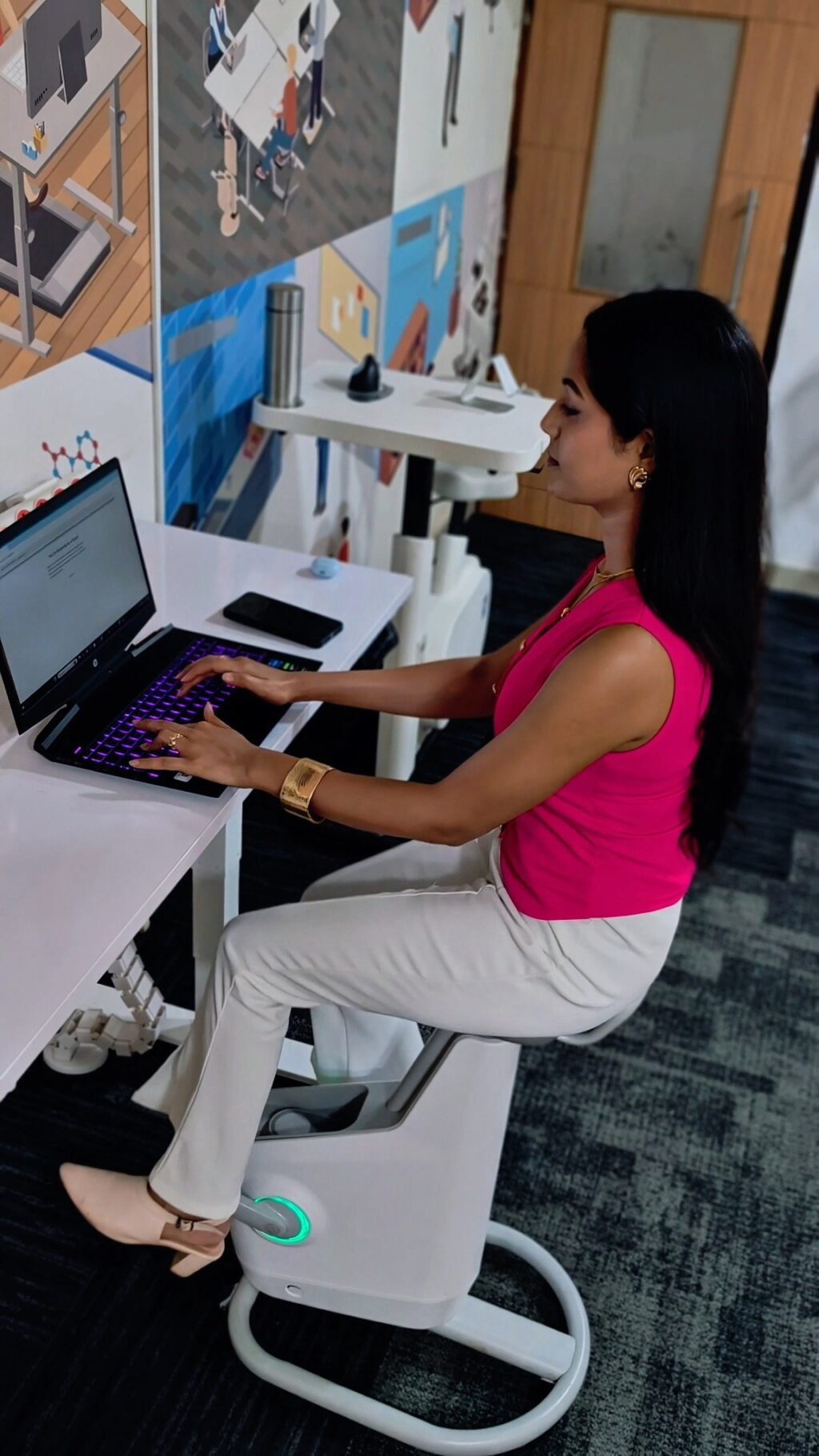
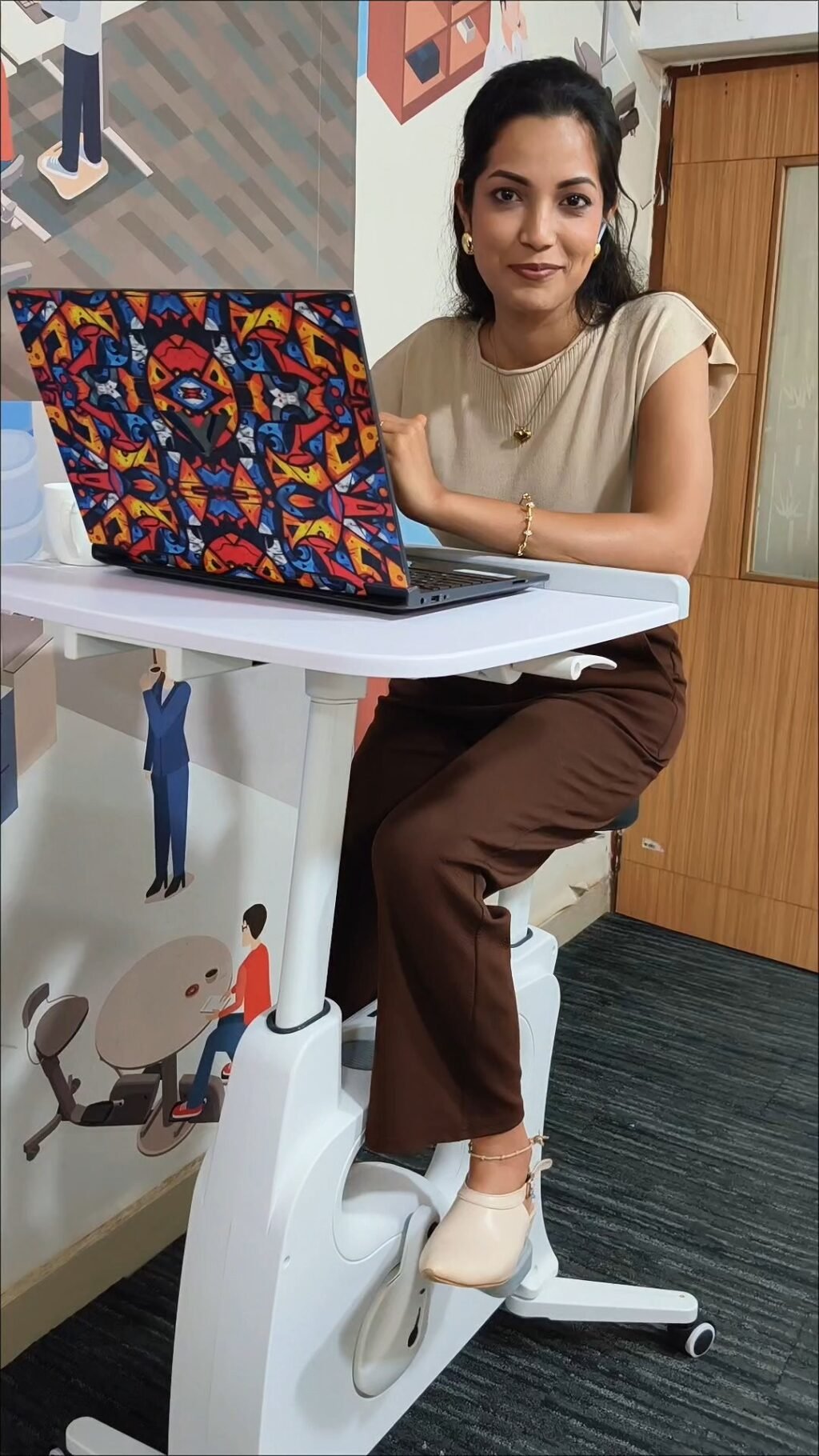
By integrating products like an ergonomic fitness ball with a stable base, you can complement your existing setup. Using a ball for a portion of the day prevents the frozen feeling of a standard chair, while the chair provides the recovery your muscles need after a core workout. Brands like WellErgon advocate for this balanced approach, giving you the tools to move more without sacrificing the support you need to get your work done.
10. How to Use a Fitness Ball Safely
If you decide to add a fitness ball to your office, follow these safety steps to avoid doing more harm than good:
Choose the Correct Size: When sitting, your hips should be slightly higher than your knees, with your thighs sloping slightly downward. Usually, a 65cm ball works for most average-height desks.
Maintain 90-90-90 Posture: Your feet should be flat on the floor, your knees at 90 degrees and your hips at 90 degrees or slightly more.
Use an Anti Slip Base: A donut base or a ball with small feet prevents the ball from rolling away when you stand up, a common office hazard!
Engage, Don’t Slouch: If you find yourself slouching on the ball, your core is tired. That is your signal to switch back to your chair.
11. FAQs (Frequently Asked Questions)
Is sitting on a fitness ball better than a chair?
Not necessarily better, but different. It is better for core activation and movement, but a chair is better for long term spinal support and rest.
How long should you sit on a fitness ball?
Start with 15-20 minutes and gradually work your way up to 60 minutes. It is generally not recommended to use a fitness ball as your only chair for a full 8-hour shift.
Can a fitness ball reduce back pain?
Yes, if your pain is caused by weak core muscles and poor posture. However, if your pain is caused by a structural injury like a slipped disc, it may aggravate the condition. Always consult a professional.
Is a fitness ball safe for office use?
Yes, provided you use an anti-burst ball and ideally one with a stabilizing base to prevent it from rolling into walkways or causing falls.
What size fitness ball is best for sitting?
Under 5’2″: 45cm ball
5’3″ to 5’8″: 55cm ball
5’9″ to 6’2″: 65cm ball
Over 6’3″: 75cm ball
12. Conclusion:
There is no one-size-fits-all solution to office wellness. If you choose only a chair, you risk muscle atrophy and stiffness. If you choose only a fitness ball, you risk fatigue and lack of support.
The Final Recommendation: Think of your Ergonomic Chair as your primary workstation, your home base for support. Think of the Fitness Ball as your active tool, a way to inject movement and strength into a sedentary day.
For the healthiest, most pain free back, combine both. Use the chair for the heavy lifting of your workday and the ball to keep your body resilient. Your spine will thank you.